EasyManua.ls Logo

Ceia THS/21E Series - User Manual

Ceia THS/21E Series
162 pages
Print Icon
To Next Page IconTo Next Page
Loading...
FI002K0018v1100UK – THS/21 Instruction manual for installation, use and maintenance
ORIGINAL INSTRUCTIONS 1
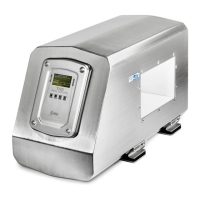
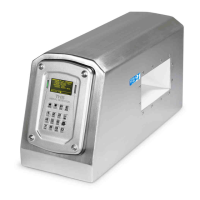
Industrial Metal Detectors
and Integrated Systems with Conveyor Belt
THS/21E - THS/21
Instruction manual
for installation, use
and maintenance
Document Date Hardware Software
FI002K0018v1100UK 2012-03-29 HV5.xx THSV5401 – ALMV5400
Read this manual carefully before installing, operating or carrying out maintenance on the device. Keep the manual in a
safe place for future reference and in perfect condition. This manual must accompany the device described herein in the
case of change of ownership and until the device is decommissioned.

Table of Contents

Questions and Answers

  • W
    Walter BarnesAug 4, 2025
    Why is my Ceia Metal Detector giving false alarms?
    • A
      Amanda JonesAug 5, 2025
      False alarms on your Ceia Metal Detector may be due to electrical or mechanical disturbances. Try performing the Environmental Compatibility Check procedure with normal operating settings. If the source isn't identified, the issue might be a malfunction. In this case, disconnect all devices connected to the metal detector. If possible, connect it to a different power supply and earth source, ensuring the environment is free from interference. If the problem continues, it may require professional assistance.
  • A
    Amanda HayesAug 11, 2025
    What to do if my Ceia Metal Detector doesn't detect test samples?
    • R
      Robert ClayAug 11, 2025
      If your Ceia Metal Detector isn't alarming when using test samples, it could be due to a few reasons. First, ensure the correct product is selected. If not, repeat the Autolearn procedure to automatically set the sensitivity. Also, the sample might not have the right diameter for the current product. Set the default product and create a new one. Check that the samples are detected, if necessary by increasing the sensitivity value. If they are detected, samples with a bigger diameter must be used for the current product.
  • C
    carl40Aug 28, 2025
    How to troubleshoot a Ceia THS/21E Metal Detector with a control panel display that is not on?
    • S
      srodriguezAug 28, 2025
      If the control panel display on your Ceia Metal Detector is not on, check the connections between the SCD card and the ALM card. Disconnect all the devices connected, switch off the system and switch it on again after a few minutes, if self-resetting protective devices have been activated. If the Metal Detector can expel metal masses, verify the RCU card is correctly connected to the ALM card. Otherwise, inspect the state of fuse F10 (and F11/F12 for Conveyor Control System) and ensure the power supply voltage is within the permitted range.
  • W
    William SotoNov 15, 2025
    How to fix a Ceia Metal Detector conveyor belt that won't start?
    • T
      taylorsherriNov 15, 2025
      If the conveyor belt in your Ceia Metal Detector system isn't starting, there are several things to check: * If the belt running indicator is off, ensure the KT parameter isn't zero and is correctly set. Also, inspect the inverter connections inside the power supply unit. * If the belt running indicator is on, verify the inverter is correctly configured for the connected motor (check NMV, NMF, NMC parameters) and inspect the motor connections. For non-integrated systems, ensure the connected motor is compatible with the inverter output characteristics. * If the belt running indicator is flashing, check that the FOLLOWING CONVEYOR input is active or, if it is not used, set FC=OFF. * If the belt running indicator is only on when the key is pressed, check the inverter connections wit...
  • M
    mindy57Nov 21, 2025
    What to do if the ejector on my Ceia Metal Detector isn't working after an alarm?
    • F
      fordjessicaNov 22, 2025
      If the ejector on your Ceia Metal Detector isn't activating after an alarm and there's no fault message, here's what you can check: * If the ejector isn't working and there's no ejection confirmation sensor, check the ejector connections. For non-integrated systems, ensure the electrical characteristics are compatible with those provided by the power supply card. If used, check the activation of the EJECT RELAY and its fuse. * If the ejector is working (checked in I/O status) and ejection confirmation check is correctly activated, and you're in synchronized ejection mode, verify the synchronization photocell is activated correctly and operating. If an encoder is installed, check that the speed measured is correct. If no encoder is installed, check that the KE parameter is equal to 0. ...

Summary

Safety Instructions and Warnings

Device Users and Training Requirements

Details on required instruction levels and training for various users throughout device lifecycle.

General Safety Warnings

Essential safety precautions and general instructions for safe operation and installation.

Installation Specific Warnings

Precautions to be taken during device installation, including electrical and environmental aspects.

Use Specific Warnings

Precautions and hazards to be aware of during the operation of the metal detector.

Maintenance Specific Warnings

Safety guidelines and precautions to be followed during maintenance operations.

Permitted and Improper Uses

Defines the intended applications and prohibits incorrect or unauthorized uses of the device.

Residual Risks Identification

Identifies potential hazards that may remain even after safety measures are in place.

Product Description

General Description and Models

Overview of CEIA THS inspection systems, including detection probes and integrated conveyor belts.

Device Identification Details

Information on ID plates for probes, control power boxes, and conveyor control systems.

Dimensions and Technical Characteristics

Physical dimensions of probes and power units, plus detailed technical specifications.

Safety Devices Overview

Details on built-in safety features like IP protection, cable glands, and self-diagnosis.

Installation Guide

General Installation Requirements

Basic requirements for installing the metal detector system, including minimum clearances.

Guidelines for Non-Integrated Models

Instructions for installing detectors on customer-provided conveyor belts or production lines.

Environmental Compatibility Installation

Guidelines to minimize electrical interference and ensure compatibility with the environment.

Unpacking and Handling Procedures

Step-by-step guide for safely unpacking and moving the metal detector and integrated systems.

Mechanical and Pneumatic Installation

Procedures for physically mounting components and connecting pneumatic systems.

Electrical Installation and Diagrams

Guidelines for wiring, connections, and understanding electrical diagrams.

Configuration and Parameter Setup

Steps for initial setup, parameter configuration, and system checks.

Using the Metal Detector

Indicators and Control Panel Functions

Explanation of device indicators, optical signals, and control panel key functions.

Switching On and Basic Operation

Procedures for safely powering up, understanding startup signals, and basic use.

Sensitivity Checks and Performance Testing

Guide to performing sensitivity tests, functional checks, and troubleshooting test failures.

CFR21 Standards Compliance Settings

Configuration settings required to ensure compliance with CFR21 electronic record standards.

Maintenance and Troubleshooting

Periodic Maintenance Procedures

Lists regular maintenance tasks, cleaning instructions, and belt adjustments.

Troubleshooting Common Issues

Guide to diagnosing and resolving common faults and error messages.

Component Replacement Procedures

Instructions for replacing components like fuses and SCD cards.

Compatibility Check Procedures

Methods for verifying system, belt, and environmental compatibility.

Self-Diagnosis System Interpretation

Explanation of fault messages and actions from the internal self-diagnosis system.

Uninstallation and Device Disposal

Procedures for safely uninstalling, packing, and disposing of the device.

Appendices

CE Declaration of Conformity

Official statement of compliance with relevant EU directives for various THS models.

Spare Parts Information

Reference to the manual for ordering spare parts, accessories, and options.

Ceia THS/21E Series Specifications

General IconGeneral
SeriesTHS/21E
SensitivityAdjustable
TypeMetal Detector
Power Supply50/60 Hz
Environmental ProtectionDesigned for industrial environments
Protection RatingIP54

Related product manuals