Figure: 3
USING AN SD CARD
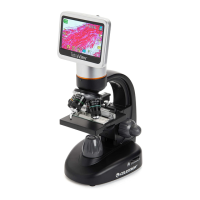
The TetraView™ comes with a 8 GB SD card, which you can use to capture images (snapshot or video). SD cards are
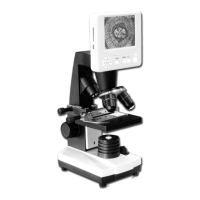
inserted into the SD card slot in the LCD monitor (Figure 1).
MICROSCOPE OPERATION
Follow these instructions to turn on the LCD and adjust the
microscope’s stage and illumination before you begin observing.
Remove the protective fi lm from the LCD screen.
LCD MODULE
This digital microscope is different from traditional microscopes because it uses an LCD instead of eyepeices. With an
LCD, you can view specimens on the screen by yourself or share them with others. To begin, turn on the LCD monitor
by pushing the power button (see Figure 1). You will see “Celestron Digital Microscope” on the screen. The touch
screen functions on the LCD module are mainly used for taking images (snapshots and video) and performing other
functions that will be discussed later in this manual.
ILLUMINATION
To get the sharpest and best views, you’ll need to choose the proper illumination (lighting):
1. To turn the illuminator on, see Figures 4 & 5 and turn one of the switches as shown.
2. The illuminator (Figure 1) is used mainly for specimen slides where the light shines up through the hole in the
stage through the slide.
ADJUSTING THE LIGHTING
Specimens of different sizes, widths, and color variations will require different levels of illumination. Normally, you
adjust the brightness by turning the switches shown in Figure 4 & 5. Another way to adjust brightness is by changing
the EV function on the touch screen. The EV (exposure value) function increases or decreases the brightness level by
using the (+) or (-) buttons on the screen.
When viewing a dark colored specimen, you may need to increase the amount of light to resolve certain features or
details. This is best done by increasing the brightness of the illuminator by rotating the brightness control dial to its
highest setting.
Experiment with adjustments to find optimum lighting settings. Each specimen and magnification may require slightly
different illumination.



 To Next Page