The CE+T Power Monitoring unit, available in T1S, T2S, and CanDis versions, is designed for AC backup systems, offering advanced power conversion technology. These units are part of a new generation of power converters that go "beyond the inverter" by providing dual input inverter capabilities, leveraging existing DC infrastructure for AC backup, offering a wide output power range, and handling the harshest AC input conditions without compromising AC output quality.
Function Description:
The T1S is a basic monitoring unit for the TSI inverter range, typically provided with NOVA, VEDA, and MEDIA ranges. It can monitor up to 32 inverters, provide Major and Minor free contacts with signalization, and monitor one digital input. It automatically detects powered inverter modules and generates alarms if an inverter fails or is removed. The T1S also supports redundancy configuration via a dipswitch.
The T2S is an extended monitoring unit for the TSI inverter range, provided with all BRAVO solutions and optionally for NOVA, VEDA, and MEDIA PACK designs. It monitors up to 32 inverters, provides Major and Minor alarms, and one user-selectable free contact with signalization. It can monitor two digital inputs and record up to 200 events. The T2S also facilitates communication via MODBUS and CANBUS protocols, sends and receives configuration from TSI inverters, and can order a server shutdown. When multiple shelves are used, the T2S is typically installed in the uppermost shelf, with free potential contacts, digital MODBUS, and CANBUS available only on the shelf where the T2S is plugged. Only one T2S is required per system (maximum 32 inverters).
The CanDis is an optional interface that allows users to access system information via displays and/or a remote computer using a web browser or SNMP protocol. It can consist of one, two, or three displays and/or a TCP/IP interface. The CanDis displays voltages, currents, frequency, and inverter configuration. It is powered by the auxiliary power supply of the modules, which has limited power, so systems with only one module may require an external TCP/IP with its own power supply.
Important Technical Specifications:
T1S Monitoring:
- Alarm contacts: 2 (Major + Minor)
- Alarm lights: 2 (Major + Minor)
- Digital Input: 1 (NO or NC input contact)
- Communication: No
- Configuration: Simple via dipswitch 1 and 2 (Digital input polarity, Redundancy)
- Log file: No
- Extended monitor: Not available
T2S Monitoring:
- Alarm contacts: Major, Minor, and one user-selectable free contact.
- Digital Inputs: 2
- Event Record: Up to 200 events
- Communication Protocols: MODBUS, CANBUS
- Relay Characteristics (for T1S and T2S):
- Maximum switching capacity: 2A @ 30VDC or 1A @ 60VDC
- Maximum switching power: 60W
- Maximum voltage: 60VDC SELV (for higher voltage, an additional relay is mandatory)
- Maximum switching current: 2A
CanDis:
- Dimensions: Length: 445mm (19" cabinet), Depth: 160mm, Height: 44mm (1U)
- Weight: 1 to 3 kg (according to options)
- Communication: CANBUS ID (124 to 264), TCP/IP (Web-SNMP)
- Power Supply: Auxiliary power supply from modules (may require external 230VAC/12VDC for full functionality with single module systems).
CS141 vs. CS121 (TCP/IP Interfaces):
CS141:
- Processor: ARM Cortex A8 800 MHz (10 times faster than CS121)
- Flash memory: 512MB (over 4500 log file entries)
- DIP switches: On the front plate (no removal from slot for changes)
- User authorization: Different authorization, administrative users can change network settings.
- Menu structure: Leaner, easier configuration and event handling.
- Firmware Update: "Drag & Drop" via any browser.
- BACS: Integrated
- Settings: No save, exit & reboot required; simplified operation, massive time saving.
- Security: Higher security (HTTPS and SSH).
- Rescue Boot Mode: Second OS for backup completely usable.
- USB Port: Connects UPS devices with USB in future versions.
- AUX Port (Serial Protocol): Robust against UPS noise (RS232), longer cables (up to 20m).
- RCCMD Broadcasting: Possible with new firmware, whole network segments can be shut down.
- SMS via IP Modem (RASMAN_G_II): Possible, can be installed anywhere.
- IP: IPv4/IPv6
- Terminal Strip: CS141LM/SCM terminal strip instead of Mini DIN8 plug (no soldering necessary).
- MTBF: 100 years
- Performance: 10 times faster in high network load.
- Standards: Embedded OS, industry standard.
- Current consumption: 12V (min. 9V, max. 30V DC), 150mA.
- Boot phase: Less than 30 seconds.
CS121:
- Processor: 32-Bit RISC-Processor
- Flash memory: 64MB (Logfiles about 12-16h)
- DIP switches: On motherboard (removal from slot for changes)
- User authorization: Only one user with admin rights.
- Menu structure: Classic, restricted event configuration.
- Firmware Update: Flash Wizard (Windows required, FTP must be active).
- BACS: Not available for CS121SC/L, BACS Webmanager needed.
- Settings: Changing configuration and saving needs 5-10 minutes.
- Security: Restricted, fails many security tests (old interfaces).
- Rescue Boot Mode: No rescue system, complete loss of configuration.
- USB Port: No USB port (tools only via COM2).
- AUX Port (Serial Protocol): Prone to UPS noise, short wires (less than 1m).
- RCCMD Broadcasting: Only single IP addresses, no broadcasting.
- SMS via IP Modem (RASMAN_G_II): Cannot handle IP modems, restricted to GSM modem range.
- IP: Only IPv4
- Terminal Strip: Mini DIN 8 connector (requires soldering).
- MTBF: 10 years (components no longer available).
- Performance: CPU overloaded in bigger networks, reboots (traffic limitation needed).
- Standards: Embedded OS (POSIX outdated), proprietary Generex OS, vulnerable to hackers.
- Current consumption: 12V (min. 9V, max. 30V DC), 160mA.
- Boot phase: Between 5 and 10 minutes.
Usage Features:
- Dual Input Inverter: Uses commercial power as the default source.
- AC Backup in DC Environment: Leverages existing DC infrastructure.
- One Stop Shop: Wide output power range.
- Harsh AC Input Conditions: Maintains quality AC output even with challenging input.
- Modular and Redundant: Systems are modular and truly redundant for high availability.
- Highly Efficient and Maintenance-Free: Designed for optimal performance with minimal upkeep.
- Battery Friendly: Optimized for battery health.
- T1S Operations: Detects inverter modules, generates Major/Minor alarms (LEDs activate immediately, relays delayed by 60s for Major, 30s for Minor).
- T2S Configuration: Allows detailed configuration of global settings, inverter parameters (input source priority, ACin mode, walk-in mode, number of phases, protection type for Delta load, frequency, short circuit thresholds, booster option, max current/power, overload duration, Airco mode, synchronization tracking speed, remote OFF disable ACin power, negative power), DC groups parameters (Vdc_in Low/High Start/Transfer/Stop), and AC groups parameters (Vac_in Low/High Start/Transfer/Stop, Fac_in Low/High Start/Stop, Stop Power).
- T2S Monitoring via HyperTerminal: Provides a text-based interface for system configuration, information, actions, and security access. Allows changing system parameters like module addresses, phases, DC groups, and AC groups.
- CanDis Display: Visual control of alarms (green for no alarm, red for active alarms). User-selectable alarm can be associated with any internal operating alarm. Displays various parameters like AC output voltage/current/power, DC input voltage/current/power, frequency, number of configured/redundant inverters, and serial number.
- TCP/IP Interface (CS121/CS141): Web browser access for monitoring and configuration, SNMP protocol for equipment monitoring. Allows setting IP address, subnet mask, gateway, DNS server, and SNMP parameters.
Maintenance Features:
- T1S/T2S Removal and Insertion: Simple procedure using a small screwdriver to release the latch.
- T2S Configuration Management: Allows reading and sending configuration files to/from the T2S, enabling backup and restoration of settings.
- Log File and History: T2S records up to 200 events, which can be viewed and downloaded as an .xls file for analysis.
- Module Error Information: Provides access to internal status of each module and troubleshooting indications.
- Update Texts and Constants: T2S automatically updates internal descriptions of parameters and messages when newer TSI modules are inserted; manual update can be forced.
- Service and Support: Manufacturer declines responsibility if equipment is not installed, used, or operated according to instructions. Warranty is void if instructions are not followed. Technical care must be performed by qualified employees. RMA process for defective units requires a number from the extranet. Toll-free support is available for major incidents and emergencies.
- Maintenance Tasks: Includes identifying site details, downloading/saving configuration and log files, checking/analyzing log files, replacing dust filters, checking module temperature, cleaning cabinets, controlling inverter mapping, checking load levels, changing configuration for AC and DC mix mode, checking alarm operation, switching OFF AC IN and checking alarms, checking temperature terminals with infrared camera, reading/recording waveform/power factor/crest factor/THD I, taking cabinet pictures, and performing MBP procedure (not recommended if no AC input line backup).

 Need help?
 General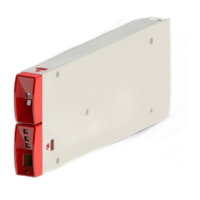

 To Next Page