CESSNA AIRCRAFT COMPANY FOR TRAINING USE ONLY
MODEL 152 7-9
Moving the airplane by hand is most easily accomplished by attaching a tow bar to the nose gear strut.
If a tow bar is not available, or pushing is required, use the wing struts as push points. Do not use the
vertical or horizontal surfaces to move the airplane. If the airplane is to be towed by vehicle, never turn
the nose wheel more than 30° either side of center or structural damage to the nose gear could result.
The minimum turning radius of the airplane, using differential braking and nose wheel steering during
taxi, is approximately 24 feet 8 inches. To obtain a minimum radius turn during ground handling, the
airplane may be rotated around either main landing gear by pressing down on the tailcone just forward
of the vertical stabilizer to raise the nose wheel off the ground.
WING FLAP SYSTEM
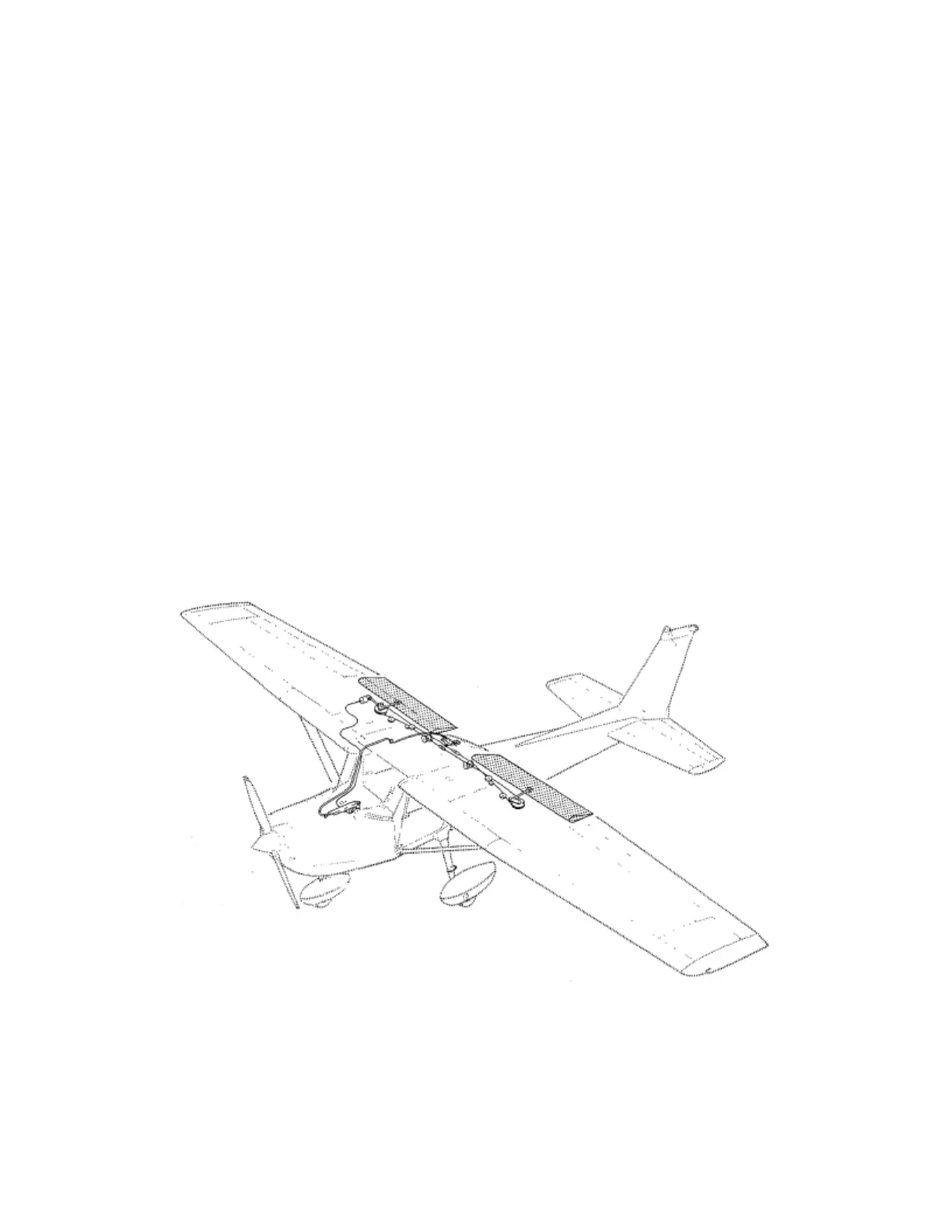
The wing flaps are of the single-slot type (see figure 7-3), and are extended or retracted by positioning
the wing flap switch lever on the instrument panel to the desired flap deflection position. The switch
lever is moved up or down in a slot in the instrument panel that provides mechanical stops at the 10°
and 20° positions. For flap settings greater than 10°, move the switch lever to the right to clear the stop
and position it as desired. A scale and pointer on the left side of the switch lever indicates flap travel in
degrees. The wing flap system circuit is protected by a 15-ampere circuit breaker, labeled FLAP, on the
right side of the instrument panel.
Figure 7-3. Wing Flap System



 To Next Page