l
Permanent bollards or wheel stops must not encroach upon the clearances listed in the clearance
diagrams in this section. Removable bollards are allowed if service personnel have the ability to
move them as needed.
l
Where permitted by code, wheel stops are preferred over bollards for head-in or back-in spaces.
Wheel Stops
l
When using wheel stops, consider the average vehicle overhang distance for the largest type of
vehicle (passenger, bus, etc.), as well as leaving space for the driver to walk up and access the
station.
l
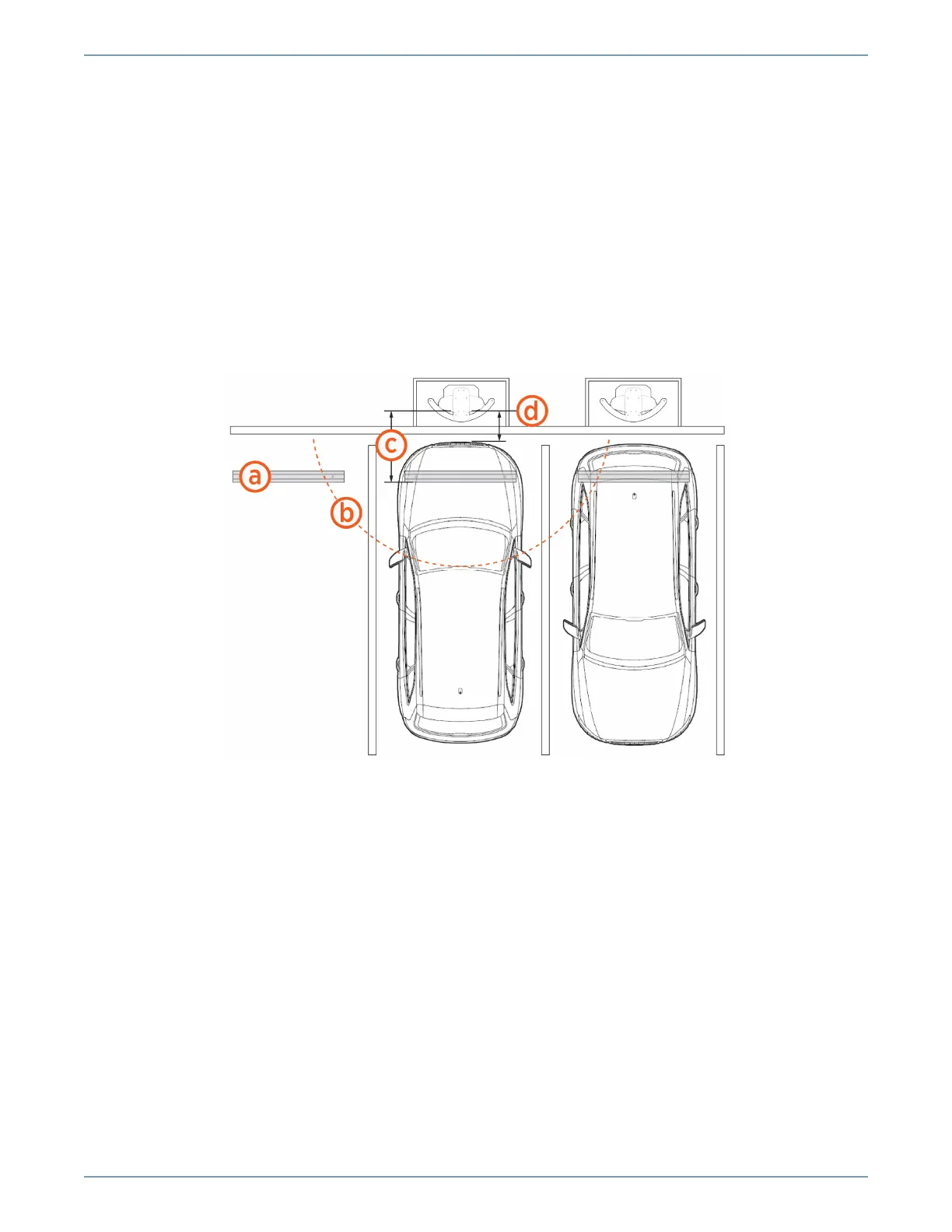
Position wheel stops to actively block at least one wheel, without presenting a trip hazard to
pedestrians walking between vehicles.
a. Wheel stop, positioned to actively block at least one wheel
b. Cable reach radius: 3.76 m (12 ft 4 in)
c. Recommended distance between wheel stop and station: 1371 mm (4 ft 6 in) for passenger vehicles
d. Recommended distance for walk-up access: 609 mm (2 ft)
Bollards
l
When bollards are required by code, needed for snowy areas, or needed for curbside spaces, ensure
bollard placement does not interfere with removing and replacing charge cables in the station’s
holsters.
l
Try to minimize bollard interference with the movement of charge cables between the station and
the vehicle. Bollard height is recommended to be no higher than 914 mm (36 in) where needed.
l
Follow the measurements listed for bollards placement Express 280 standard (2.4 m) CMK:
14
Wheel Stops and Bollards





 To Next Page