To Next Page
W
wanda41Sep 12, 2025
What to do if Receiver Fault appears in Cirrus Aircrafts?
- Hheidi21Sep 12, 2025
If your Cirrus Aircrafts has a Receiver Fault, ensure all antenna connections are correct; otherwise, return it to Garmin for service.



What to do if Receiver Fault appears in Cirrus Aircrafts?
If your Cirrus Aircrafts has a Receiver Fault, ensure all antenna connections are correct; otherwise, return it to Garmin for service.
What to do for Baro Altitude Fault in Cirrus SR22 Aircrafts?
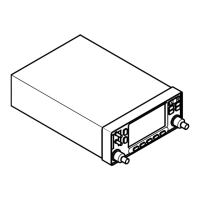
If your Cirrus Aircrafts is experiencing a Baro Altitude Fault, first verify that the baro altimeter has power and is properly wired. Then, verify the configuration is set correctly using the GTS 8XX Install Tool.
How to resolve a red 'X' on a data port in Cirrus SR22 Aircrafts?
If you see a red 'X' on a data port on the configuration page of your Cirrus Aircrafts, ensure the port is correctly wired to the GTS 8XX and that the correct settings are selected on the configuration page.
What to do if there are no audio alerts in Cirrus SR22 Aircrafts?
If you are not getting any audio alerts from your Cirrus Aircrafts, make sure the audio is properly wired from the GTS 8XX and the volume isn't set too low.
How to fix 'Data failed' message on Cirrus SR22 Aircrafts unit?
If your Cirrus Aircraft's unit fails to power up and displays a 'Data failed' message, first, ensure the power is correctly wired to the GTS 8XX and the circuit breaker is closed. If the issue persists, use the USB Install Tool to verify that the GTS 8XX is configured correctly for the desired display.
Why Cirrus SR22 battery will not hold charge?
Your Cirrus Aircrafts battery might not hold a charge due to several reasons. Flights may be too short to recharge the battery sufficiently, in which case you should remove the battery and recharge it when necessary. Loose connections or corrosion could also be the cause; tighten, clean, and neutralize the connections. A faulty battery will also prevent it from holding a charge, so consider replacing it. Lastly, standing for too long, especially in a hot climate, can drain the battery. Remove the battery and recharge it when needed.
How to fix defective alternator in Cirrus SR22?
To fix a defective alternator in your Cirrus Aircrafts, replace the alternator.
What to do if circuit breaker activated in Cirrus SR22?
If a circuit breaker is activated (open) in your Cirrus Aircrafts, reset the circuit breaker and troubleshoot the circuit.
How to fix faulty voltage regulator in Cirrus Aircrafts?
To fix a faulty voltage regulator in your Cirrus Aircrafts, replace the voltage regulator.
How to fix low engine RPM in Cirrus Aircrafts?
To fix low engine RPM in your Cirrus Aircrafts, increase the engine RPM.
Lists maximum gross takeoff weight, maximum zero fuel weight, and maximum baggage compartment loading.
Details limitations for the engine, including manufacturer, model, power rating, and oil temperature.
Presents the CG envelope graphically and defines forward and aft limits based on weight.
Prohibits aerobatic maneuvers and spins; allows normal stalls, chandelles, lazy eights within bank limits.
Specifies the positive and negative load factors allowed for different flap settings at 3600 lb.
Prohibits flight into known icing conditions.
Specifies approved fuel grades, total fuel capacity, and maximum allowable fuel imbalance.
Defines maximum takeoff altitude (10,000 ft MSL) and maximum operating altitude (17,500 ft MSL).
Covers limitations for Cirrus Perspective Integrated Avionics System, avionics switch off, PFD/MFD cooling fan failures.
Details the Cirrus Airframe Parachute System (CAPS) as a life-saving option for critical emergencies.
Provides key airspeeds for emergency maneuvers like maneuvering speed, best glide, and engine-out landing.
Covers procedures for engine failure on takeoff (low altitude) and in flight, including restart attempts.
Details the procedure for engine airstart, including checklist items and amplification notes.
Provides procedures for cabin fire in flight and engine fire in flight.
Outlines the procedure for an emergency descent, including power lever, mixture, and airspeed.
Presents best glide speed and ratio, with a chart showing glide distance versus altitude.
Details procedures for emergency landing without engine power, including radio, transponder, and CAPS activation.
Provides procedures for ditching, including radio, transponder, CAPS, airplane evacuation, and flotation devices.
Describes procedures for landing when elevator control is lost, using flaps and trim for control.
Covers partial power loss, low oil pressure, high oil temperature, and high cylinder head temperature.
Details procedures for engine speed high and propeller governor failure.
Covers high fuel flow, low fuel quantity, and fuel imbalance warnings.
Addresses high voltage on main buses and essential bus, and battery 1 current sensor warnings.
Details procedures for AHRS failure, ADC failure, and PFD display failure.
Focuses on inadvertent spin entry and the mandatory CAPS activation.
Details the CAPS activation procedure, including handle operation and post-deployment actions.
Details procedures for landing with failed brakes or a flat tire.
Addresses abnormal engine conditions like low idle oil pressure and starter engaged annunciation.
Procedure for low alternator 1 output, including checking circuit breakers and shedding non-essential loads.
Covers avionics switch off, PFD/MFD cooling fan failure, and flight displays too dim.
Details procedures for pitot static malfunctions, including static source blocked and pitot tube blocked.
Covers electric trim/autopilot failure and flap system exceedance.
Addresses brake failure during taxi and left/right brake over-temperature.
Lists critical airspeeds for takeoff rotation, enroute climb, landing approach, and go-around.
Describes engine starting procedures, including priming, flooding indications, and oil pressure checks.
Details power check, flap settings, soft/rough field, and crosswind takeoff procedures.
Procedure for short field takeoff including flaps, brakes, power, mixture, elevator control, and airspeed.
Describes normal climbs and climb speeds for maximum rate and angle, considering engine cooling.
Provides guidance on landing with full flaps, normal landings, short field landings, and crosswind landings.
Procedure for balked landings or go-arounds, including autopilot disengagement, power, flaps, and airspeed.
Describes aircraft stall characteristics, including power-off and power-on stalls, and recovery procedures.
Table showing indicated airspeeds (KIAS) versus calibrated airspeeds (KCAS) for different flap settings.
Table showing indicated airspeeds (KIAS) versus calibrated airspeeds (KCAS) with heater/defroster ON.
Provides tables for correcting indicated altitude to true altitude based on flaps, density altitude, and static source.
Lists stall speeds (KIAS/KCAS) for different weights, CG positions, flap settings, and bank angles.
Explains factors affecting takeoff distance (winds, runway, flaps, AC) and provides correction notes.
Table showing takeoff distance (ground roll and 50ft obstacle) at various temperatures and altitudes.
Table showing takeoff distance (ground roll and 50ft obstacle) at various temperatures and altitudes.
Table showing climb gradient (ft/NM) at various weights, altitudes, temperatures, and speeds.
Table showing rate of climb (fpm) at various weights, altitudes, temperatures, and speeds.
Table showing enroute climb gradient (ft/NM) for different conditions, including ice accumulation.
Table showing enroute rate of climb (fpm) for different conditions, including ice accumulation.
Presents cruise performance data (RPM, MAP, PWR, KTAS, GPH) at various altitudes and temperatures.
Table showing balked landing climb gradient with ice accumulation for different conditions.
Table showing balked landing rate of climb with ice accumulation for different conditions.
Explains factors affecting landing distance and provides correction notes for winds and runway slope.
Details preparation, leveling, weighing, and measuring steps for determining empty weight and CG.
Guides pilot in calculating total weight and moment using forms and charts for proper loading.
Chart and table to determine if weight and moment are within limits for proper loading.
Describes instruments on PFD (attitude, airspeed, heading, altitude) and standby instruments.
Explains primary and standby attitude indicators, pitch/roll/slip/skid info, and red warning chevrons.
Covers fuel storage (92-gallon usable), fuel selector valve, electric and engine-driven pumps, and fuel quantity indication.
Describes the 28 VDC system with two alternators, two batteries, and power distribution via MCU buses.
Provides audible warning via horn and CAS message for approach to stall.
Describes system components: heated Pitot tube, static ports, alternate static source, and water traps.
Provides advanced cockpit functionality and situational awareness with integrated flight, engine, nav systems.
Primary display for flight parameters (attitude, airspeed, heading, altitude); accepts data from MFD and AVIONICS units.
Assists pilot in safe flight by providing control force feedback (soft barrier) to maintain flight envelope.
Monitors pilot inputs to detect hypoxia and automatically descends to a lower altitude for recovery.
Describes the ELT system, its components, installation, and emergency procedures.
Details the Autopilot system, including general description, limitations, and modes.
Procedures for autopilot malfunction, including disconnection and altitude loss during recovery.
Enters mode automatically when airspeed falls below minimum threshold with Autopilot engaged.
Details approved for FIKI, capacity, tank size, and system operation limitations.
Requires operation as described in manual, specific speeds, and immediate exit from icing conditions upon malfunction.
Specifies minimum airspeed for known icing (95 KIAS) and max airspeed for system operation.
Maximum weight for flight into known icing conditions is 3600 lb.
Prohibits takeoff with any ice, snow, frost, or slush adhering to critical surfaces or engine inlet.
Provides stall speeds with ice accumulation, noting potential altitude loss and KIAS inaccuracy.
Explains factors affecting landing distance with ice and provides correction notes for runway slope.
Procedures for anticipated icing conditions, including switch settings, checks, and flap retraction.
Procedures for approach and landing in icing conditions: system settings, monitoring ice, flap settings, and airspeed.
Designed to lower aircraft and occupants in life-threatening emergencies; may cause damage or injury.
Immediate evaluation of aircraft controllability and structural capability after collision; CAPS recommended if unflyable.
Recommends CAPS activation due to severe gusts, inadvertent control movements, or exceeding load factors.
Recommends immediate CAPS activation due to control system failure, severe turbulence, icing, or disorientation.
Recommends CAPS activation for forced landings on unprepared surfaces or in hazardous terrain/conditions.
Describes CAPS landing descent rate, touchdown impact, occupant preparation, and door position.
Details the position to protect occupants from injury, especially back injury, before and after touchdown.
 General
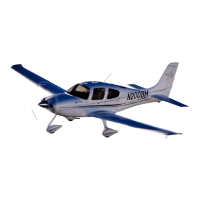
| Manufacturer | Cirrus Aircraft |
|---|---|
| Engine | Continental IO-550-N |
| Power | 310 hp |
| Service Ceiling | 17, 500 ft (5, 300 m) |
| Fuel Capacity | 81 US gal (310 L) |
| Propeller | Hartzell 3-blade constant speed |
| Avionics | Cirrus Perspective+ by Garmin |
| Max Speed | 213 knots (245 mph, 394 km/h) |
| Cruise Speed | 183 knots (211 mph, 339 km/h) |
| Rate of Climb | 1, 270 feet per minute |
| Wingspan | 38 ft 4 in (11.68 m) |
| Length | 26 feet |
| Height | 8 ft 11 in (2.7 m) |
| Max Takeoff Weight | 3, 600 lb (1, 633 kg) |
| Cabin Width | 49 in (124 cm) |
| Stall Speed | 60 knots |
| Seating | 4 |