To Next Page
D
Dr. Brittany Sloan MDSep 12, 2025
What to do during intermittent network outages with Cisco IP Phone?
- CCharlene HowellSep 12, 2025
Contact the system administrator for information on known problems in the voice network.



What to do during intermittent network outages with Cisco IP Phone?
Contact the system administrator for information on known problems in the voice network.
Why Cisco 3905 IP Phone does not recognize DTMF digits?
If the Cisco IP Phone does not recognize DTMF digits or the digits are delayed, keys should not be pressed rapidly; pressing the keys too quickly can result in missed or delayed digits.
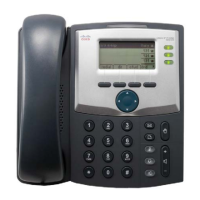
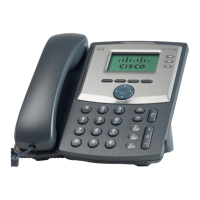
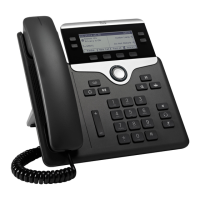
Details the physical buttons and hardware components of the Cisco Unified SIP Phone 3905.
Describes the display elements and information shown on the Cisco Unified SIP Phone 3905 screen.
Explains how to connect the Cisco Unified SIP Phone 3905 to the network.
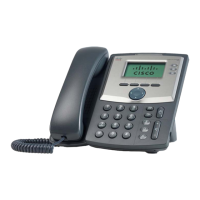
Details the foldable footstand for the Cisco Unified SIP Phone 3905 and its viewing angle adjustment.
Provides instructions on how to safely clean the non-touchscreen display of the Cisco Unified SIP Phone 3905.
Explains how to adjust the handset rest for wall-mounted Cisco Unified SIP Phone 3905 units.
Allows users to view information about the last 50 received, missed, or placed calls on the phone.
Enables users to customize phone settings, such as preferred ringtones and ringer volume.
Provides access to view model information such as MAC address, serial number, and IP address.
Information on accessing and changing administrator settings, requiring contact with the system administrator.
Explains that voice messages are stored on the voicemail system and company determines the system used.
Guides users on how to personalize their voicemail settings by following voice prompts.
Details ways to check for new voice messages, including visual and audible indicators.
Provides instructions on how to listen to voice messages using the phone's interface.
Automatically answers incoming calls after one ring, configured by the system administrator.
Enables automatic answering of calls via speakerphone by keeping the handset in the cradle.
Allows barging into a shared line call automatically if configured.
Forwards all incoming calls to another number, configurable on the phone or via web pages.
Describes the process and confirmation for setting up call forwarding on the phone.
Allows answering calls ringing on a co-worker's phone within a call pickup group.
Procedure to answer a ringing call within your pickup group by transferring it to your phone.
Procedure to answer calls outside your group using a group pickup number.
Notifies users of new incoming calls while already on a call, via tone and screen display.
Instructions on how to answer a waiting call using the Hold/Resume button.
Allows placing calls using billing or tracking codes, including Forced Authorization Codes (FAC).
Procedure to place a call using a Forced Authorization Code (FAC).
Enables talking with multiple parties simultaneously on a call.
Procedure for setting up a conference call with multiple parties.
Allows the conference host to remove a participant from an ongoing conference call.
Enables activating phone features by quickly pressing and releasing the hookswitch button.
Lists features like answering calls and initiating conferences that can be activated using hookflash.
Allows placing an active call into a held state.
Procedure to place an active call on hold and resume it using the Hold/Resume button.
Blocks audio input for the handset and speakerphone, allowing the user to hear but not be heard.
Procedure to turn the mute function on or off using the Mute button.
Allows adding a plus (+) sign for international dialing by holding the '*' key.
Procedure to dial an international number using Plus Dialing.
Allows calling the most recently dialed phone number.
Procedure to redial the last dialed number using the Redial button.
Enables using one phone number for multiple phones and sharing call handling tasks.
Redirects a connected call from your phone to another number or connects two calls.
Procedure to transfer a call to another recipient, optionally waiting for them to answer.
Allows toggling between two calls using Hold/Resume before completing a transfer.
Explains how to use web pages to control phone features, settings, and services.
Provides steps for signing into and out of the Cisco Unified Communications Manager User Options web pages.
Allows making changes to device settings on the phone via the User Options web pages.
Covers settings for specific phone lines, including call forwarding and message indicators.
Step-by-step guide to configure call forwarding settings through User Options web pages.
Procedure to change the visual message waiting indicator settings on the phone.
Procedure to change the audible message waiting indicator settings for voicemail.
Manages PIN, browser password, and language settings for accessing phone features and services.
Instructions to change the password used for accessing User Options web pages.
Procedure to change the Personal Identification Number (PIN) for accessing phone features.
Guides on changing the language (locale) settings for the User Options web pages.
Discusses how power outages and network congestion can affect phone performance and call quality.
Explains the impact of power interruptions on emergency service access and phone functionality.
Details how network degradation affects voice/video quality and can cause call drops.
Overview of cryptographic features and compliance with import/export laws for the product.
Highlights accessibility features provided for vision, hearing, and mobility impaired users.
Details special terms, warranties, and license agreements applicable to the hardware and software.
 General
| Speakerphone | Yes |
|---|---|
| Ethernet Switch | No |
| Handset | Standard |
| Protocol Support | SIP |
| Lines | 1 |
| Headset Port | No |
| Power over Ethernet (PoE) | IEEE 802.3af Class 1 |
| Ethernet Ports | 2 |