
 Need help?
Do you have a question about the CLIVET Q4DN-2-XMi Series and is the answer not in the manual?
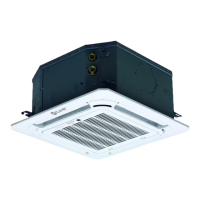
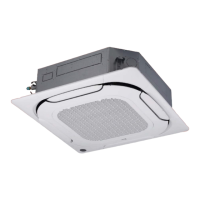
Identifies the product series as 4-WAY CASSETTE unit for VRF systems.
Explains the meaning of various warning and caution symbols used throughout the manual.
Crucial safety guidelines and prohibitions for operating the appliance safely.
Information and regulations concerning the use and handling of fluorinated gases.
Identifies and illustrates the main parts of the indoor unit, such as louvers and grilles.
Lists all supplied and not supplied accessories required for installation and use.
Explains how to identify the indoor unit using the serial number label.
Procedures for checking the appliance upon delivery and reporting any damage or missing parts.
Provides a table detailing the dimensions and weight of different unit models.
Crucial warnings and guidelines to follow before commencing the installation process.
Guidelines for choosing a suitable installation location considering ventilation, access, and safety.
Lists unsuitable locations for installing the indoor unit to prevent damage or hazards.
Specifies minimum clearance requirements around the unit for installation and maintenance.
Information on fitting small ducts for air conditioning adjacent rooms and airflow direction.
Detailed instructions and diagrams for correctly hanging the indoor unit during installation.
Details on supporting the unit from different ceiling types, including wooden structures and concrete slabs.
Instructions for installing anchor rods (M10) for securing the unit, including length determination.
Details on connecting air ducts, airflow volumes, and maximum duct length for different models.
Steps for making wall holes for refrigerant, drainage, and electrical connections, including hole inclination.
Procedures for installing the drainage pipe, ensuring proper slope, insulation, and preventing backflow.
Guidelines for laying out drainage pipes, including slope requirements and connecting multiple units.
Essential safety warnings and general requirements for electrical wiring and connections.
Instructions for connecting the power cable to the indoor unit, including terminal block details and cable types.
Details on cable sizing, power supply voltage, and communication cable types for different models.
Guidelines for using shielded cables for communication wiring to prevent interference and ensure proper operation.
How to wire the communication bus between indoor and outdoor units using a daisy-chain configuration.
Methods for connecting wired controllers to one or multiple indoor units for control.
Specific wiring instructions for a one-way communication mode between the unit and a wired controller.
Step-by-step guide on how to assemble the front panel, including removing and refitting the air intake grille.
How to set the DIP switches on the internal electrical panel for different applications and power settings.
Procedures for setting the network and indoor unit addresses, either automatically or manually.
Detailed explanation of the function of each DIP switch on the main control board for various settings.
List of checks to perform before starting the unit to ensure proper installation and operation.
Steps for operating the unit after installation and performing initial tests to confirm functionality.
Identifies and illustrates the main components of the unit, such as louvers and display LED.
Explains the meaning of the display codes and indicators for normal operation and standby modes.
Details additional functions like automatic restart and how to optimize unit performance.
How to adjust louvers for optimal air distribution in cooling and heating modes using remote control.
Procedures for safely cleaning the indoor unit, including safety warnings and prohibited methods.
Steps for removing, cleaning, and reinserting the air filter to maintain efficiency and prevent damage.
Instructions for preparing the unit for long-term storage, including cleaning and disconnecting power.
Steps for performing maintenance before frequent use, including checks and cleaning.
Identifies common issues, their possible causes, and initial steps to resolve them without professional help.
Detailed list of anomalies, their potential causes, and recommended remedies before contacting service.
Lists specific error codes displayed by the unit and their corresponding possible causes.
Detailed electrical wiring diagrams for the indoor unit, showing component connections.
Official document stating that the product complies with relevant EC directives and standards.
 General
| Brand | CLIVET |
|---|---|
| Model | Q4DN-2-XMi Series |
| Category | Air Conditioner |
| Language | English |


 To Next Page