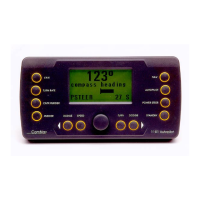
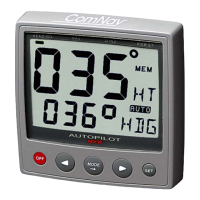
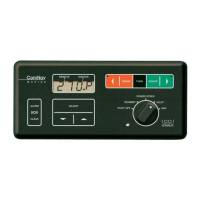
ComNav 2001 Autopilot System
P/N 29010017 V1.0 - 17-
METHOD 2
Mount the compass sensor either above or below
the compass, spaced a minimum of 1 inch (25
millimetres) away from the compass card. Turn
the master select switch on the autopilot to the
STANDBY position. Rotate the sensor until the
reading on the autopilot display matches the
compass reading.
If the reading on the display of the autopilot
decreases when the heading on the compass
isincreasing, turn the sensor over. Rotate the
compass through 360 degrees, comparing
readings every 20 degrees. If the readingsdiffer
by more than +/- 2 degrees (4 degrees total),
remount the sensor a further 1/2 inch (12
millimetres) from the compass, and repeat.
Continue repeating until the accuracy of the
sensor begins to deteriorate. The final mounting
position for the sensor should be the one where
the best accuracy was obtained.
Either method will determine the optimum
distance between the compass and the sensor.
Mounting the sensor above the compass reduces
the possibility of compensating magnets
interfering with the operation of the sensor, but
also reduces the visibility of the compass if it is to
be used as a steering compass.
As a further test, tilt the bowl of the compass so
the card tilts relative to the sensor. The heading
on the display of the autopilot should not change
more than two degrees, with the compass still
indicating the same heading.
If the heading changes more than two degrees, the
magnets on the compass card are not powerful
enough, and the compass is not compatible with
the sensor.
If the accuracy of the compass and sensor
combination cannot be made at least +/- 2
degrees, then the compass is not compatible with
the autopilot sensor. Your dealer can supply a
compass specifically designed for the ComNav
2001 autopilot.


 To Next Page