ComNav 2001 Autopilot System
P/N 29010017 V1.0 - 36-
SEA TRIALS
1. Adjust the external controls to the following
initial settings:
RUDDER '4'
COUNTER RUDDER '0'
YAW '0'
TURN RATE '6'
2. To obtain the maximum rudder gain setting
that can be used on the vessel at that speed and
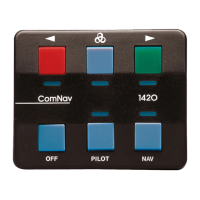
load, in calm water, turn the master select switch
to the PILOT position with the vessel travelling
in a straight line at its normal cruising speed in
calm water.
Make a 40 degree course change using the red or
green ARROW key. Continue making 40 degree
course changes while adjusting the RUDDER
control until the vessel overshoots the correct
course several times before settling onto it.
3. Continue making 40 degree course changes
while slowly increasing the COUNTER
RUDDER setting, until the vessel settles onto
course with only one overshoot of 5 degrees or
less. On some vessels, the RUDDER setting may
have to be decreased by one position to get the
vessel to control properly.
The RUDDER and COUNTER RUDDER
controls are at the maximum combined settings
that can be used on the vessel at that speed, and
under the existing sea conditions.
In general, the RUDDER and COUNTER
RUDDER settings will both need to be increased
as the weather worsens. The higher the
COUNTER RUDDER setting relative to the
RUDDER setting for calm water, the less it will
need to be increased in rough weather.
For example, if the vessel controls well in calm
seas with the RUDDER control set at 4 and a
COUNTER RUDDER setting of 2, both the
RUDDER and COUNTER RUDDER settings
may have to be increased to '5' in rough weather.
If the vessel controls well in calm weather with a
RUDDER setting of '4' and COUNTER
RUDDER setting of '6', the RUDDER setting
may have to be increased to '6' and the
COUNTER RUDDER setting increased only 1
position to '7' as the weather declines.
As the vessel's speed decreases, the rudder
becomes less effective. In general, the RUDDER
and COUNTER RUDDER settings will both
need to be increased as the speed decreases. The
higher the COUNTER RUDDER setting relative
to the RUDDER setting, the less it will need to
be increased at lower speeds.
To find the correct RUDDER and COUNTER
RUDDER settings at different vessel speeds, or
when the vessel is towing, follow the procedures
outlined in sections 2 and 3 above.
Make a record of the different settings needed to
control the vessel at all important speeds, loads,
and weather conditions that it normally
experiences.
The YAW is normally left at '1'. This provides
0.5 degrees of dead band on either side of the
programmed course before the autopilot will
begin to react. On many vessels, setting the YAW
to '0' will cause the autopilot to work harder than
necessary to hold the vessel on course. As the
weather worsens, the YAW setting can be
increased. This will result in slightly worse
steering, but will reduce the amount of rudder
movement, prolonging the life of the steering
system.
4. Once settings for the RUDDER and
COUNTER RUDDER controls have been
determined, make several 40 degree course
changes, and adjust the TURN RATE control
until the vessel makes the course change at a
comfortable rate.
5. If the vessel steers properly under
autopilot control on some headings, but seems to
wander on others, particularly heading either
North or South, the problem most likely lies with
on board magnetic interference to the compass. A
qualified compass adjuster will be required to
reduce or eliminate this interference.
In addition to normal adjustments, the compass
should be compensated for deviation caused by


 To Next Page