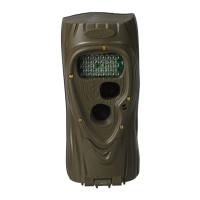
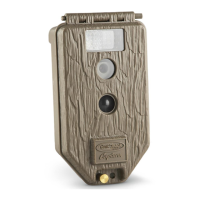
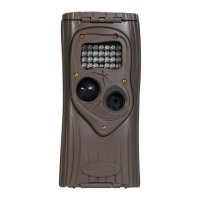
Detection Range
e motion sensor detects the temperature di erence
between the air and the animal. e range at which
an animal will be detected varies with animal size,
movement speed, air temperature and the heat of
the animal.
1. Detection range will be reduced in hot
temperatures (over 26˚C or 80˚F).
2. Animals walking directly toward the camera
may not be detected until they are very close
(within 10 feet) to the camera.
3. Animals with thick hair (such as deer in
winter) will be harder to detect than animals
with a thin summer coat. is can occasionally
result in reduced detection range in winter.
4. e larger the animal, the farther away it can
be detected. For example, a deer may be detected
beyond 50 feet, but a fox may be detected
only up
to 25 feet.
5. A moving animal is detected better than
stationary animals. A small ying bird can
be detected because of the wing movement
and speed.
6. Stationary animals might not be detected.
An animal standing in front of the camera
may stay undetected until it moves.
17


 To Next Page