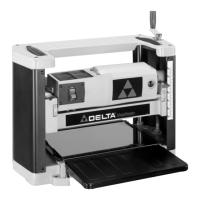
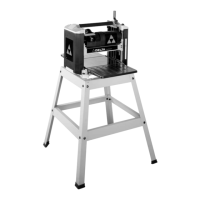
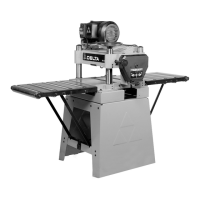
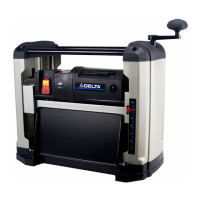
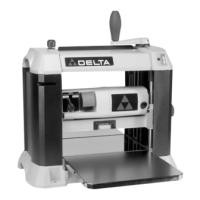
The Delta ShopMaster Model TP300 is a 12-inch portable planer designed for woodworking tasks, offering a range of features to facilitate efficient and precise material processing. Its primary function is to reduce the thickness of wooden workpieces and create flat, smooth surfaces, making it an essential tool for various carpentry and woodworking projects.
Function Description
The planer operates by feeding a workpiece through a cutterhead equipped with two high-speed steel double-edged reversible knives. As the wood passes beneath the rotating cutterhead, a thin layer of material is removed, reducing the workpiece's thickness. The depth of cut is adjustable, allowing users to control the amount of material removed with each pass. This control is managed by raising and lowering the head assembly, which contains the cutterhead, feed rollers, chip deflector, and motor. An English/metric scale and pointer on the side of the planer provide visual guidance for setting the desired height of the cutterhead, ensuring accurate and consistent results.
The machine is designed for ease of use, with a clear "ON/OFF" switch located on the front of the motor for simple operation. For safety and to prevent unauthorized use, the switch can be locked in the "OFF" position by removing the switch toggle. This feature is particularly important when the tool is not in use or when children are present in the workshop.
To ensure optimal performance and prevent uneven wear on the knives, the planer incorporates polyurethane feed rollers that guide the workpiece smoothly through the machine. A chip deflector is also included to manage wood chips and dust generated during planing, directing them away from the work area for a cleaner and safer environment.
Usage Features
The Delta ShopMaster TP300 offers several features that enhance its usability and versatility:
- Adjustable-Folding Table Extensions: The planer is equipped with infeed and outfeed extension tables that can be lowered to provide additional support for longer workpieces. These tables are crucial for maintaining stability and accuracy when planing extended lengths of wood, preventing the workpiece from tipping or bowing. The manual provides instructions for leveling these extension tables to ensure they are flush with the main planer table, which is critical for achieving consistent thickness across the entire length of the board.
- Depth-of-Cut Control: The raising and lowering handle allows for precise adjustment of the cutterhead height. One full revolution of the handle adjusts the cutterhead by approximately 5/64 inches (1.9mm). This fine control enables users to make thin, incremental cuts, which is recommended for achieving the best results and preventing motor strain, especially when working with wider or harder woods. The dual English/Metric scale aids in setting the exact desired thickness.
- Recommended Depth-of-Cut Chart: The manual includes a chart that provides recommended depth-of-cut guidelines based on the width and type of wood (soft or hard). This helps users optimize their planing operations for efficiency and to avoid premature motor failure, which can occur from continuous operation at excessive cutting depths.
- Workpiece Support: The importance of adequately supporting the workpiece at all times is emphasized. For long workpieces, the extension tables should be utilized to support both the infeed and outfeed ends at table height. This prevents the workpiece from twisting, warping, or bowing during the planing process, ensuring a flat and consistent finish.
- Planing Techniques: The manual outlines a recommended sequence for planing to achieve the best results:
- True Up One Face: Start by feeding one face of the board over a jointer (if available) to create a perfectly flat surface.
- Plane to Thickness: Place the surfaced side face down and feed the board through the planer, alternating sides with thin cuts until the desired thickness is achieved and both sides are flat. If the board twists or warps, repeat the "true up one face" step.
- Cross-cut to Final Length: Once planing is complete, cross-cut the lumber to its final length.
- Preventing Uneven Knife Wear: A crucial usage tip is to feed wood through different spots on the table whenever possible. This practice helps distribute the wear across the entire length of the planer knives, prolonging their sharpness and overall lifespan.
- Power Cord Storage: Wire hangers are conveniently located on the underside of the infeed extension table for storing the power cord when the planer is not in use or during transport. This keeps the cord tidy and prevents it from becoming a tripping hazard or getting damaged.
- Portability: The planer is designed with two lifting straps on its top surface, making it easier to transport the machine. This enhances its portability, allowing users to move it between different workstations or job sites with greater ease.
Maintenance Features
Regular maintenance is crucial for the longevity and optimal performance of the Delta ShopMaster TP300. The manual provides clear instructions for key maintenance tasks:
- Knife Inspection and Adjustment: The knives are a critical component, and the manual provides detailed steps for checking and adjusting them. This involves using a knife setting gauge to ensure the knives are correctly positioned in the cutterhead. The dual-edged design means that when one side becomes dull, the knives can be flipped over and reset, extending their useful life. The process involves loosening locking screws, carefully positioning the knife with the gauge, and then retightening the screws.
- Knife Replacement and Resetting: When both edges of the knives are dull or damaged, they need to be replaced. The manual guides users through the process of carefully removing the old knives, knife locking bars, and springs, cleaning the knife slots, and then installing new springs, knives, and locking bars. Extreme caution is advised due to the sharpness of the knives. It emphasizes the correct orientation of the knife locking bars and the proper tightening sequence for the screws to secure the knives in place.
- Brush Inspection and Replacement: The motor brushes are subject to wear and require periodic inspection. The manual recommends checking the brushes after the first 50 hours of use for a new machine or a new set of brushes, and then every 10 hours thereafter until replacement is necessary. Users are instructed on how to remove the brushes for inspection and to replace both brushes if the carbon is worn to 3/16" in length or if the spring or shunt wire is damaged.
- Lubrication: Proper lubrication ensures smooth operation of the gears and feed rollers. The manual specifies applying a light coat of E.P. multi-purpose grease on the teeth of the large gear in the gear box and a light coat of spray lubricant on the chains. Additionally, oil should be squirted onto the feed roller bushings at each end of the feed rollers. These steps help reduce friction and wear on moving parts.
- Cleaning: The manual advises cleaning the cutterhead and removing any protective coating with a soft cloth moistened with kerosene. It also recommends keeping the planer table clean and occasionally waxing its surface to reduce friction during planing operations. This helps ensure smooth feeding of workpieces and prevents buildup of debris.
- Pre-Operation Checks: Before each use, users are reminded to check for damaged parts, ensure guards are in place, and verify that all adjusting keys and wrenches have been removed from the tool. This proactive approach to maintenance and safety helps prevent accidents and ensures the machine is in optimal working condition.

 Need help?
 General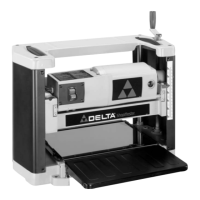

 To Next Page