27
DEPA
®
Air Operated Diaphragm Pumps
PTFEvalveseats(exceptseriesPMand
DL15-FA/SA) are generally delivered
with 2 O-rings. In order to guarantee leak
tightness of the pump these O-rings
must be replaced after each disassem-
bly of the inlet and outlet ports.
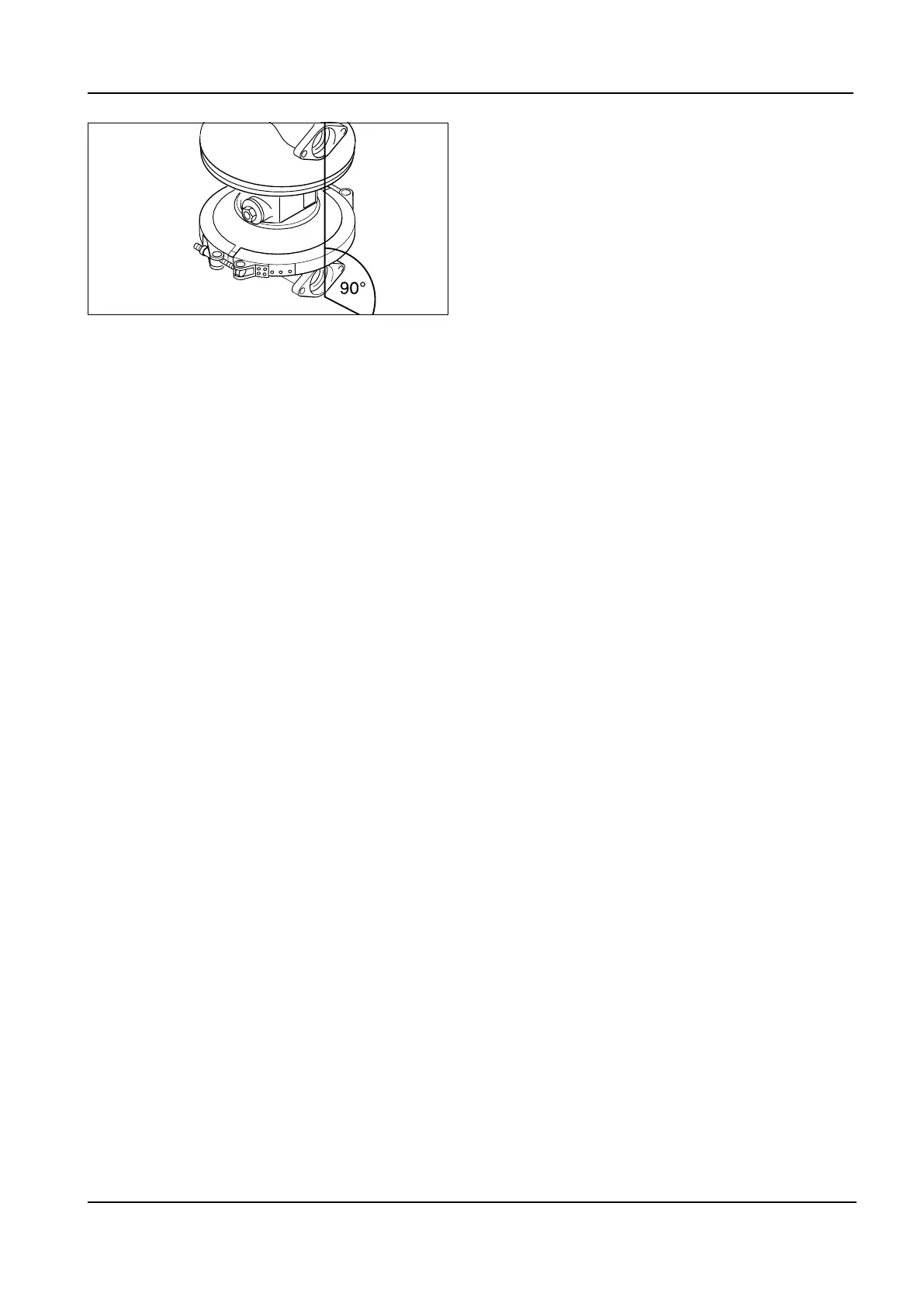
Fig. 7: Alignment of pump chambers
NRS marked yellow
NBR
marked red
EPDM
marked blue
FKM(Viton
®
) marked white
PTFE(polytetrauorethylene)notmarked
Thespeciedcolourmarksonlyapplyfor
valve balls and valve seats. The diaphragms
are marked by corresponding characters.
Before installing a new set of diaphragms,
valve seats and valve balls make sure that
the available material is suitable for the
intended use (see compatibility list).
If the defective parts in the pump have not
been damaged by normal mechanical wear,
but show signs of chemical attack, you
shoulduseadierentmaterial.
5.3.1.2 Replacement of elastomer
components
■ Loosen the screws and disassemble
pressure and suction sockets (Fig. 8).
■
Loosen the ball lifter (optional accessory)
■ Loosen the clamp bands (to avoid siz-
ing of high-grade steel nuts and bolts, if
necessary apply some oil) (Fig. 9).
On the polished high-grade steel ver-
sions (DB, DH) unscrew the milk pipe
tting.
■
Remove the pump chambers.
■ Loosen the outer diaphragm plate and
takeitowiththediaphragm(Fig.10).
On plastic pumps turn on the plastic cap
rst(fromDL25).
■ With compound diaphragms, the dia-
phragm is unscrewed by hand directly
out of the plunger.
■
Pull the piston rod with the second
diaphragm out of the central block and
disassemble the second diaphragm as
described before (Fig. 11).
5.3.1.3 Replacement of the PTFE
diaphragm
Proceed as follows to replace PTFE dia-
phragms:
■Pumps DL 40, 50 and 80 with PTFE
diaphragms have thicker internal dia-
phragm plates to reduce and displace
the stroke. For subsequent conversion
to PTFE diaphragm, the corresponding
plates must be used (Fig.13).
■
PTFE diaphragms are generally deliv-
ered with a EPDM back diaphragm. This
must be mounted on the air side.
■
Assembly of the pump chamber: As-
semblyofdiaphragm,xationbyfas-
tening the outer diaphragm plate acc.
topage45“Tighteningtorques”.The
pump chambers must generally be as-
sembled with the diaphragm in suction
position (Press diaphragm plate into air
chamber) (Fig. 15). Fasten clamp band
ormountingange.Assemblethesec-
ond diaphragm in the same way. The
angefaceofthepumphousingmust
be in line (Fig. 7).
■
Assembly of PTFE valve seats:



 To Next Page