Need help?
Do you have a question about the Digital Watchdog VMAX480 and is the answer not in the manual?
Guidelines for setting up the DVR in a suitable environment, avoiding dust, humidity, and extreme temperatures.
Details on FCC and UL compliance statements for the digital video recorder.
List of items included with the DVR package, including manuals, cables, and accessories.
Recommendations for DVR installation in racks or on flat surfaces, emphasizing ventilation.
Steps for powering on the DVR, boot-up process, and initial user login.
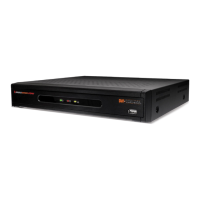
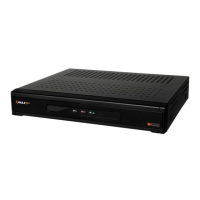
Detailed explanation of each button on the DVR's front panel and their functions.
Description of Video-In, Audio-In, and Audio-Out ports on the rear panel.
Details on USB, LAN, and Power Input ports located on the rear of the DVR.
Information on HDMI, MIC input, and Loop Out ports on the DVR's rear panel.
Explanation of the buttons and features available on the IR remote controller.
Step-by-step guide for logging into the DVR system with user credentials.
How to switch between different camera view modes (1, 4, 9, 16, PIP).
How to search for recorded video footage using date and time.
Overview of the main setting categories: System, Device, Record, Network, Backup, Quick Setup.
Configuration of Date/Time, VGA Resolution, Language, IP Address, and other system info.
Methods for upgrading the DVR firmware using USB or FTP server.
Adjusting display timeouts, intervals, and screen transparency settings.
Creating and managing user accounts with different authorization levels.
Saving and loading DVR system settings to/from USB memory devices.
Information on HDD status, capacity, and management options.
Performing a health check on the DVR's hard drive.
Steps to restore the DVR to its original factory default settings.
Configuring camera titles, brightness, contrast, color, sensitivity, and motion areas.
Managing audio input/output channels and volume control for the DVR.
Setting up and configuring external sensor inputs for alarm triggers.
Configuring motion detection parameters for triggering alarms and recording.
Setting up additional alarms, such as HDD usage alerts and video loss notifications.
Configuring PTZ camera protocols, addresses, and baud rates for remote control.
Detailed setup for resolution, FPS, quality, pre/post-alarm, and recording types.
Optimizing network stream parameters like resolution, FPS, and quality.
Configuring settings specifically for emergency or panic recording situations.
Setting up time-based schedules for recording events across different days.
Assigning unique recording schedules for specific holidays.
Configuring IP address, subnet mask, gateway, and DNS server details.
Setting up Dynamic DNS services for remote access to the DVR.
Configuring remote and email notifications for system alarms and events.
Step-by-step guide for backing up recorded video clips to external storage.
Instructions on using the Advance Client Software (ACS) backup player.
Steps to access and log into the DVR's web interface.
Introduction to the various settings available through the web interface.
Minimum and recommended PC specifications for installing and running ACS software.
Step-by-step guide for installing the Advance Client Software (ACS) on a computer.
Instructions for removing the Advance Client Software (ACS) from the system.
Fundamental operations and features of the ACS client software.
How to log in to the ACS software as an administrator.
Explanation of the main interface elements and panels within the ACS software.
Description of the functions available on the ACS software toolbar.
Managing registered DVR sites and establishing connections within ACS.
Controlling PTZ cameras remotely using the ACS software interface.
Using the calendar interface within ACS to select dates for video search.
How to use the search panel in ACS to find and play recorded video.
Configuring how camera channels are displayed within the ACS software.
Viewing and managing event logs from the DVR within the ACS software.
Performing advanced searches for specific events within the ACS software.
Executing remote backups of DVR data using the ACS software.
Upgrading the DVR firmware remotely via the ACS client software.
Process for registering DVR sites within the ACS client software.
Adding, editing, or removing ACS users and their authorities.
Configuring display options such as OSD and time format synchronization.
Setting up event monitoring and notification parameters within ACS.
Miscellaneous configurations for ACS, including recording directory and language.
Recommended and minimum system requirements for Mac ACS software.
Step-by-step instructions for installing the ACS client software on macOS.
Fundamental operations and interface overview of the Mac ACS client software.
Explanation of the main interface components of the Mac ACS software.
Description of the toolbar buttons and their functions in Mac ACS.
Managing DVR sites and connections using the site list panel in Mac ACS.
Controlling PTZ cameras via the PTZ panel in the Mac ACS software.
Using the calendar panel in Mac ACS for date and time-based video searches.
Utilizing the search panel in Mac ACS to locate and play recorded video.
Registering, modifying, or removing DVR site information in Mac ACS.
Guide for installing the DW VMAX application on an iPhone.
Instructions for installing the DW VMAX application on an Android device.
Steps for installing the Mobile ACS application on a Blackberry device.
 General
| Operating System | Embedded Linux |
|---|---|
| Remote Viewing | Yes |
| Compression Format | H.264 |
| Network Interface | 10/100/1000 Mbps Ethernet |
| Operating Temperature | 0°C to 40°C |

 To Next Page