Need help?
Do you have a question about the Doogee S88Pro and is the answer not in the manual?
Identifies energy source types, sub-assemblies, and circuits for electrical injury classification.
Classifies power sources (PS) and potential ignition sources (PIS) related to fire hazards.
Classifies thermal energy sources based on surface, location, temperature, and contact time.
Identifies radiation types present and their corresponding energy source classification.
Details safeguards for preventing electrically-caused injury based on energy sources.
Outlines safeguards to prevent fire hazards from internal combustible materials.
Describes safeguards against injury from hazardous substances, including battery compliance.
Details safeguards for preventing injury from mechanical energy sources like sharp edges.
Covers acceptance criteria for materials, components, and subassemblies used in the equipment.
Ensures equipment design and construction meet safety standards and robustness requirements.
Details various tests like steady force, drop, impact, and glass impact for safeguard robustness.
Addresses safety aspects for products containing batteries, including instructional safeguards.
Classifies electrical energy sources based on voltage, current, and potential hazards.
Details requirements for accessible parts, contact requirements, and insulation.
Specifies requirements for insulating materials, clearances, creepage distances, and dielectric strength.
Covers requirements for protective conductors, bonding, terminals, and earthing reliability.
Classifies power sources (PS) and potential ignition sources (PIS) for fire safety.
Details safeguards against fire under single fault conditions, including fire enclosures.
Covers requirements for internal/external wiring and safeguards against fire due to connections.
Focuses on reducing exposure to hazardous substances like ozone and battery safety.
Details safeguards against injury from mechanical sources like sharp edges and moving parts.
Covers stability tests, impact tests, drop tests, and stress relief for mechanical integrity.
Details requirements and safeguards against thermal energy sources and burn injuries.
Covers classification and safeguards for various radiation types including laser and UV.
Addresses protection against acoustic energy sources, particularly for listening devices.
Evaluates equipment performance and safety under simulated single fault conditions.
Tests the UV resistance of materials and equipment components.
Specifies requirements for equipment markings, symbols, and user instructions.
Covers protection devices like thermal cut-offs, links, and their testing requirements.
Details tests for wound components, transformers, and motors including insulation and overload.
Specifies requirements for mains cords, strain relief, varistors, and IC current limiters.
Covers testing for printed boards, cemented joints, and liquid-filled components.
Details safety requirements for batteries, protection circuits, charging, and discharge.
Focuses on additional safeguards and endurance testing for secondary lithium batteries.
Covers electrochemical potentials and measurements of creepage distances and clearances.
Evaluates flammability of fire enclosures and barrier materials under specific conditions.
Covers various mechanical tests including steady force, impact, drop, and stress relief.
Details requirements for CRT protection against implosion effects.
Highlights specific requirements and differences for Denmark related to safety standards.
Covers common modifications and differences across European groups for safety requirements.
Details special national conditions and differences applicable to specific countries.
Lists critical components, their manufacturers, models, technical data, and standards.
Details mechanical tests for lithium coin/button cell batteries, including drop and crush tests.
Covers thermal requirements, electric strength tests, and capacitor discharge.
Classifies electrical energy sources based on steady state voltage, current, and pulses.
Details safety requirements and classification for high pressure lamps.
Covers abnormal operating conditions, fault conditions, and input tests for safety.
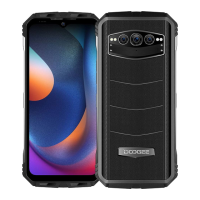
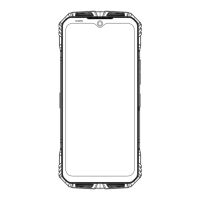
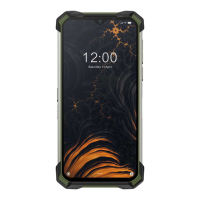
Shows the external appearance of the product and its accessories, including charger and cable.
Provides images of the internal components of the product, showing PCB and battery layout.
 General
| Processor | MediaTek Helio P70 |
|---|---|
| RAM | 8 GB |
| Storage | 128 GB |
| Front Camera | 16 MP |
| Operating System | Android 10 |
| Dimensions | 171.6 x 85.5 x 18.7 mm |
| Weight | 372 g |
| SIM | Dual SIM (Nano-SIM, dual stand-by) |
| Wireless Charging | No |
| Fast Charging | Yes, 24W |
| NFC | Yes |
| Face Unlock | Yes |
| Display | 6.3 inches, IPS LCD |
| Rear Camera | 8MP |
| Battery | 10000mAh |
| Protection | IP68, IP69K |
| Colors | Black, Orange |
| Network | 2G, 3G, 4G |
| Fingerprint Sensor | Yes |

 To Next Page