16 CA 251/301 M251EN2
Battery cell
Battery - Checking the
electrolyte level
EVERY 50 HOURS OF OPERATION (Weekly)
1
2
3
Fig. 22 Electrolyte level in battery
1. Cell cap
2. Electrolyte level
3. Plate
Never use a naked flame when checking
the battery. The electrolyte emits explosive
gas while the alternator is charging.
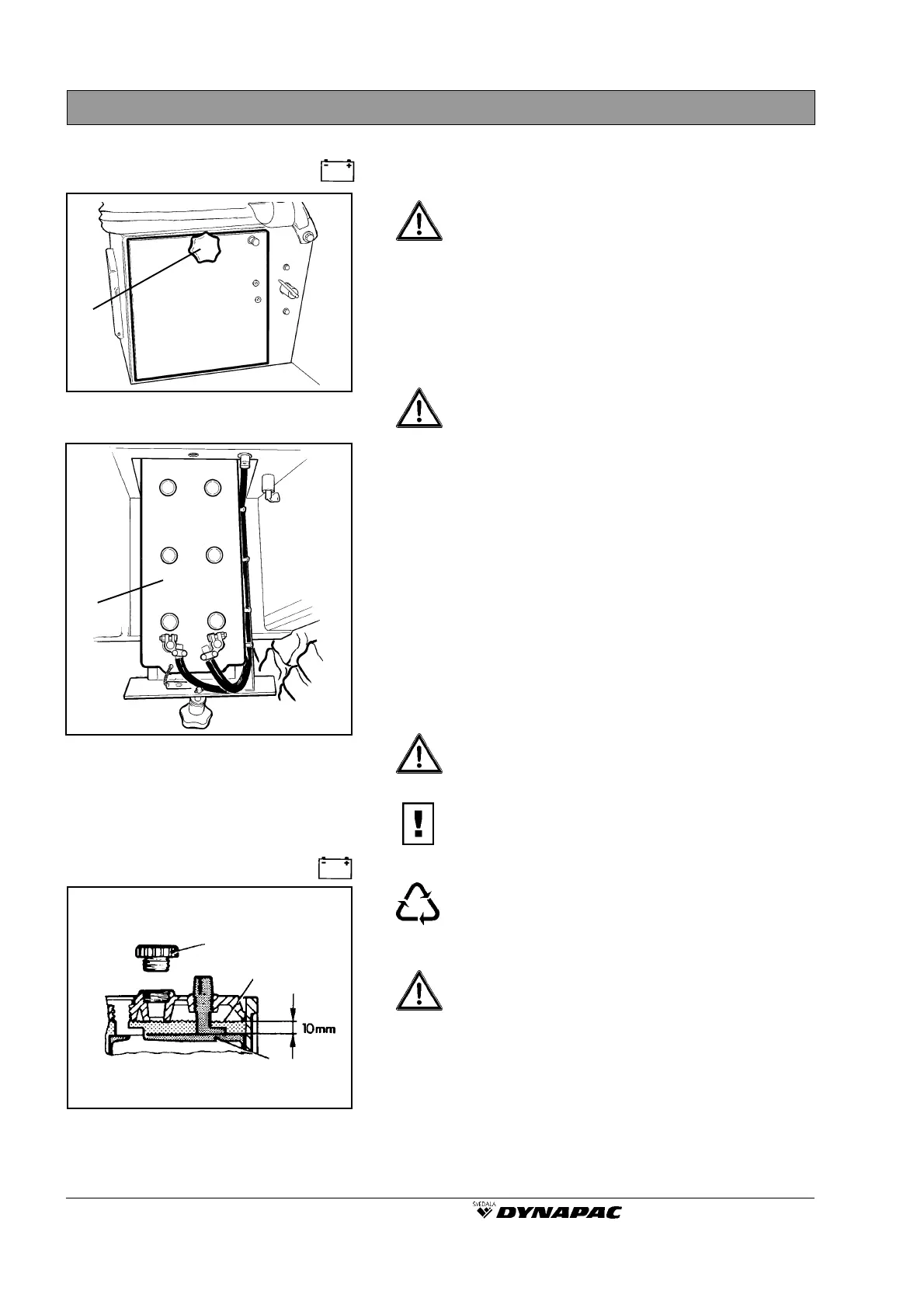
1. Turn the knob (1).
2. Pull out the battery shelf.
3. Wipe the top of the battery.
Wear protective goggles. The battery
contains corrosive acid. Flush with water
in the event of contact with the skin.
3. Take off the cell caps and check that electrolyte
level is about 10 mm (0.4") above the plates. Check
the level of all cells, and top up with distilled water
as required to the correct level. If ambient tempera-
ture is below zero, the engine should be run for a
while after topping up with distilled water, ie, there is
otherwise a risk that the battery fluid will freeze.
4. Make sure the venting holes in the cell caps are not
clogged. Refit the caps.
5. Battery terminals must be clean and well tightened.
Clean the terminals if corroded and grease them
with acid-free Vaseline.
Always ensure that the battery box is
closed and latched when driving.
When removing the battery, always
disconnect the negative cable first.
When fitting the battery, always connect the
positive cable first.
Take care of the battery after changing. The
battery contains lead which contaminates
the environment unless it is treated properly.
Before doing any electric welding on the
machine, disconnect the ground cable of
the battery and then disconnect all electric
connections to the alternator.
Fig. 20 Battery shelf
1. Knob
WARNING
WARNING
1
1
Fig. 21 Battery shelf
1. Knob
WARNING
CAUTION
WARNING



 To Next Page