REV. 09/2022
4G
1.2.4 Temperature
Rated temperature of electrolyte is 30 °C.
If the temperature is too high, it will reduce the service life of the battery; too low may reduce the
battery capacity.
When the temperature reaches the limit temperature of 55 ° C, it is prohibited to run the battery.
1.3.1 Daily Maintenance
1.3 Maintenance & Care
Charge the discharged battery;
Visual inspection for excessive dirtiness and mechanical damage after the charging.
1.3.2 Weekly Maintenance
Control the electrolyte fluid level. Check the electrolyte fluid level when the charging is about
to complete. If necessary, add distilled water into the electrolyte when the charging is about to
complete to make the uid level reach the rated standard.
Lower uid level may reduce the battery capacity, and thus reduce the service life of battery.
Higher liquid level may lead to electrolyte overflow when charging, which may cause
corrosion to the battery compartment or even the vehicle.
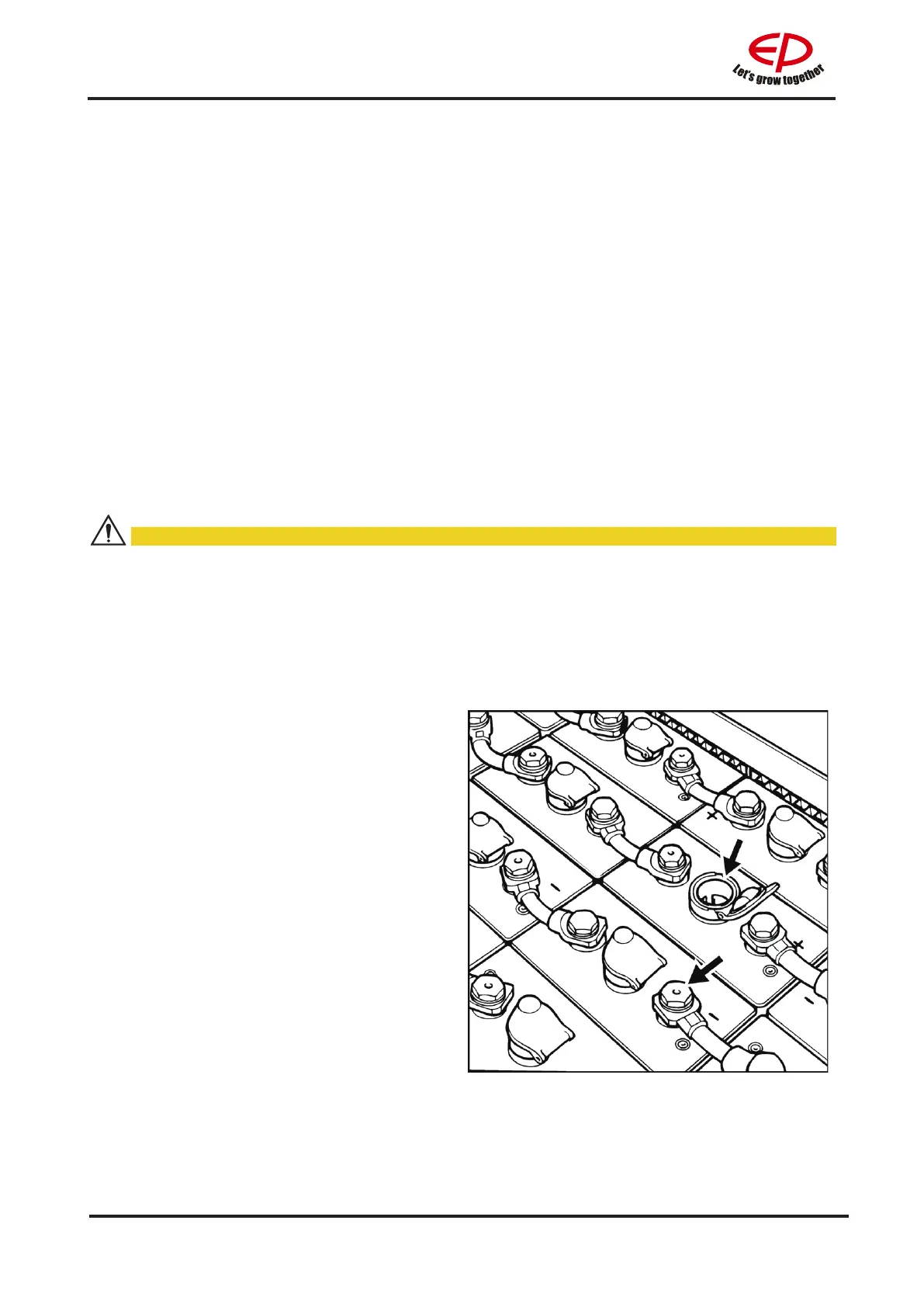
Checking the battery condition,
electrolyte level and specic gravity
Inspect battery for cracks, raised plates and
electrolyte leaks.
Unscrew the battery cover and check the
electrolyte level.
If the battery has an inspection tube, then the
electrolyte level should be at the base of the
tube. If there is no inspection pipe, then the
electrolyte level should be 10-15 mm higher
than the plate.
If the electrolyte level is excessively low, it can
only be lled up with distilled water.
Remove any sediment from the electrodes and
lubricate with non-acidic lubricating grease.
Retighten the electrode holder.
Use a hydrometer to check the electrolytes.
The specic gravity should be
between1.24-1.28.
•
•
•
•
•
•
•
CAUTION


 To Next Page