EasyManua.ls Logo

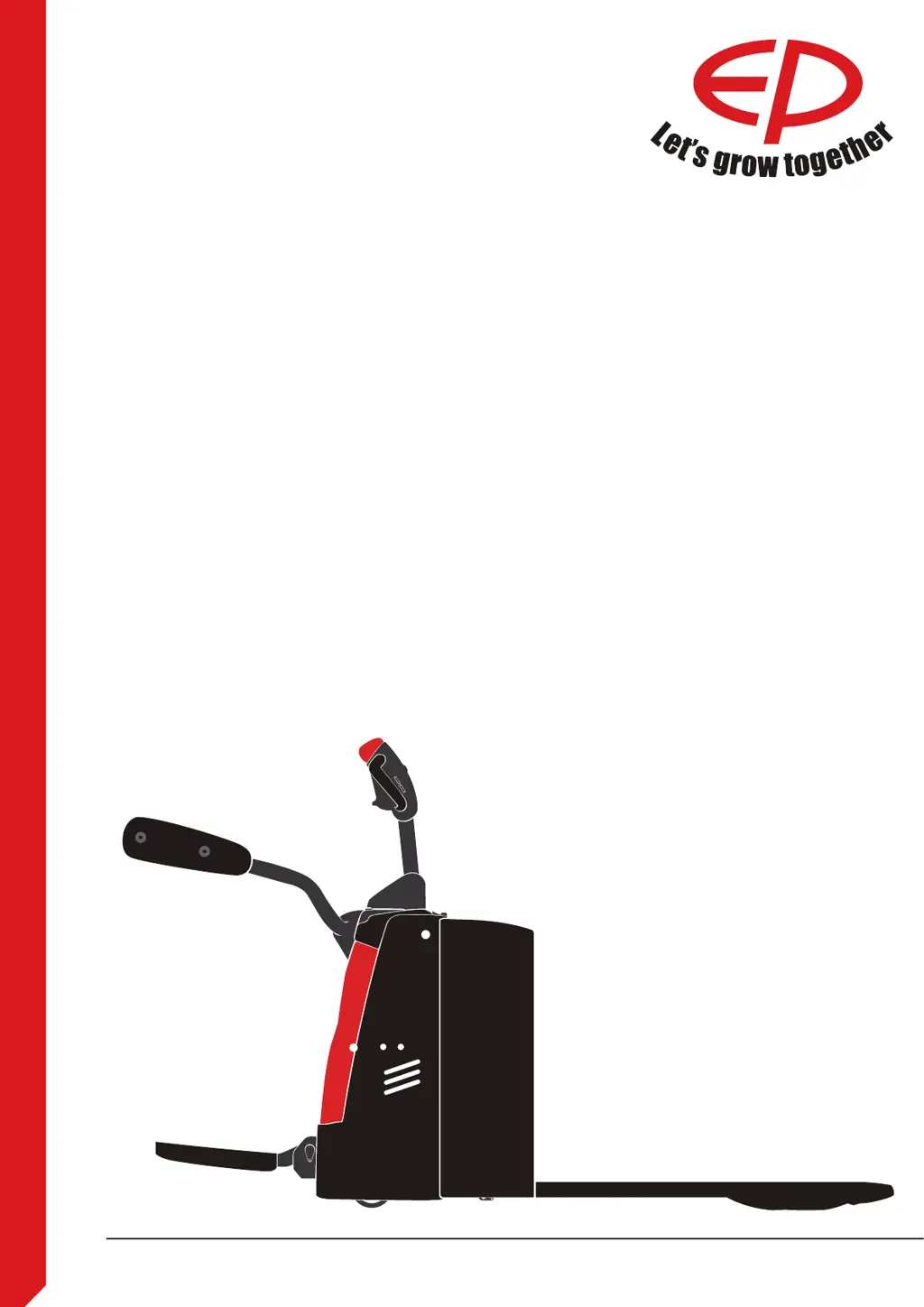
ep RPL201 - User Manual

ep RPL201
73 pages
Print Icon
To Next Page IconTo Next Page
Loading...
Part No.508000004501
V2 10/2022
Operation Manual
RPL301
RPL251
RPL201
RPL201H
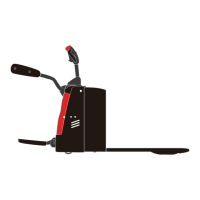
Electric pallet trcuk

Questions and Answers

  • M
    Michael LucasAug 7, 2025
    How to troubleshoot why my ep Truck does not start?
    • S
      Susan ColemanAug 8, 2025
      If your ep Truck doesn't start, there could be several reasons. First, check the battery connector to ensure it's properly plugged in. Also, make sure the key switch is in the “I” position, not “0”. Verify the CanCode code is correct and that the battery has sufficient charge. Inspect the fuses and ensure the truck is not in charge mode. If the battery connector is not plugged, connect it.
  • C
    Christopher ReyesAug 16, 2025
    What to do if the load cannot be lifted on my ep Truck?
    • J
      Julie CruzAug 16, 2025
      If the load cannot be lifted on your ep Truck, it might be due to several reasons. Ensure the charging capacity is above 15. If it's not, charge the battery. Also, make sure the truck is operational. Check the hydraulic oil level and inspect the fuses. Refer to the troubleshooting steps for 'Truck does not start' to ensure the truck is operational.
  • J
    Jason MyersAug 22, 2025
    What to do if my EP Forklifts truck does not start?
    • D
      Daniel ParkerAug 22, 2025
      If your EP Forklifts truck doesn't start, there are several potential causes: * The battery connector might not be plugged in. Ensure it is securely connected. * The key switch may be in the “0” position. Set it to “I”. * The CanCode code could be incorrect. Verify the code. * The battery charge might be too low. Check the charge level and charge if needed. * A fuse could be faulty. Inspect the fuses. * The truck may be in charge mode. Interrupt the charging process.
  • A
    Alexander WalshAug 30, 2025
    Why my EP Forklifts load cannot be lifted?
    • K
      Katherine PatelAug 30, 2025
      If the load cannot be lifted by your EP Forklifts truck, consider these possibilities: * The charging capacity may be below 15. Charge the battery. * The truck might not be operational. Perform all the checks listed under “Truck does not start.” * The hydraulic oil level could be too low. Check and replenish the hydraulic oil level. * A fuse might be faulty. Check the fuses.
  • С
    СергейMar 29, 2026
    Где найти коды ошибок, или пояснение на фото

    Summary

    Manual Introduction and Safety

    Explanations on the Manual

    Explains potential differences between manual and actual product.

    Safety Signs Explained

    Explains DANGER, WARNING, CAUTION, NOTE symbols.

    Intended Use and Truck Description

    Intended Use Guidelines

    Specifies intended applications and relevant regulations.

    Technical Description of the Truck

    Details truck construction, braking, lifting, and control handle.

    User Responsibilities and Modifications

    Equipment User Obligations

    Defines user responsibilities for safety and operation.

    Modification Restrictions

    Outlines prohibitions and strict conditions for truck modification.

    Wind Load Considerations

    Advises on wind impact on stability and load handling.

    Conformity and Legal Requirements

    CE and UKCA Markings

    Explains conformity markings for EU and UK market compliance.

    Declaration of Conformity

    Declares truck conformity with EU and UK directives and regulations.

    Nameplates and Alarming Labels

    Identification Labels and Symbols

    Displays truck ID labels and safety symbols like pinch warnings.

    Truck Nameplate Details

    Details the information provided on the truck's main nameplate.

    Lithium-ion Battery Nameplate

    Explains the information found on the lithium-ion battery nameplate.

    Operation Safety and Conditions

    Utilization Safety Specifications

    Covers ambient temperature, rainwater use, EN standards, and EMC.

    Improper Use Guidelines

    Details incorrect truck usage and related warnings.

    EN Standards and EMC

    Covers sound level standards and electromagnetic compatibility (EMC).

    Conditions for Application

    Specifies required working conditions and application guidelines.

    Truck Stability

    Lists reasons for stability loss and how to maintain it.

    Truck Overview and Controls

    Component Identification

    Identifies and labels the main components of the electric pallet truck.

    Control Handle and Key Switch

    Explains control handle functions and key switch operation.

    Display Instrument Interpretation

    Explains startup display and operational indicators on the instrument panel.

    Truck Use and Operation

    Preparation for Use: Daily Checklist

    Provides a checklist for daily pre-operation inspections by operators.

    Commissioning and Wheel Flattening

    Details commissioning steps and addresses wheel flattening after parking.

    Truck Starting Procedure

    Step-by-step instructions on how to start the electric pallet truck.

    Running, Steering, and Braking

    Running Modes and Controls

    Details pedestrian vs. stand-on modes and platform folding.

    Steering and Braking Systems

    Explains steering, mechanical operating brake, and reverse braking.

    Advanced Braking and Safety Switches

    Explains regenerative braking, emergency reverse, and stop switches.

    Goods Handling and Parking

    Lifting and Lowering Operations

    Details lifting and lowering pallet forks using control buttons.

    Secure Parking Procedures

    Steps for safely parking the truck, lowering forks, and powering off.

    Driving and Slope Operations

    Forward and Reverse Movement

    Explains how to control the truck's forward and reverse drive directions.

    Pallet Loading and Transport

    Guides on approaching, inserting forks, adjusting height, and transport.

    Unloading Operations

    Details driving to location and lowering load to unload.

    Ascending, Descending, and Starting on Slopes

    Guidelines for ascending, descending, and starting on slopes safely.

    Truck Transportation and Manual Movement

    Secure Transport and Tie-down

    Instructions on securing the truck with blocks, ropes, or straps for transport.

    Moving a Failed Truck

    Steps for moving a truck that has become immobile due to failure.

    Lithium-Ion Battery Information

    Battery Conformity and Handling Guidelines

    Declares conformity and lists essential handling guidelines.

    Intended Use, Misuse, and Accessories

    Defines limits, misuse scenarios, approved accessories, and BMS function.

    Lithium-ion Battery Safety Warnings

    Safety instructions on handling, PPE, and electrical hazards.

    Handling Faulty or Discarded Batteries

    Guidelines for monitoring, temporary storage, and disposal of damaged batteries.

    Lithium-ion Battery Transportation

    Regulations and precautions for transporting lithium-ion batteries, including labeling.

    Battery Recycling and Disposal

    Outlines requirements for recycling and proper disposal of lithium-ion batteries.

    Battery Charging and Storage

    Details charging procedures, temperature ranges, and storage recommendations.

    Common Lithium-ion Battery Problems

    Lists common battery issues and their solutions.

    Battery Cleaning and Life Optimization

    Recommends cleaning methods and using BMS to optimize battery life.

    Lead-Acid Battery Information

    Lead-Acid Battery Safety and Warnings

    Covers safety, electrolyte hazards, hydrogen production, and warnings.

    Battery Pre-Use Checks, Discharging, and Charging

    Details checks, discharge precautions, and charging procedures.

    Battery Temperature and Maintenance

    Discusses temperature effects, daily charging checks, and weekly electrolyte checks.

    Monthly Maintenance and Normal Battery Status

    Outlines monthly checks and how to identify normal battery status.

    Battery Care and Storage

    Provides instructions for cleaning, insulation checks, and storing batteries.

    Lead-Acid Battery Fault Analysis

    Battery Charge and Electrolyte Faults

    Analyzes faults for charge issues and improper electrolyte addition.

    Electrode, Shedding, Overcharging & Discharge Faults

    Covers sulfation, shedding, overcharging, and discharge faults with causes/solutions.

    Circuit, Electrode, and Leakage Faults

    Addresses short circuits, reverse electrodes, and battery leaks with remedies.

    ep RPL201 Specifications

    General IconGeneral
    Brandep
    ModelRPL201
    CategoryTrucks
    LanguageEnglish

    Related product manuals