209173 RCD-2
Index A
151
2) Use of toilets
- Every time the toilets are used, flush afterwards with copious amounts of water in the bowl using the toilet pump (manual
or electric).
- When you are leaving the boat for several days, flush with fresh water. You may wish to use the shower in the head for
this purpose. Seawater allowed to stagnate in the bowl gives off bad odours.
3) Maintenance of blackwater tank
- The risk of unpleasant odours forming increases when the waste water remains in the tank for a long time.
- Whenever possible empty the tank regularly, even before it is full.
- Every time the tank is emptied put in about 5 litres of fresh water and add an appropriate detergent additive (available
from chandleries). A very simple method is to add soda salts, which clean and disinfect at the same time.
- Before winterising, flush the tank with copious amounts of fresh water filling it through the 'WASTE' deck connection.
Leave at least 5 litres of fresh water mixed with a detergent additive.
- Disinfecting: Disinfect the tank once a year by filling it with a solution of Javel water (1 to 1000).
4) Using the drainage valve
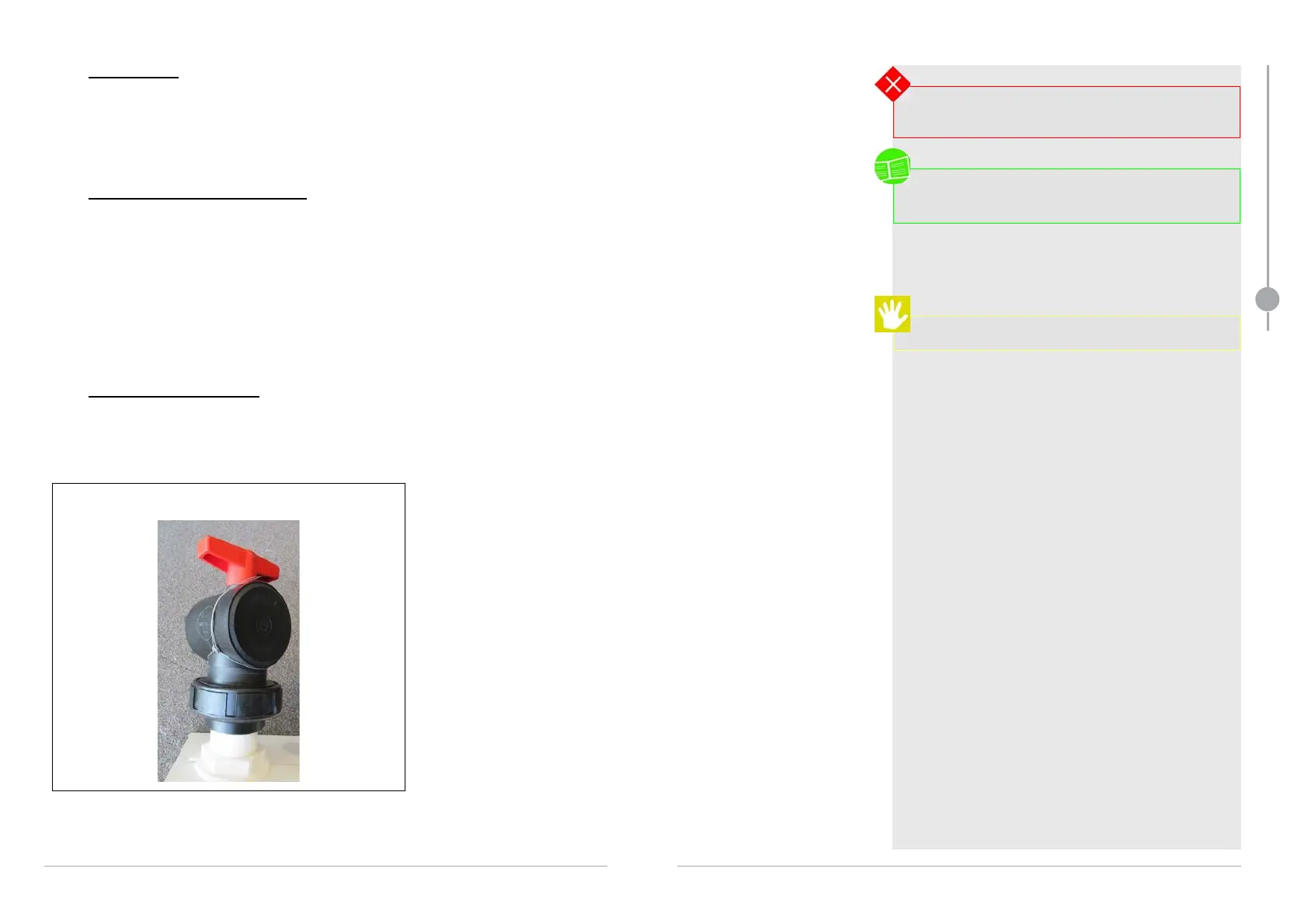
- The direct-to-sea drainage valve can be sealed by means of the drilled hole on the handle.
- To lock the drainage valve in the closed position: Pass the tightening collar around the drainage valve and feed through
the hole in the handle as shown.
Blackwater tank drainage valve (to sea)
Never use automobile anti-freeze in the
blackwater system: risk of poisoning.
Respect local regulations regarding the
emptying of blackwater tanks.
- Beware of any unintentional draining.
Water systems
13



 To Next Page