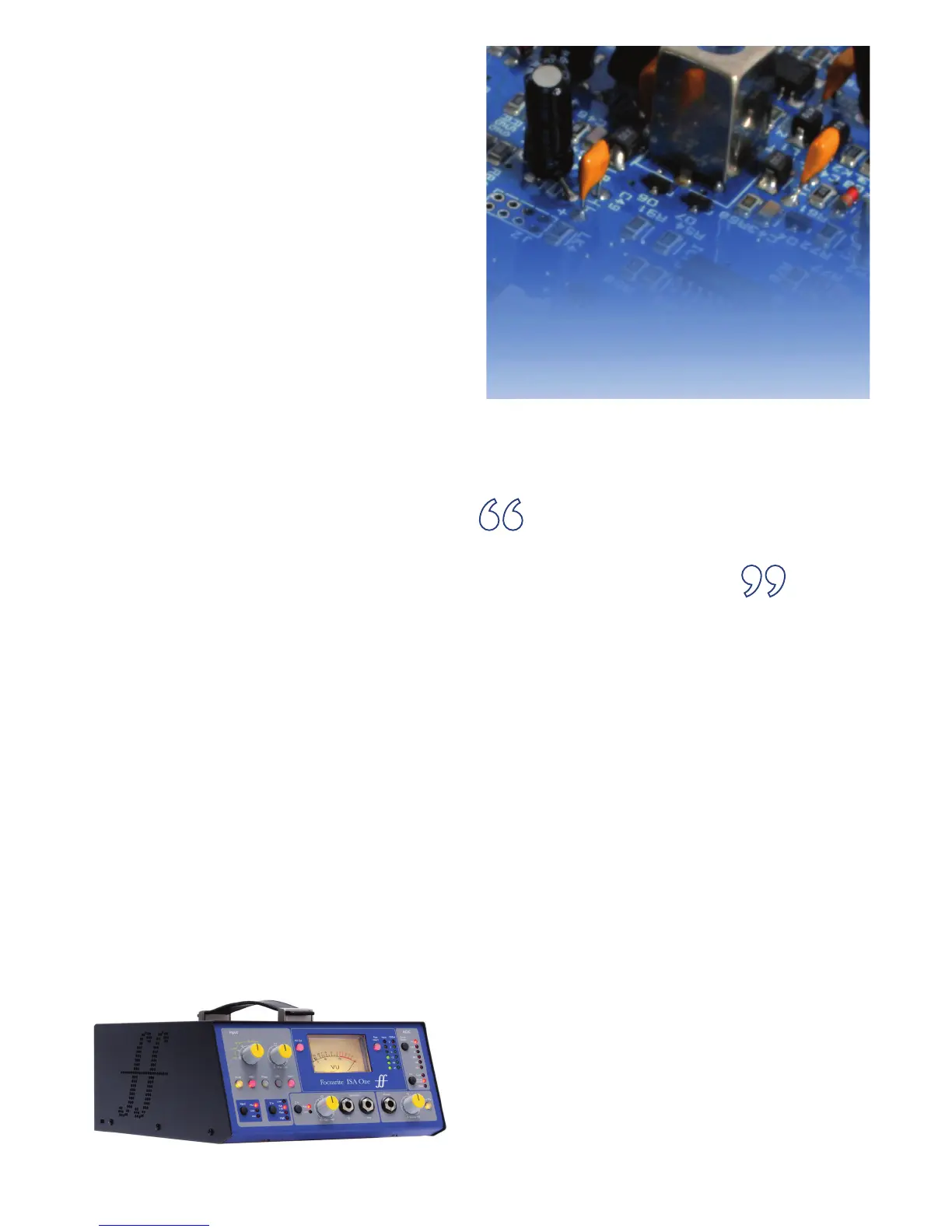
Richard Elen and Rob Jenkins unveil the design
principles and approaches behind successful
digital conversion systems.
For many years there has been a kind of mystique surrounding
digital audio conversion: the act of converting analogue signals
to digital, and vice versa. The vast majority of this mystique
derives from the earlier days of digital conversion, when the
subject was a good deal more arcane and mysterious than it is
today. Industry use of digital audio technology only goes back
forty years or so (unlike analogue audio, which dates back to
the middle of the 19th century), and in the early days — and
for a comparatively long time afterwards — the significant
parameters that directly affected conversion quality were
simply not fully understood. The role of jitter in muddying the
sound and introducing intermodulation distortion was not fully
realised, for example. Indeed, clocking as a whole was not
given the attention it deserved. The first (analogue) imaging
and reconstruction filters to do their job without introducing
significant phase distortion were designed by essentially
breaking the rules and seeing what happened; learning how
to effectively dither a digital signal was the sort of thing audio
engineers picked up in Dark Arts classes at Hogwarts.
Today, digital audio as a whole is a lot better, and more widely,
understood. Fundamental conversion components offer a level of
performance far in advance of what they were only a decade ago.
there really isn’t any magic to good
conversion: it’s simply a matter of taking
care and not cutting corners
We know how to implement a good phase-locked loop for
effective clock recovery and jitter minimisation. Not only have
higher sample rates given us much more room to implement
high-quality filters; we’re better at designing them too, and
we know how to build a digital filter that suffers from few of
the challenges that faced our predecessors, so much so that
today’s D-A designs can actually clean up filter problems in
earlier digital recordings. We also know that there really isn’t
any magic to good conversion: it’s simply a matter of taking care
and not cutting corners.
Advances In Silicon
The starting point for any new conversion system is to consider
the conversion chips available at the time a product is being
designed. New, more advanced parts come out, on average, every
couple of years, each offering better performance than the last,
and pushing back the boundaries of converter design. Smaller
audio companies can take advantage of these almost immediately
and design a product around them, whereas the giants of the
industry can be slower to respond for reasons that go beyond the
technical domain, such as procurement practicalities.
It’s the chips that define the practical limits of a conversion
system’s specifications — in particular the dynamic range
— and any self-respecting professional audio company will
research the available parts at the time they are planning a
new product, and determine what offers the best performance
(and possibly the best value for money). Exactly what the chip
is — what its type number is, or who made it — is rather less
Digital Conversion
The Focusrite Approach
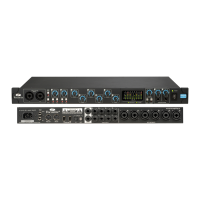
The ISA One Digital: a modern mix of high-quality analogue
and digital technology.




 To Next Page