13
Multiple loudspeaker systems
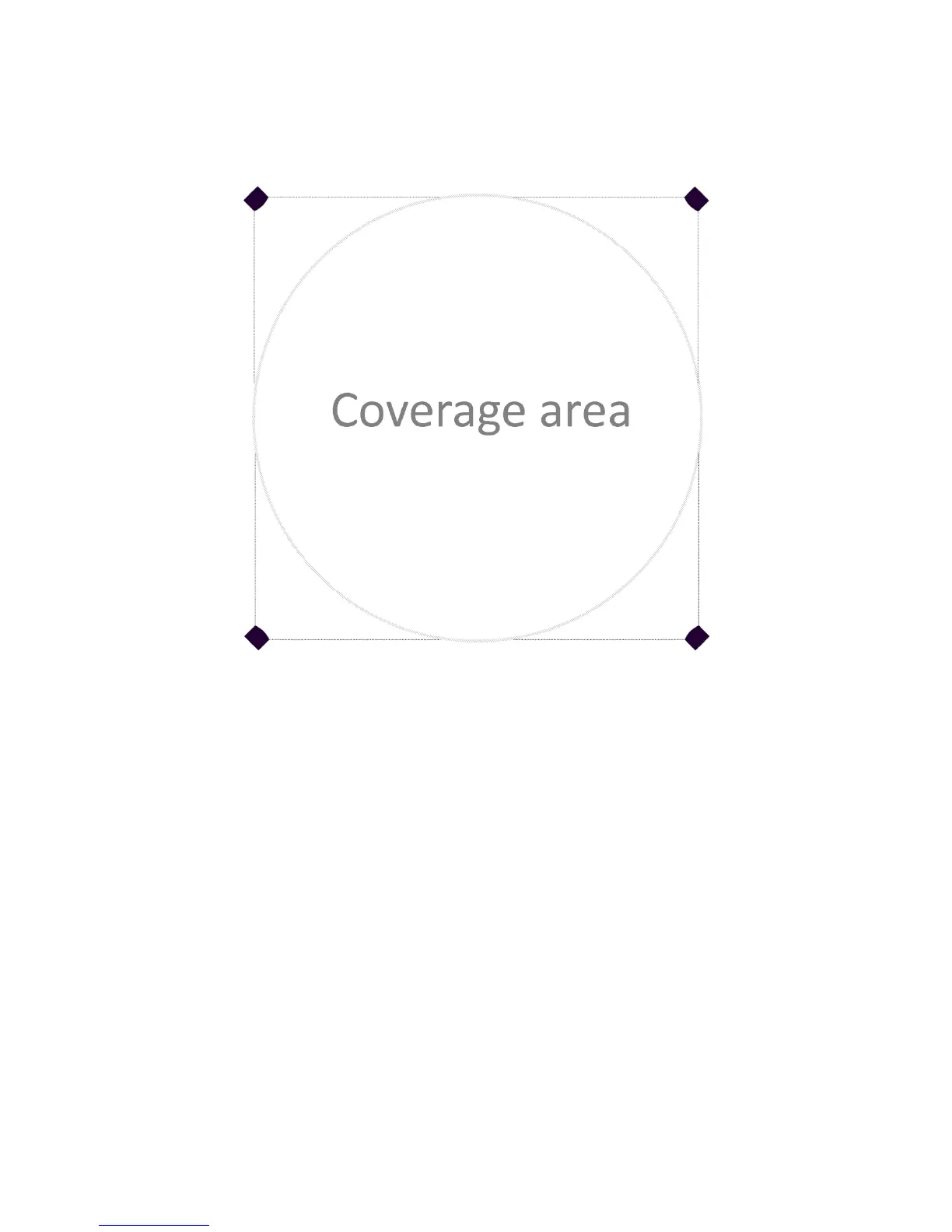
Where multiple loudspeakers are to be used to concentrate coverage into a specific area, your F81’s 90°
horizontal coverage allows simple four-corner set-ups for foreground music coverage.
Fig 6.2-8 4-speaker set-up
Generally speaking, every time you double the number of loudspeakers at equal distances from you,
you’ll increase sound pressure level by between 3 and 6dB. The exact figure will depend on the
programme material.
If you’re at the central “sweet spot” of a stereo loudspeaker system, centrally-panned signals – e.g.
vocals or bass – will sum up to 6dB, whereas stereo signals will sum up to 3dB.
In the 4-speaker example, this summation effect will be doubled and concentrated towards the centre of
the audience area. As audience members move towards the centre – away from the loudspeakers - this
4-speaker summation will partially compensate for distance. This leads to very smooth level coverage.
If the architecture allows, always try to keep your loudspeaker positions symmetrical in the room,
Large-scale distributed loudspeaker systems
If wide coverage is more important than stereo or multi-channel operation (e.g. for a conference venue
or large lecture theatre), a mono, distributed system may be a better option.
The example (overleaf) uses 12 F81s to cover a 32m wide, 180°, fan-shaped audience.
www.funktion-one.com © Funktion One Research Limited 2011


 To Next Page