6
The dominant sterilizing agent is steam at a temperature of 121 -
134 °C. Material that is damaged by this temperature may be sterilized
in some autoclave models in formalin vapour at 55 - 80°C.
Most types of items can be treated in the HS 66-autoclaves, using
adapted programs:
Instruments, machine parts, glass, plastic, leather, textiles, hot or cold
liquids in open or vented containers and small rigid pressure-tight
containers filled with liquids.
European standard EN 285 (Australia/New Zeeland, Standard AS
1410) specifies the use of fixed programs only. However, the control
equipment of HS 66-autoclaves allows the programs to be made
variable during the time testing is in progress.
As not only the processes but door operation too are controlled
automatically, the step to full automation of the handling of sterile items
is not a long one. The control unit is therefore prepared for controlling
an autoclave having a GETINGE ASF automatic loading and unloading
unit.
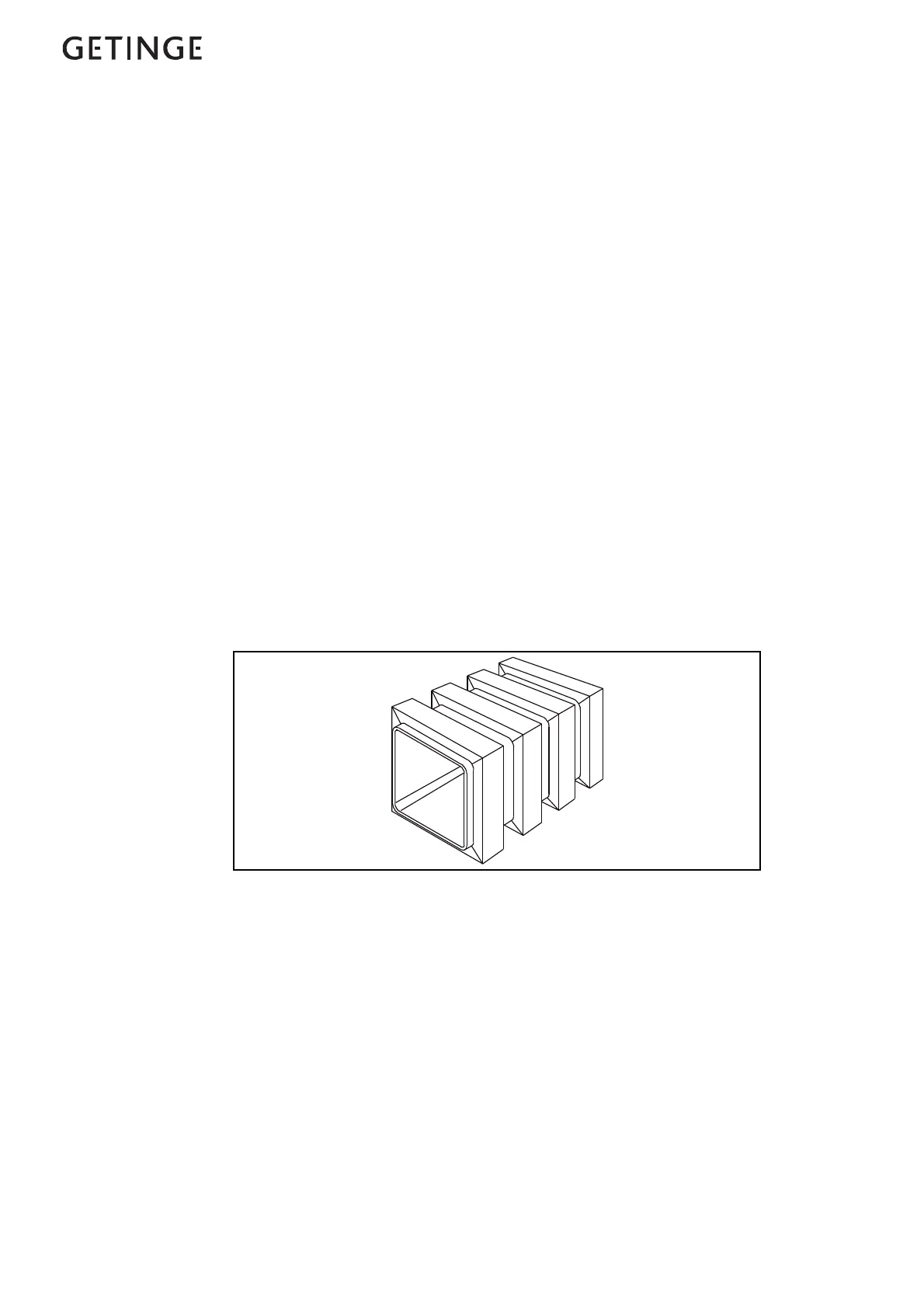
As with other GETINGE double-jacketed autoclaves, the external
surface of the chamber is more than half covered by all-welded U-
sections.. These stiffen the flat walls of the pressure vessel, and at the
same time accommodate the steam which keeps the chamber walls
warm in order to minimize condensation in the chamber. The design
principle makes all welds accessible for visual inspection after the
thermal insulation has been removed.
A vacuum pump of the water-ring type removes air, steam and
condensation from the chamber and door-gasket groove. The sealing
water of the pump is taken from an open tank which in some cases also
supplies the feedwater pump, on autoclaves with a steam generator,
with water.
The condenser between the chamber and vacuum pump converts
waste steam to water. This reduction of the pump handling volume
contributes greatly to improving pump efficiency and protecting the
pump and waste pipes against high temperatures.
A well-damped discharge system after the vacuum pump and well-
dimensioned thermal insulation around the chamber mean that the
autoclave affects the surroundings to an insignificant extent and is
therefore easy to position.



 To Next Page