EasyManua.ls Logo

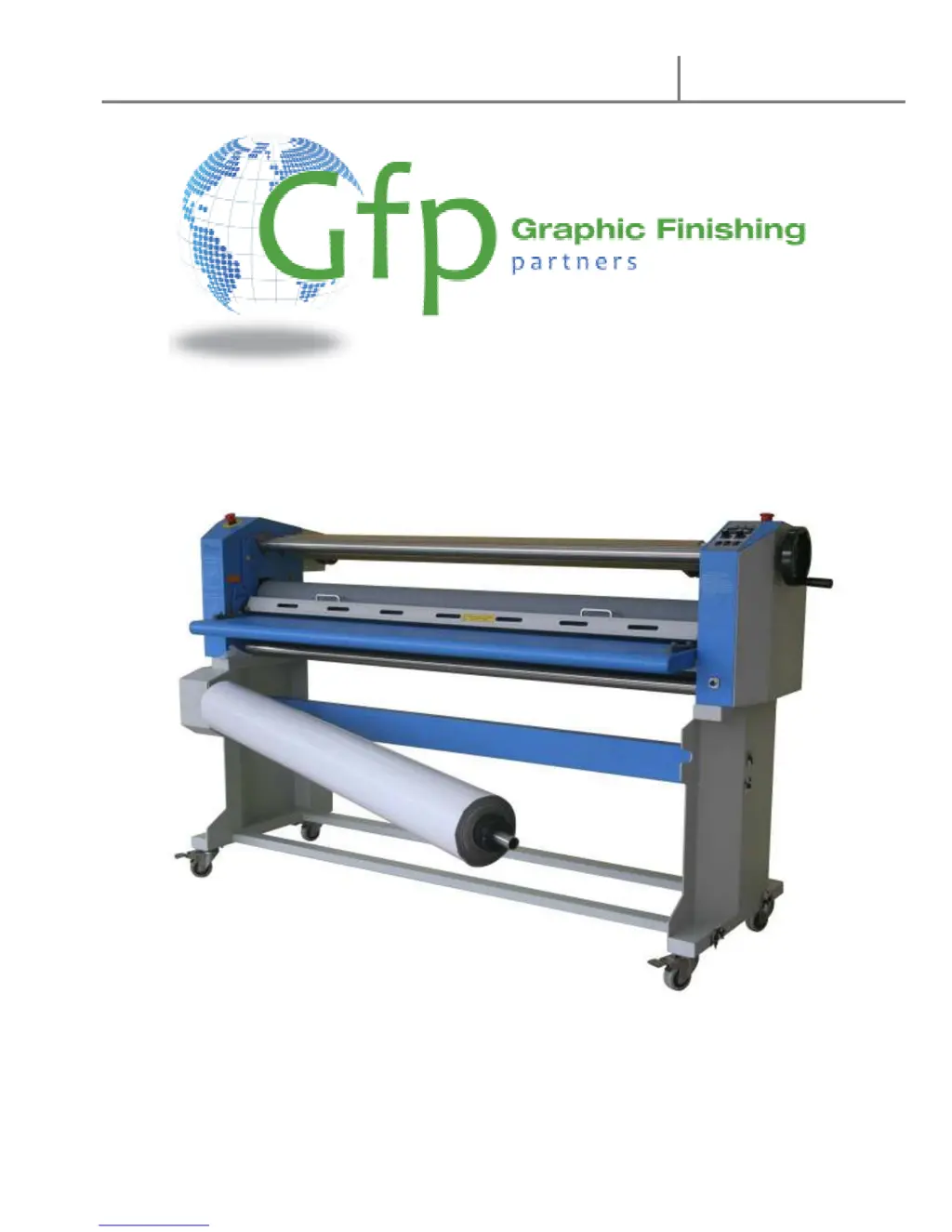
Gfp 563TH - User Manual

Gfp 563TH
26 pages
Print Icon
To Next Page IconTo Next Page
Loading...
Gfp
563TH
December 2012
1
OPERATING MANUAL Gfp 563 TH
Please read this manual carefully before operating!

Questions and Answers

  • D
    dpittsAug 20, 2025
    Why does my Gfp 563TH Laminator have poor film adhesion or cloudy prints?
    • T
      thomas32Aug 20, 2025
      Poor film adhesion or cloudy prints on your Gfp Laminator can be due to: 1. Nip roller pressure being too low, so increase it. 2. Dust on the print surface. Make sure to clean the print surface before lamination.
  • E
    ericksonjasonAug 22, 2025
    How to fix a Gfp Laminator that does not turn on?
    • K
      Kevin NavarroAug 22, 2025
      If your Gfp Laminator doesn't turn on, there are several possible causes. First, ensure the power cord is properly plugged in. Then, check that the main power switch is in the ON position. If it still doesn't work, the circuit breaker might have tripped, so try resetting it. Another potential issue is a blown main power fuse, which would require replacing the fuse on the rear panel. Finally, the motor may have failed, requiring replacement of the electric motor.
  • W
    wwaltersAug 25, 2025
    Why does my Gfp 563TH Laminator have wrinkles in film?
    • W
      William MontesAug 25, 2025
      If you notice wrinkles in the film on both the top and bottom of your Gfp Laminator, this is likely due to excessive nip roller pressure. Reduce the nip pressure using the hand wheel to resolve this issue.
  • R
    Rebekah CastilloAug 26, 2025
    What to do if Gfp 563TH rollers do not turn?
    • J
      John TaylorAug 26, 2025
      If the rollers on your Gfp Laminator do not turn after pressing the 'Run' button, the emergency switch may be engaged. Disengage the emergency switch to allow the rollers to turn. Alternatively, there might be excessive roller nip pressure. Try reducing the nip pressure of the rubber rollers.
  • C
    cheryl90Aug 28, 2025
    Why Gfp 563TH Laminator has poor film adhesion?
    • M
      Mark BuchananAug 28, 2025
      Poor film adhesion or cloudy prints on your Gfp Laminator can be caused by a few things. The nip roller pressure might be too low, so try increasing it. Also, dust on the surface of the print can cause this issue, so make sure to clean the print surface before lamination.
  • H
    Haley HuangAug 29, 2025
    How to fix Gfp Laminator heat roller not heating?
    • L
      Lori FoxAug 29, 2025
      If the heat roller on your Gfp Laminator is not heating, make sure the heater is switched on and adjust the temperature setting knob to the desired level.
  • N
    nallenAug 31, 2025
    Why is the lamination output from my Gfp Laminator curled?
    • J
      johnnyfullerSep 1, 2025
      If the lamination output from your Gfp Laminator is curled, it could be due to the sheet curling upward or downward. If the sheet is curled upward, reduce the top roll tension. If it's curled downward, reduce the bottom roll tension.
  • D
    Donna HernandezSep 2, 2025
    How to prevent Gfp Laminator film supply roll from getting loose?
    • E
      Elizabeth HunterSep 2, 2025
      If the film supply roll on your Gfp Laminator gets loose during operation, it's likely due to insufficient brake tension on the supply roll. Increase the brake tension to resolve this.
  • N
    Nicholas WilliamsSep 4, 2025
    What to do if Gfp 563TH backing paper gets loose?
    • L
      Larry DavidsonSep 4, 2025
      If the backing paper on your Gfp Laminator gets loose when being rolled up, increase the brake tension on the backing paper rewind roller.
  • C
    Courtney WilkinsonSep 6, 2025
    What to do if my Gfp 563TH does not turn on?
    • D
      Daniel ChapmanSep 6, 2025
      If your Gfp Laminator doesn't turn on, several issues could be the cause: 1. Check the power cord to ensure it is properly plugged in. 2. Verify that the main power switch is in the ON position. 3. Inspect the circuit breaker and reset it if it has tripped. 4. Examine the main power fuse and replace it if it's blown. 5. The electric motor might have failed and needs replacement.

Summary

Introduction and Safety

1. Introduction

Provides a welcome message and instructions to read the manual.

2. Important Safety Instructions

Outlines critical safety warnings for machine operation and maintenance.

Service and Repair Safety

Only authorized technicians should perform repairs on the laminator.

Pre-Operation Safety Checks

Read all instructions before connecting power or operating the machine.

General Safety Precautions Warning

Essential safety precautions must be followed during installation and use.

Installation Safeguards

Shipping Damage and Location

Report shipping damage promptly and avoid extreme environmental locations.

Power Outlet and Voltage Safety

Ensure accessible, grounded outlets and verify voltage compatibility.

Electrical Component Integrity

Do not use damaged wires/sockets; use licensed electricians for wiring.

Safety Equipment Integrity

Never defeat or remove safety equipment like interlocks, shields, or guards.

General Safeguards

Roller and Entrapment Hazards

Keep body parts and clothing away from rollers to prevent entanglement.

Proper Machine Use and Handling

Use machine only for intended purposes; keep out of reach of children.

Operational Warnings

Avoid unattended operation, flammable materials, and hot rollers.

Maintenance and Disconnection

Disconnect power for maintenance; lift top roller when idle.

Operating Conditions

Environment and Space Requirements

Place on level surface; maintain 8x10 ft space and clean environment.

Material Handling and Distributor Contact

Avoid cutting films on rollers; contact distributor for repairs.

Operator Presence and Environmental Warnings

Operator must be present; avoid direct sun, dust, and vibrations.

Control Panel Functions

Indicator Lights and Displays

Identifies indicators for cold/hot modes and readiness, plus temperature display.

Control Switches and Modes

Explains switches for temperature, direction, and operation modes.

Operational Notes

Machine lacks continuous reverse; photo-eye reset procedure noted.

Photo-electric Eye Reset Procedure

Steps to reset machine operation if the photo-electric eye stops it.

Installation Procedures

9 A. Uncrate the Machine

Instructions for safely removing the machine from its shipping crate.

9 B. Remove Heat Tube Package

Steps to remove the heat tube package secured within the crate.

9 C. Remove Machine from Skid

Procedures for lifting and removing the machine from the shipping skid.

9 D. Assemble Machine Stand

Steps for assembling the machine's support stand.

9 E. Set Machine on Stand

Instructions for placing the machine onto its assembled stand.

Handle with Care Warning

Warning to handle the machine with care during lifting and placement.

9 F. Align Machine to Stand

Details on how to secure the machine to the stand using anchor bolts.

Component Installation

10. Installing Heat Tube

Step-by-step guide for installing the heat tube into the roller assembly.

10 A. Insert Heat Tube

Detailed steps for properly inserting the heat tube component.

10 B. Connect Electric Wires

Instructions for connecting the electrical wiring for the heat tube.

11. Installing Take Up Reel

Guidance on installing the take-up reel assembly.

Adjust Rewind Tube Pressure

Adjust rewind tube pressure for proper backing paper removal and film feeding.

Additional Installation and Removal

12. Additional Installation Items

Final checks and connections required after initial setup.

Plug Foot Pedal and Check Components

Plug in foot pedal, check drive chains, set screws, and electrical connections.

13. Removing Press Roller Assembly

Procedures for safely removing the press roller assembly.

Roller Assembly Removal Steps

Unscrew thumb screw and lift off the press roller assembly.

Film Loading and Threading

14. Loading Film

Step-by-step guide for loading film rolls onto the supply shaft.

Film Loading Steps

Loosen/reattach adaptor, position film, fasten screws, adjust brake tension.

15. Threading Film

Step-by-step guide for threading film through the laminator rollers.

Film Threading Steps

Load film, lift roller, thread through, separate liner, tack adhesive.

Film Handling and Cutter Warnings

Ensure film is wrinkle-free; use cutter carefully to avoid heat roller damage.

Operation and Roller Gap Management

16. Operation

Instructions for powering on and operating the laminator.

Powering On and Mode Selection

Plug in, turn on power, select cold or hot mode, and set temperature.

Temperature Settings and Indicators

Match roller temp to material; LCD shows actual temp (inactive in cold mode).

17. Roller Gap

Adjusting the gap between the laminator rollers for proper pressure.

Roller Gap Adjustment Methods

Use hand-wheel to adjust roller pressure; clockwise lowers, counter-clockwise raises.

Nip Pressure and Model Specific Notes

Avoid excessive pressure; 55" model requires less nip pressure.

Roller Gap Adjustment

Check for Uneven Roller Gap

Procedure to check the uniformity of the roller gap across the laminator.

Correcting Uneven Roller Gaps

Steps to address and fix uneven roller gaps by adjusting components.

Optional Features and Settings

19. Optional Rewind

Information on installing and operating the optional rewind device.

Rewind Device Installation and Operation

Steps for installing the rewind device and operating its motor functions.

Gfp 563TH Specifications

General IconGeneral
BrandGfp
Model563TH
CategoryLaminator
LanguageEnglish

Related product manuals