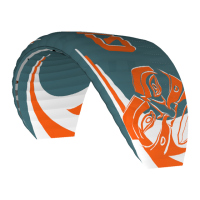
Full stall (dynamic stall)
The full stall happens when the wing partially deflates and loses its arched shape. It is
triggered when the maximum possible angle of attack is exceeded. The most common cause is
going below the minimum speed or flying near the minimum speed combined with the effects of
turbulence.
In full stall, the paramotor glider loses its forwards travel, surges backwards and deflates. If
the brakes are held down, the canopy comes up over the pilot again. The result is an almost
vertical descent with a sink rate of approx. 8m/s.
Slowly release the brakes, making sure that this is done symmetrically. As soon as the glider
is completely open above the pilot, the brakes are released.
As this is done, the canopy accelerates forwards dynamically and picks up speed. Do not brake
too soon (otherwise it could go into a full stall again), and be careful to avoid a front stall by
making sure that it does not shoot too far forwards.
Spin
The spin is a stable flight attitude, in which one side of the canopy stalls, while the other side
continues to fly forward. The glider turns around the stalled side of the wing.
In normal thermal flight, you are not very far from the limits of a spin. If a spin occurs, just let
up the brakes and wait for the glider to surge forward, checking it with the brakes if it surges too
far. Never release the spin if the glider is far back behind you, always try to release it when the
glider is above or in front of you!
If the spin does not stop, check whether you have released the brakes fully!
Other tips for dangerous situations
Cascade
Many reserve deployments are a result of a cascade of over-corrections by the pilot. Please
note that over-corrections are often worse than no input at all.



 To Next Page