fibres absorb water. Mould may form if the paramotor glider is stored wet and the fibres may rot,
particularly when it is warm. This can make the paramotor glider unsuitable for flying within a
short time.
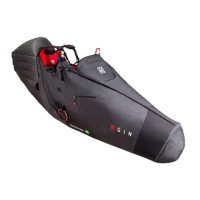
A brand-new glider will often be compressed when delivered. This is solely for the initial
delivery and the glider should not be compressed in such a way again. Do not pack your glider too
tightly after use and, even though it is very comfortable, never sit on the backpack with the
glider inside.
If salt water gets on the glider, it should be rinsed immediately in fresh water (refer to the
section “Cleaning”).
Lines
The Falcon has various different high-quality and accurately manufactured lines which have
been selected according to the load and area of use. You should also protect the lines from
unnecessary UV light because, as with the fabric, UV light in particular will weaken the lines.
Be careful that there is no abrasion caused to the coating on the lines by rubbing, particularly
when ground-training with crossed risers.
Do not walk on the lines after the glider has been spread out and watch out for spectators or
skiers who may inadvertently go over the lines.
When you are packing up the glider, be careful to avoid putting any unnecessary kinks in the
lines and use only the overhand knot or bowline knots described for the brake lines.
Rigid construction
Various forms of plastic rods are used in the Falcon (rigid construction), which create the
leading edge’s shape and the canopy’s stability. To ensure that the plastic rods keep their shape,
it is important that you pack the glider as described in the section “Packing the paramotor glider”.
The plastic rods on the Falcon can all be replaced through small pockets. If you notice that a
plastic rod has been damaged or misshapen because of incorrect use, this can be replaced by Gin
Gliders or a Gin Gliders authorised workshop.



 To Next Page