begins to brake. Note that the brake cascades already cause drag by their aerodynamic
resistance.
If you do need to make adjustments to suit your harness / motor combination, body and flying
style, we strongly recommend that you test fly the glider after every 2cm of adjustment. There
should be a minimum of 10cm of free brake travel when the glider is flown hands-off. This
prevents the brakes being applied unintentionally when the speed system is fully engaged. We
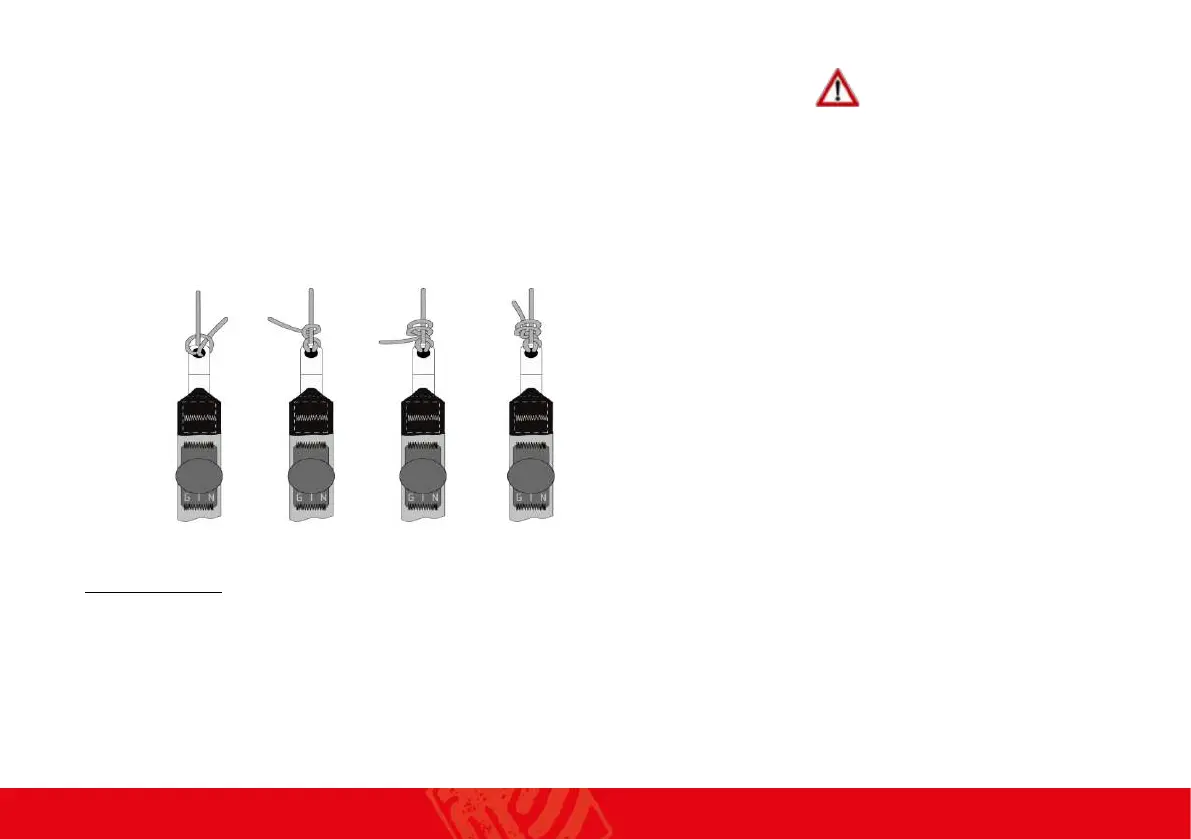
recommend a double sheepshank or a bowline knot for the brake handle attachment as shown in
the diagram.
Fig. 16: Bowline knot
Incorrect adjustment
If the brake lines are too long, the paramotor glider reacts slowly and is difficult to land. The
brake lines can be adjusted during flight by wrapping them around your hands which will improve
the flight characteristics. Adjust the brake lines to the correct length after you have landed.
If the brakes are shortened, care must be taken that the paramotor glider is not slowed down
in trim and accelerated flight. If the brake lines are too short, the following risks could arise:
• there could be an early stall
Loose, unsuitable or incorrectly tied brakeline
knots can cause the main brake line to loosen
and then lead to loss of control of the glider.
It is always safer to have the variable brake
pulley adjustment too long rather than too
short. Short brake lines can dramatically
change the flight characteristics by removing
stability both in pitch and roll!
It is always best to seek the advice and
assistance of a local instructor or
experienced pilot for any setting up
requirements.



 To Next Page