ExampleInstallations
Therearemanywaysthatastovecanbeproperlyinstalled.Thepotentialvariablesinanyinstallation
canvarygreatlydependinguponwhereyouplaceyourstove,yourplannedexhaustconfiguration,
andotherfactors.Forthatreasonwecannotshoweverypossibleinstallation.However,belowyou
willfindseveralexamples
ofthepreferredinstallationsthatwerecommend.Ifyouinstallyournew
stoveinthesamemannerastheseexampleinstallationsyouwillgetthebestperformancefromyour
unit.
HORIZONTALLYTHROUGHWALL
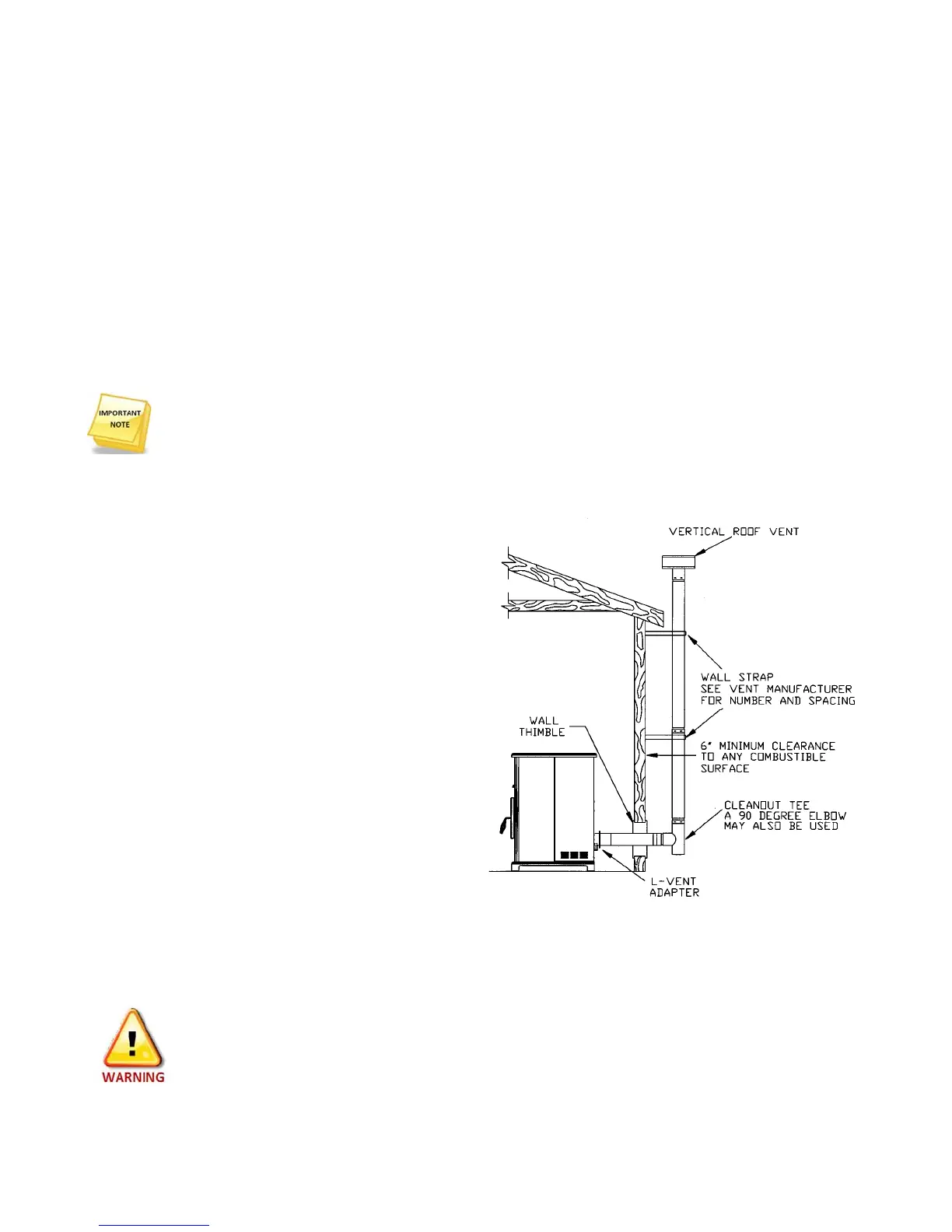
Thisinstallation(refertoFigure6)istheidealwaytoventyourstove.Youshouldmake
every
attempttoventyourunitasshowninthisexampleasitwillprovideyouwiththegreatestefficiency
andperformanceofyourunit.Inaddition,thisinstallationwillhelptoensurethatyouhaveaclean
andefficientburnsolongasyouareusingaqualityfuelandproperdampercontrol.
Thefurtheryoudeviatefromthisrecommendedinstallation,thelessefficientlyyourunit
willfunction.
NOTE:FollowL‐Ventchimneymanufacturer’sinstructions.
1. Positionstove,adheringtoclearancesshown
inFigure1.
2. Locatepositionofholeinwall;directly
behindstoveexhaustvent(refertofigure3).
3. Alwaysmaintain3”clearancefrom
combustiblematerials.
4. InstallL‐VentwallthimbleperL‐Vent
manufacturer’sinstructions.
5. Attachenoughpipingtopenetrateand
extendatleast6”beyondexteriorwalls.An
8‐footverticalpiperunissuggestedwhere
possibletoreducethepossibilityofsmoke
spillageintheeventofalossofnegative
pressure.
6. Attachcapandsealoutsidewallthimbles
withnon‐
hardeningwaterproofmastic.
7. Terminationshouldnotbelocatedsothat
hotexhaustgasescanignitetrees,shrubs,or
grassesorbeahazardtochildren.Exhaust
gasescanreachtemperaturesof500ºFandcauseseriousburnsiftouched.
FOLLOWYOURVENTPIPEMANUFACTURERSINSTRUCTIONSREGARDINGALLASPECTS
OFVENTINSTALLATIONANDCLEARANCES.
Figure6



 To Next Page