Boston Scientific (User’s Manual Template 8.5in x 11in Global, 91091755 Rev/Ver. AA), Manual, MB, XPS, Global, 50623316-01A_pretrans
Process Black ΔE ≤5.0 / CMYK Image
9
WARNING: It is required for everyone in the room to wear protective eyewear.
Eyewearhasbeendesignedtoprotectoperatingroompersonnelfromthe532nmlaserenergy.Theeyewearhasaminimumopticaldensity(OD)
of6.0at532nm.TheeyewearrequirementsforEUare532DL6.Thesetypesoflaserprotectiveeyewearinclude:
• Nearlyclearphysicianlaserprotectiveeyewear—Theessentiallyclearlensmaterialhashighvisiblelighttransmissionandminimalcolor
distortion.
• Orangeprotectiveeyewear—Althoughithasgoodvisiblelighttransmission,theorangecoloroftheplasticlenscausessomecolordistortion.
8.2 Burns
Personnel using lasers should be knowledgeable of the fire hazards associated with laser use. Accidental irradiation of tissue other than the target
tissue may result in a burn or vaporization. Surrounding the target area with moist drapes or saline-soaked sponges will keep it moist and greatly
reduce this hazard.
Flammable or combustible items in the laser environment may include flammable liquids or combustible ointments, gases, plastics, paper or gauze
materials, adhesive or plastic tapes, and endotracheal tubes.
Laser appropriate fire extinguishers and water should be available where lasers are used. Care and precision in aiming and applying laser energy
are important.
WARNING: Never use a clamp to secure the laser fiber to a drape. The use of a clamp to secure a fiber may cause the fiber to bend at sharp
angles and damage the fiber. To do so can result in an unsafe condition. The fiber can break and release laser energy causing a burn in the
protective jacket. If undetected, this condition will result in a burn or ignition of flammable materials.
8.3 Reflection of the Beam From Instruments
Use caution when aiming the laser beam to prevent reflection of the beam off metallic surgical instruments. Mirror-finish instruments are especially
dangerous as they have highly reflective surfaces. The laser light reflected from such instruments is intense and potentially harmful.
Matte, dull, satin-finished, or ebonized instruments have fewer glares, and those with curved surfaces do not reflect light as intensely. While these
instruments usually produce a more diffused reflection that is less harmful, this reflection can still be damaging. Protective eyewear should be worn
at all times to prevent eye damage.
WARNING: When using anodized, black chrome finished, or ebonized instruments during a surgical procedure, additional caution should be
taken to prevent burns. These instruments will become extremely hot when they come in contact with a laser beam and are not able to quickly
dissipate heat. When tissue is touched under these conditions, a burn may result.
8.4 Ignition of Flammable Materials
The laser can ignite many materials used during a surgical procedure. Use of non-flammable materials is strongly recommended.
8.5 Electrical
Electrical hazards with the laser are the same with any electrical device. Use caution when plugging the unit into the wall outlet. The area must be
free of water and user’s hands must be dry.
Always disconnect the laser by grasping the plug and not the power cord. Examine the electrical cord routinely, if signs of wear are noted, contact
BSC technical support to have it repaired or replaced.
8.6 Operating Room Environment
This section describes specific safety measures for the operating room to aid in the safe operation of the laser system. Medical Electrical Equipment
(MEE) is not intended to be used in an oxygen-rich environment.
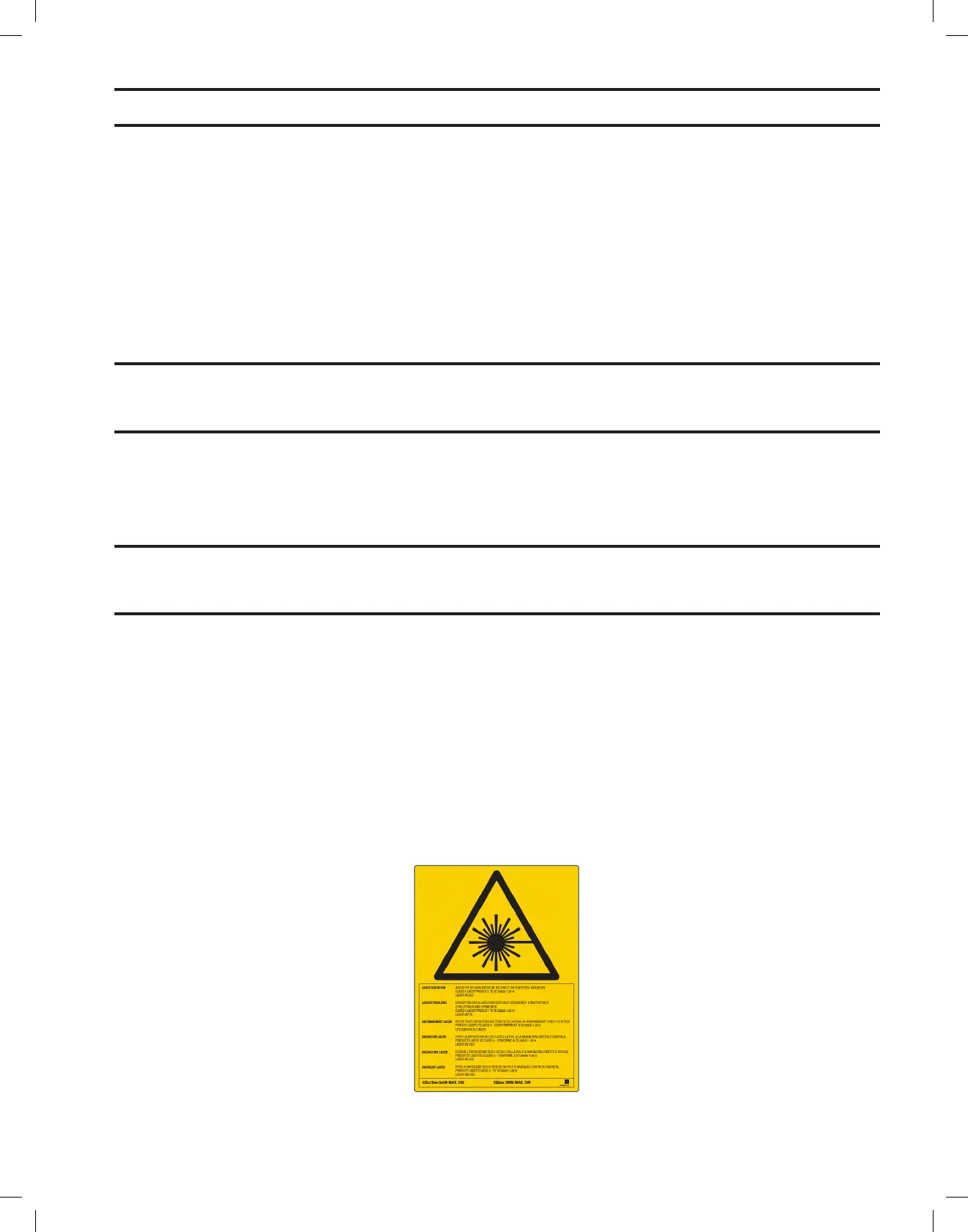
Laser Warning Signs
The area where the laser system is operated should be labeled. Warning signs that specify the laser wavelength being used should be posted at all
operating room and access door entrances. Figure 1 is an example of a sign suitable for use with the laser system.
Figure 1. Laser Warning Sign


 To Next Page