3. Brake system
The brake system is the front two-wheel braking type consisting of a master cylinder, brakes and
brake pedal.
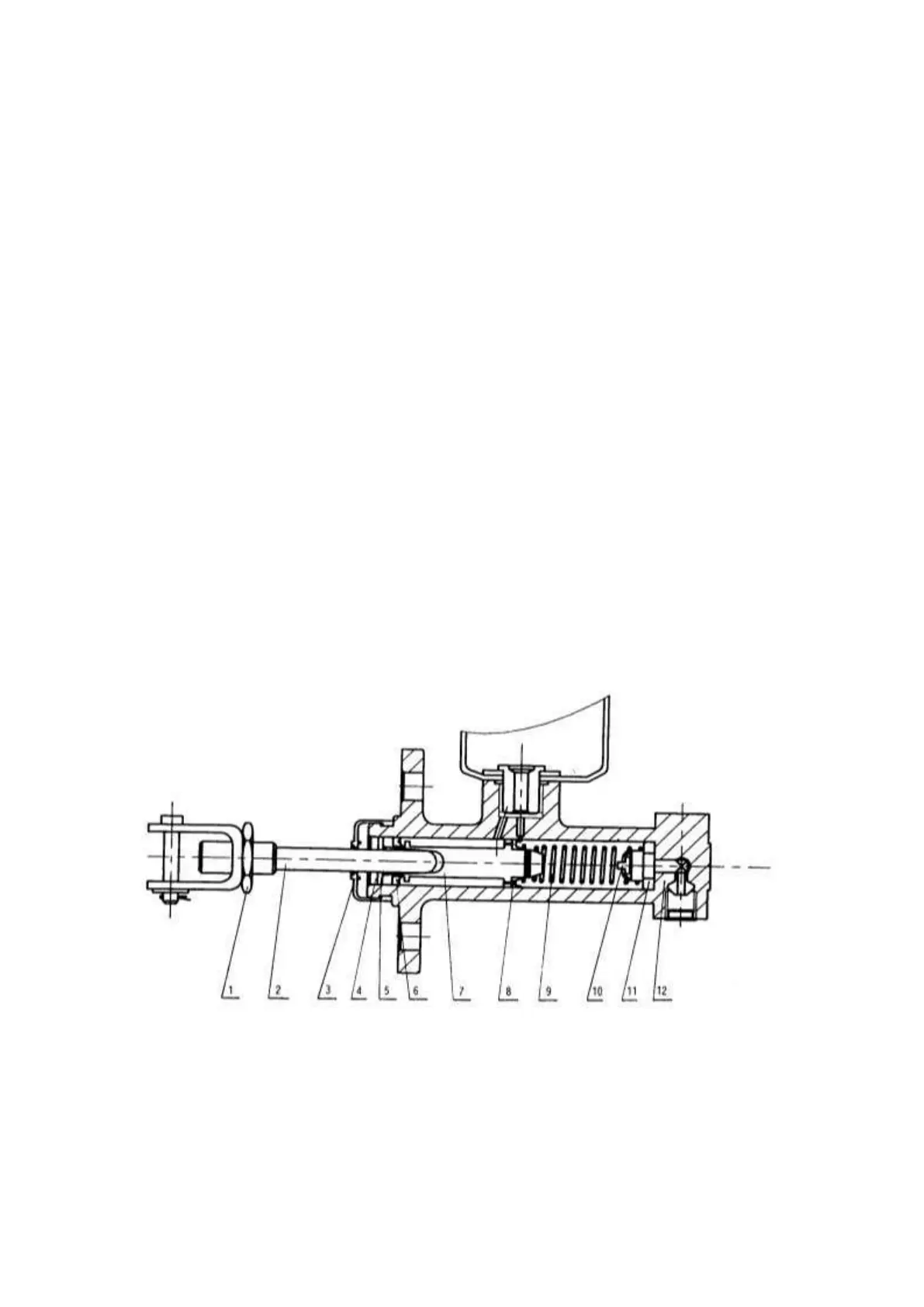
3.1 Master cylinder
The master cylinder contains a valve seat, check valve, return spring, primary cup, piston and
secondary cup, which are kept in place with stop washer and stop wire. The exterior of the cylinder is
protected from dust by means of a rubber dust cover. The piston is actuated through the push rod by
operation of the brake pedal. First, as the brake pedal, the push rod pushes the piston forwards. The
brake fluid in the cylinder flows back to the reserve tank through the return port until the primary cup
blocks up the return port. After the primary cup passes the return port, the brake fluid in the cylinder is
pressurized and opens the check valve, flowing through the brake lines to the wheel cylinder. Thus,
each wheel cylinder piston is forced outwards. This brings the brake shoes into contact with the wheel
drum and slows or stops the lift truck.. Meanwhile, the cavity caused behind the piston is filled with
brake fluid led through the return port and inlet port to lubricate the piston. When the brake pedal is
released, the piston is forced back by the return spring. At the same time, the brake fluid in each wheel
cylinder is pressurized by the force of the brake shoe return spring, thus returning into the master
through the check valve. With the piston in its original position, the fluid in the cylinder flows into the
reserve tank through the return port. The brake fluid in the brake lines and wheel cylinders has a
residual pressure proportioned to the set pressure of the check valve, which makes each wheel cylinder
piston cup securely seated to prevent oil leakage and eliminates of vapor lock developing when the lift
truck is sharply broken.
图 3-1 Master cylinder



 To Next Page