C9B
10
A2088-3.0 en/de/frHBM
4 Conditions on site
Protect the transducer from weather conditions such as rain, snow, ice and
salt water.
4.1 Ambient temperature
The temperature effects on the zero signal and on the sensitivity are compen
sated.
To obtain optimum measurement results, the nominal (rated) temperature
range must be complied with. Constant, or very slowly changing, tempera
tures are best. Temperature‐related measurement errors are caused by heat
ing on one side (e.g. radiant heat) or by cooling. A radiation shield and all‐
round thermal insulation produces noticeable improvements, but must not be
allowed to set up a force shunt.
Tip
Hand warmth can cause a one‐sided warming of the transducer. Such temper
ature gradients can change, e.g. the zero point of the transducer. We there
fore recommend, after such warming, to wait approx. 15 minutes before start
ing measurements so that the thermal equilibrium can be restored.
4.2 Moisture and corrosion protection
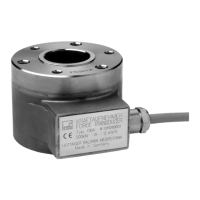
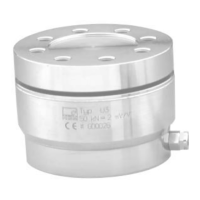
Series C9B force transducers are hermetically encapsulated and are therefore
very insensitive to moisture. The transducers reach the protection class IP67
per DIN EN 60259 (test conditions: 0.5 hours under 1m water column). Nev
ertheless, the force transducers must be protected against permanent mois
ture influence.
The housing of the transducer is completely made of stainless steel. The
transducer must be protected against chemicals that could attack the trans
ducer body steel or the cable (polyurethane, PUR).
With stainless steel force transducers, please note that acids and all materials
which release ions will also attack stainless steels and their welded seams.
Should there be any corrosion, this could cause the force transducer to fail. In
this case, appropriate protective measures must be implemented.


 To Next Page