4
1.2 Humidity transmission
In addition to heat, humidity can also be transported with
rotary heat exchangers. The decisive factor here is the mate-
rial and/or the surface of the storage mass. Characteristic
features for different designs have been developed with
detailed measurements of wheels from different manufac-
turers by the building technology test centre of the University
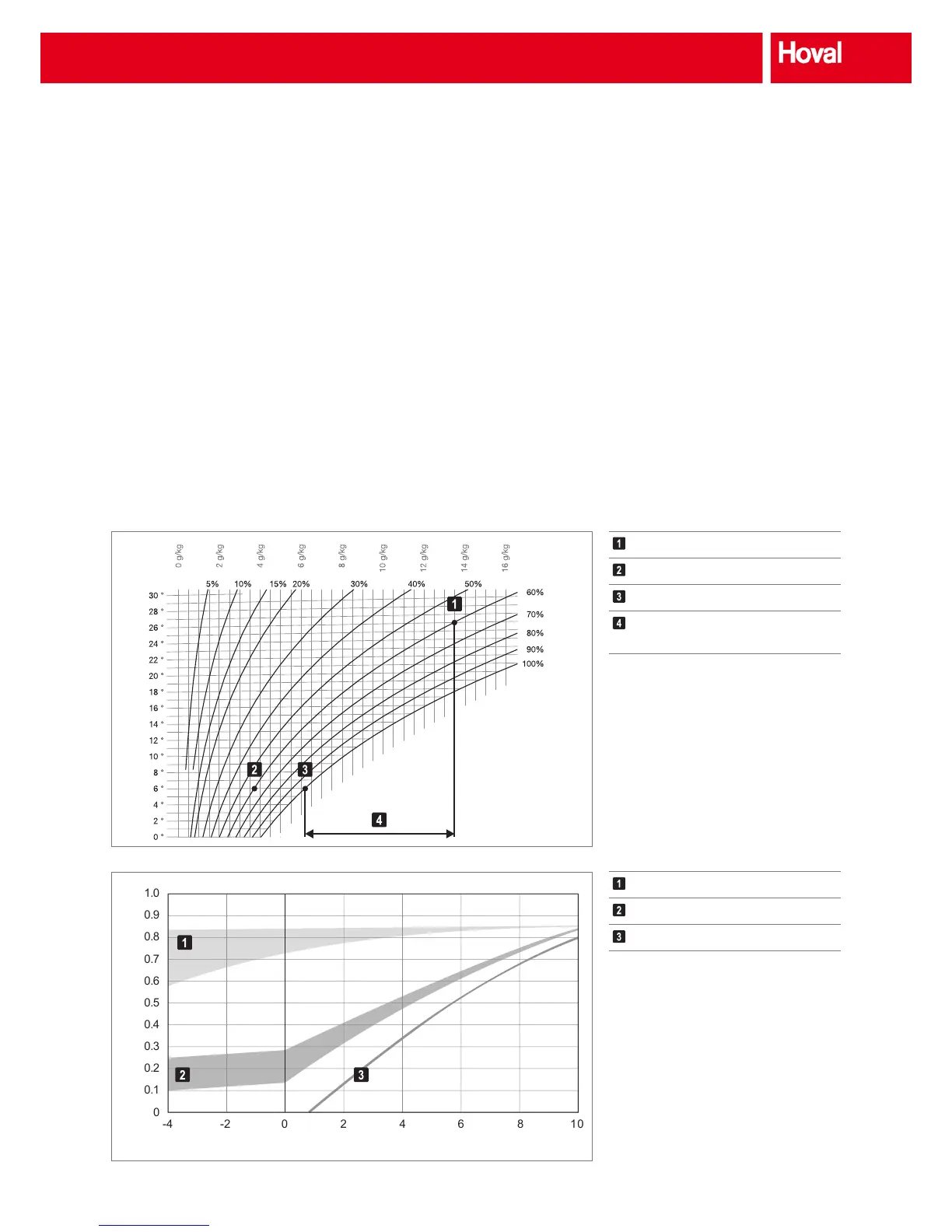
of Lucerne. The reference factor for the humidity efciency
is the condensation potential; that is the humidity difference
between warm-air humidity and the saturation humidity of the
cold air (see Fig. 4).
Fig. 4: Denition of condensation potential κ
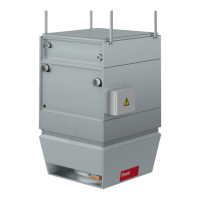
Sorption wheel
Enthalpy wheel
Condensation wheel
Warm air entry
Cold air entry
Saturated cold air
Condensation potential of
warm air κ
Humidity efciency η
x
Condensation potential κ [g/kg]
The following must be noted:
■ The greater the condensation potential the greater the
volume of condensate that can be expected at the warm
air side.
■ If the condensation potential is zero or negative, no
condensation can take place. Humidity transmission is
therefore only possible by sorption.
■ The derived characteristics reect typical values of 1 : 1
for the mass-ow ratio and the pressure drop of approx.
130 Pa at an airway height of 1.9 mm.
■ The area of application of reference magnitude κ, i.e. the
condensation potential, is restricted to the standard condi-
tions of ventilation technology. The temperature efciency
must be at least 70 %. The humidity transmission must
not be restricted by the saturation curve (e.g. with very
low outside temperatures).
Fig. 5: Typical course of humidity efciencies of various
wheels depending on the condensation potential
Temperature
WaterRelative humidity
Principle and Operation



 To Next Page