EasyManua.ls Logo

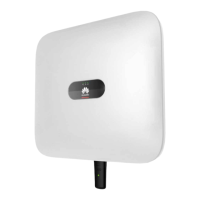
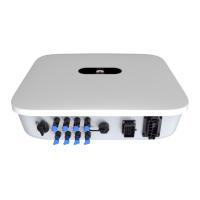
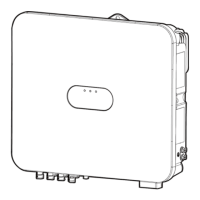
Huawei SUN2000-8K-LC0 - User Manual

Huawei SUN2000-8K-LC0
140 pages
Print Icon
To Next Page IconTo Next Page
Loading...
SUN2000-(8K, 10K)-LC0 Series
User Manual
Issue 01
Date 2023-09-15
HUAWEI DIGITAL POWER TECHNOLOGIES CO., LTD.

Table of Contents

Other manuals for Huawei SUN2000-8K-LC0

Questions and Answers

  • S
    Shannon HeathSep 9, 2025
    How to deal with Huawei Network Hardware Unstable Grid Frequency?
    • J
      Jessica ReynoldsSep 10, 2025
      If your Huawei Network Hardware reports Unstable Grid Frequency, it means the grid frequency change rate does not comply with the local power grid standard. If the alarm occurs occasionally, it may be due to a temporary issue with the power grid, and the device should automatically recover. If it occurs frequently, check if the power grid frequency is within the allowed range and contact the local power operator.
  • A
    Anthony CraigAug 22, 2025
    What to do if Huawei Network Hardware shows Grid Failure?
    • B
      Brianna DonaldsonAug 22, 2025
      If your Huawei Network Hardware indicates a Grid Failure, check the AC voltage. Also, verify that the AC circuit is properly connected and that the AC circuit breaker is in the ON position.
  • S
    stephanie45Sep 5, 2025
    What does Abnormal Residual Current mean on Huawei Network Hardware?
    • J
      John WilkinsonSep 6, 2025
      An Abnormal Residual Current warning on your Huawei Network Hardware indicates that the insulation impedance on the input side to PE has decreased during operation. If this alarm appears occasionally, it may be a temporary external circuit issue, and the SUN2000 should recover automatically once the fault is cleared. However, if the alarm occurs frequently or persists, check whether the impedance between the PV string and the ground is too low.
  • J
    James RodriguezSep 4, 2025
    What causes Huawei Network Hardware to display Grid Underfrequency?
    • G
      griffinbarbaraSep 4, 2025
      If your Huawei Network Hardware shows a Grid Underfrequency error, it means the actual power grid frequency is lower than the standard requirement for the local power grid. If this occurs occasionally, it may be due to a temporary issue with the power grid, and the device should recover automatically. If it occurs frequently, check whether the power grid frequency is within the allowed range and contact the local power operator if it isn't. If the frequency is within range, you can modify the grid underfrequency protection threshold via the mobile app or NMS with the consent of the local power operator.
  • T
    Tonya FieldsSep 3, 2025
    Why does Huawei Network Hardware show Low Insulation Resistance?
    • J
      Julie FoxSep 3, 2025
      A Low Insulation Resistance error on your Huawei Network Hardware indicates a short circuit between the PV array and the ground, or that the ambient air of the PV array is damp causing poor insulation. To address this: 1. Set the insulation resistance protection to the minimum value and restart the inverter. 2. Check that the PE cable of the device is correctly connected. 3. Check the output impedance of the PV array to ground, and rectify any short circuits or insulation issues. If there are multiple PV strings, check them one by one.
  • B
    Brooke ChaneySep 2, 2025
    How to fix Huawei Network Hardware DC Arc Fault?
    • A
      Alexandria PhillipsSep 2, 2025
      If your Huawei Network Hardware is showing a DC Arc Fault, check the PV string power cables for arcing or poor contact.
  • M
    Michelle JohnsonAug 31, 2025
    How to resolve Huawei Network Hardware Grid Overfrequency?
    • J
      Justin WilsonAug 31, 2025
      If your Huawei Network Hardware displays a Grid Overfrequency error, it indicates that the power grid frequency is higher than the standard requirement for the local power grid. If the alarm occurs occasionally, it may be a temporary grid abnormality, and the device should recover automatically. If it occurs frequently, check if the power grid frequency is within the allowed range and contact the local power operator if it's not. If the frequency is within range, you can modify the grid overfrequency protection threshold via the mobile app or NMS with the consent of the local power operator.
  • S
    Shane OrtegaAug 30, 2025
    What to do if Huawei Network Hardware shows Device Fault?
    • A
      Adrian WebbAug 30, 2025
      If your Huawei Network Hardware indicates a Device Fault, turn off the AC output switch and DC input switch, and then turn them back on after 5 minutes. If the fault continues, contact your dealer or technical support.
  • D
    Diana PalmerAug 28, 2025
    How to troubleshoot Huawei Network Hardware AC Overcurrent?
    • P
      Paul RussellAug 29, 2025
      If your Huawei Network Hardware is showing an AC Overcurrent error, it indicates a dramatic voltage drop or a short circuit in the grid. The device is designed to detect and rectify external working conditions in real time, so it should automatically recover once the fault is cleared. However, if the alarm occurs frequently and affects the power plant's energy yield, check for a short circuit at the output. If the problem persists, contact your dealer or technical support.
  • K
    Kelsey GardnerAug 27, 2025
    What causes Huawei Network Hardware to have String Voltage High?
    • D
      dmccarthyAug 27, 2025
      A String Voltage High error on your Huawei Network Hardware usually means that the PV array is not configured correctly. Too many PV modules might be connected in series in the PV string, causing the open-circuit voltage to exceed the device's maximum operating voltage. To fix this, check the serial connection configuration of the PV string to ensure the PV string open-circuit voltage does not exceed the device's maximum operating voltage. Once the PV array configuration is corrected, the alarm should disappear.

Huawei SUN2000-8K-LC0 Specifications

General IconGeneral
Rated Output Power8 kW
Max. DC Voltage1100 V
Start Voltage200 V
Max. Efficiency98.6%
European Weighted Efficiency98.3%
CoolingNatural convection
Protection DegreeIP65
Number of MPP Trackers2
Maximum Input Current per MPPT13 A
Output Frequency50 Hz / 60 Hz
Maximum Input Voltage1100 V
Max. DC Power12 kW
Max. AC Power8.8 kW
Rated AC Voltage230 V
Operating Temperature Range-25 °C to +60 °C
Rated Output Voltage230 V
Maximum Input Power12 kW

Related product manuals