HW group
30
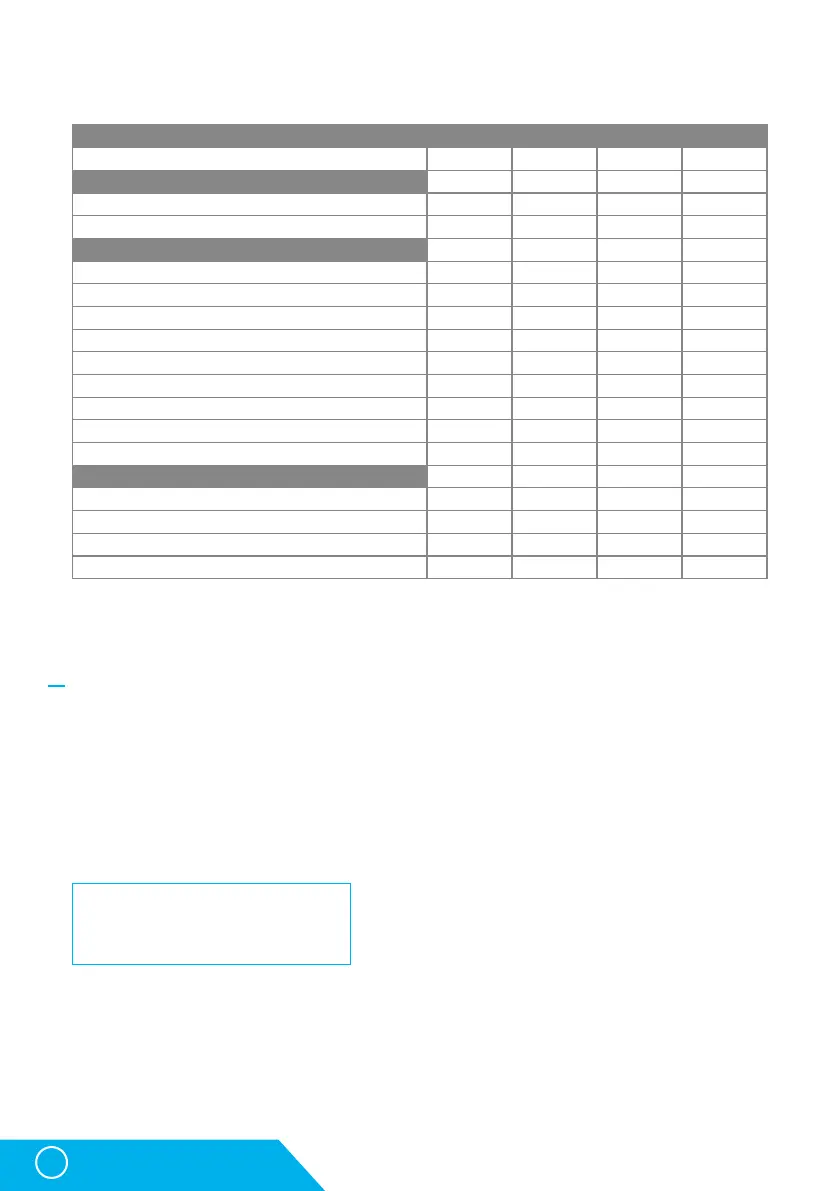
WiFi Radio
WiFi signal strength
Description Min Typical Max Unit
Input frequency 2412 - 2484 MHz
Tx power
Output power of PA for 72.2 Mbps 13 14 15 dBm
Output power of PA for 11b mode 19,5 20 20,5 dBm
Sensitivity
DSSS, 1 Mbps - –98 - dBm
CCK, 11 Mbps - –91 - dBm
OFDM, 6 Mbps - –93 - dBm
OFDM, 54 Mbps - –75 - dBm
HT20, MCS0 - –93 - dBm
HT20, MCS7 - –73 - dBm
HT40, MCS0 - –90 - dBm
HT40, MCS7 - –70 - dBm
MCS32 - –89 - dBm
Adjacent Channel Rejection
OFDM, 6Mbps 37 dB
OFDM, 54Mbps 21 dB
HT20, MCS0 37 dB
HT20, MCS7 20 dB
What is signals strength
WiFi is a radio signal and it has limitations in reach given firstly by the transmission output and
by the quality and shape of the antennas. Signal strength is indicated in decibels per miliwatt
of output (dBm), often (incorrectly) simplified to “dB”. Signal strength has a negative value and it
applies that the lower the value (a higher number after the negative sign), the worse.
The decibel unit is non-dimensional and expresses the logarithm of a ratio of two values.
In our case, it is the ratio of received output to an etalon of 1 mW:
This means that if you have a signal of -54 dBm, it is higher (better) than a value of -82 dBm.
dBm = 10
*
log
10
_____________
P
1
1 mW
STE2 – User Manual



 To Next Page