18 19
When overtaking, you are the give-way vessel. The other vessel is expected to maintain course and
speed. Avoid it as you clear it. When being passed by another vessel, maintain speed and direction
so that the passing vessel can clear.
In other circumstances, when preparing to go around a bend on a body of water, sound a prolonged
blast on a whistle for four (4) to six (6) seconds. Regardless of whether you hear a response, proceed
with caution.
Under normal operation situations, stationary shing and sailing boats (stationary or moving) are
given the right of way.
Always learn about and pay attention to buoys and other markers. The Uniform State Waterway
Marker System has been devised for interior waterways in the United States. Markings may vary by
geographic location. Always consult appropriate authorities before using the power board in unfa-
miliar waters.
SAFE OPERATION ON THE WATER
Laws, rules, regulations and enforcement have been developed in North America and around the
world to ensure safe and proper operation of all watercraft. It is the responsibility of the owner and/
or operator to familiarize himself or herself with all applicable ordinances on the body of water upon
which the JetSurf™ power board will be operated. For operators in the United States, refer to the
website*: www.uscg.boating.org
In Canada, refer to the website**: www.tc.gc.ca/eng/marinesafety/menu.htm
Other countries have their own laws or participate in international rules. Always verify markings and
rules as they apply to any body of water on which operations will be conducted.
GENERAL PRUDENTIAL RULE
Rule 2 in the International Rules says, “In obeying and construing these rules due regard shall be
had to all dangers of navigation and collision, and to any special circumstances, which may
render a departure from the above rules necessary in order to avoid immediate danger.”
GENERAL EXPECTATIONS
Always use common sense when encountering other vessels. The power board is considered a pow-
ered watercraft and will be expected to give-way to non-powered vessels that have less manoeuvra-
bility. The vessel that does not has the duty to take proper and timely action to sta out of the way of
the stand-on vessel. Normally, the give-way vessel should not cross in front of the stand-on vessel.
Always move in such a way that the stand-on operator can see the operation.
When encountering other powered vessels, there are three (3) main situations that could require
avoiding a collision:
- Meeting (approaching another vessel head on);
- Crossing (travelling across the other vessel’s path);
- Overtaking (passing or being passed by another vessel).
When meeting another vessel head on with the risk of collision, neither has right of way. Both vessels
must alter course to avoid an accident. Keep the other vessel on the port (left) side unless it is possi-
ble to clear each other by maintaining course.
When two (2) power-driven vessels cross paths with risk of collision, the vessel that views the crossing
vessel to the starboard (right) side must give way.
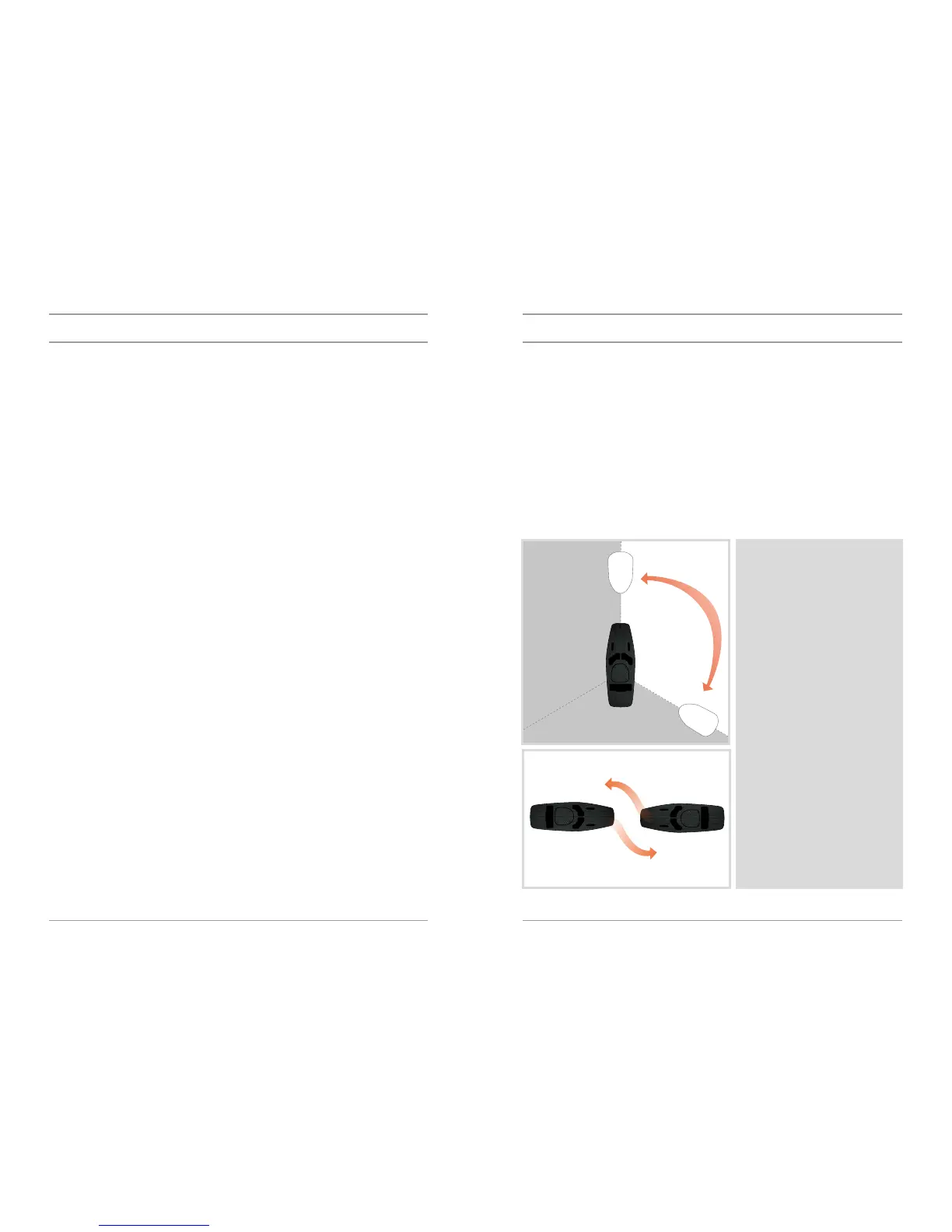
MEETING
When two boats are approaching
each other on the water, one has
the righta-way and is designated the
“stand-on” vessel. The other boat
must yield or give way and is desig-
nated the “give-way” vessel.
In illustration A, you are the JetSurf™
in the center. You are required to
yield to any vessel shown in the
white area (you are the “give-way”
vessel). Any vessels shown in the
shaded area must yield to you(you
are the “stand-on” vessel). If both
of you are heading directly toward
one another, illustration B, you both
must give way. You should turn right
to keep the approaching vessel to
your left or port side. This rule does
not apply if both vessels will be clear
of each other if you continue on
your set course and speed.
* It applies to the USA; ** It applies to Canada
SAFETY MATTERSSAFETY MATTERS
A
B



 To Next Page