EasyManua.ls Logo

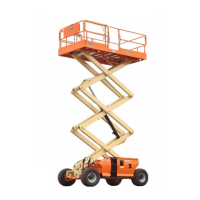
JLG RT2669 - User Manual

JLG RT2669
128 pages
Print Icon
To Next Page IconTo Next Page
Loading...
Operation and Safety Manual
Original Instructions - Keep this manual with the machine at all times.
ANSI
®
AS/NZS
Models
RT2669, RT3369
ERT2669, ERT3369
PVC 2004
31217162
September 28, 2021 - Rev B

Table of Contents

Other manuals for JLG RT2669

Questions and Answers

  • K
    Kristin WagnerAug 5, 2025
    Why won’t my JLG RT2669 Lifting Systems shift or is slow to start?
    • A
      Alexandra CastroAug 6, 2025
      If your JLG Lifting Systems won’t shift or is slow to start, it could be due to obstructed flow through the servo control signal lines; ensure these lines are clear and signal pressure is adequate. Also, the size and condition of the supply and drain orifices affect shift rate; verify the correct orifices are installed and not obstructed, cleaning or replacing them as necessary.
  • K
    Kelly ThompsonAug 15, 2025
    Why is there excessive noise and vibration in my JLG RT2669?
    • A
      anthonywatkinsAug 15, 2025
      Excessive noise and vibration in JLG Lifting Systems can stem from several issues. Insufficient hydraulic fluid may cause cavitation; thus, refill the reservoir to the correct level, ensuring adequate oil supply and unobstructed lines. Trapped air can also cause cavitation, so purge all system lines and components. A loose or incorrect shaft coupling can produce vibrations; ensure the correct coupling is properly fitted. Misaligned shafts create friction, so align them correctly. Finally, overly viscous hydraulic oil can cause cavitation; replace it with fluid appropriate for operating conditions.
  • S
    stewarttonyAug 26, 2025
    What to do if my JLG Lifting Systems is operating hot?
    • D
      Donna BurkeAug 27, 2025
      Overheating in JLG Lifting Systems can occur if there is not enough hydraulic fluid to meet cooling demands; therefore, fill the reservoir to the correct level. A faulty or obstructed heat exchanger can also cause overheating; ensure adequate airflow and good operating condition, repairing or replacing as needed. Finally, a system relief valve that is unseated or fails can lead to overheating; repair or replace any malfunctioning relief valves and verify that machine loads are not excessive.

Summary

SECTION 1 - SAFETY PRECAUTIONS

1.1 GENERAL SAFETY

General safety precautions for machine usage and maintenance.

1.2 PRE-OPERATION SAFETY

Essential checks and knowledge before operating the machine.

1.3 OPERATION SAFETY

Safe practices and hazard avoidance during machine operation.

1.4 TOWING, LIFTING, AND HAULING

Procedures and safety for towing, lifting, and hauling the machine.

1.5 MAINTENANCE SAFETY

Safety precautions to prevent injury or damage during maintenance.

SECTION 2 - USER RESPONSIBILITIES, MACHINE PREPARATION, AND INSPECTION

2.1 PERSONNEL TRAINING

Requirements for operator training, supervision, and responsibilities.

2.2 PREPARATION, INSPECTION, AND MAINTENANCE

Recommended inspections and maintenance schedule.

2.3 PRE-START INSPECTION

Checklist for inspecting the machine before starting operation.

2.4 WALK-AROUND INSPECTION

Step-by-step guide for performing a walk-around inspection.

2.5 FUNCTION CHECK

Procedures for checking machine functions before operation.

2.6 OSCILLATING AXLE - LOCKOUT CYLINDER TEST (IF EQUIPPED)

Test procedures for the oscillating axle lockout cylinder system.

SECTION 3 - MACHINE CONTROLS, INDICATORS, AND MACHINE OPERATION

3.1 GENERAL AND DESCRIPTION

Overview of the MEWP's purpose, controls, and operation.

3.3 OPERATING CHARACTERISTICS AND LIMITATIONS

Machine capabilities, limitations, and stability factors.

3.4 PLATFORM LOADING

Guidelines for safe platform loading and distribution.

3.5 BATTERY CHARGING (ERT MACHINES)

Instructions for charging batteries on ERT machines.

3.6 GROUND CONTROL STATION

Controls and indicators for ground operation of RT and ERT machines.

3.7 PLATFORM CONTROL STATION

Controls and indicators for platform operation of RT and ERT machines.

3.8 INDICATOR DISPLAY

Explanation of various indicators on the machine's display.

3.9 PLATFORM CONTROL INDICATOR DISPLAY

Navigating and understanding the platform control display.

3.10 ENGINE OPERATION

Procedures for starting and operating the machine's engine.

3.11 DRIVING

Instructions and safety for driving the machine.

3.12 PLATFORM

Procedures for raising, lowering, and extending the platform.

3.13 LEVELING JACKS AND QUIKLEVEL ADVANCED

Operation of leveling jacks and QuikLevel advanced systems.

3.15 PARKING, STOWING, TOWING, AND TIE DOWN;LIFTING

Procedures for parking, stowing, towing, and tie-down/lifting.

3.18 PLATFORM RAILS FOLD-DOWN PROCEDURE

Steps for folding down platform rails.

3.19 DECALS

Identification and location of various decals on the machine.

SECTION 4 - EMERGENCY PROCEDURES

4.1 GENERAL AND INCIDENT NOTIFICATION

General emergency steps and how to report incidents.

4.3 EMERGENCY TOWING PROCEDURES

Procedures for towing RT and ERT machines in emergencies.

4.4 EMERGENCY OPERATION

Using ground controls, operator unable to control, platform caught overhead.

SECTION 5 - ACCESSORIES

5.1 AVAILABLE ACCESSORIES

List of available accessories for the machine.

5.2 FOOTSWITCH

Description and function of the footswitch accessory.

5.3 GENERATOR (2500 W)

Specifications, safety, and operation of the generator accessory.

SECTION 6 - GENERAL SPECIFICATIONS AND OPERATOR MAINTENANCE

6.1 INTRODUCTION

Introduction to general specifications and operator maintenance.

6.2 SUPPLEMENTAL INFORMATION FOR CE MACHINES

CE conformity information and directive compliance.

6.3 MACHINE SPECIFICATIONS

Detailed technical specifications for all models.

6.4 OPERATOR MAINTENANCE AND LUBRICATION

Routine maintenance tasks and lubrication points.

6.5 BATTERY MAINTENANCE AND CHARGING

Procedures for daily charging and quarterly battery maintenance.

6.6 PROPANE FUEL SYSTEM

Safety and maintenance for the propane fuel system.

6.7 TIRES AND WHEELS

Information on tire damage, replacement, and wheel installation.

SECTION 7 - INSPECTION AND REPAIR LOG

Inspection and Repair Log Entries

Space to record inspection and repair dates and comments.

Corporate Office Information

JLG Industries Contact Information

Corporate office address and contact numbers.

JLG RT2669 Specifications

General IconGeneral
ModelRT2669
Lift Capacity600 lbs (272 kg)
Weight4, 200 lbs (1, 905 kg)
Engine Power24.8 hp (18.5 kW)
Fuel TypeDiesel
Drive Type4x4
Drive Speed4.8 km/h

Related product manuals