EasyManua.ls Logo

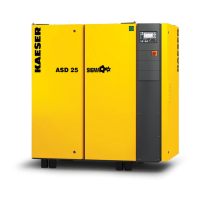
KAESER ASD 25 - User Manual

KAESER ASD 25
138 pages
Print Icon
To Next Page IconTo Next Page
Loading...
Service Manual
Screw Compressor
ASD T Tri-Voltage
9_5721 06 USE

Table of Contents

Question and Answer IconNeed help?

Do you have a question about the KAESER ASD 25 and is the answer not in the manual?

Summary

2 Technical Data

2.13 Power Supply

Basic requirements and types of power supply for the machine.

3 Safety and Responsibility

3.4.2 Qualified personnel

Defines qualifications required for operators and maintenance personnel.

3.5 Dangers

Information on various forms of danger and basic safety instructions.

3.5.1 Safely Dealing with Sources of Danger

Addresses dangers from electricity, compression, air quality, springs, and rotating parts.

3.5.2 Safe Machine Operation

Guidelines for safe transport, installation, and decommissioning of the machine.

3.6 Safety Devices

Lists and describes the safety devices provided to ensure safe working.

3.8 In Emergency

Procedures for handling emergencies, including fire fighting, oil contact, and refrigerant injury.

4 Design and Function

4.2 Functional Description of the Machine

Explains how the machine works, covering air intake, compression, and cooling oil circulation.

4.6 Operating States and Control Modes

Explains machine operating states and different control modes like DUAL, QUADRO, VARIO.

4.8 Safety Devices

Lists and describes the safety devices provided to ensure safe working.

5 Installation and Operating Conditions

5.1 Safety

Safety instructions for installation and operating conditions.

5.2 Installation Conditions

Details requirements for machine placement, distances, and ventilation.

5.2.1 Place of installation and distances

Specifies recommended distances from walls and for ventilation access.

5.2.2 Ensure adequate ventilation

Guidelines for ensuring sufficient airflow into the machine room.

6 Installation

6.1 Safety

Essential safety instructions to follow during the installation process.

6.5 Making the Power Supply Connection

Detailed steps for connecting the machine to the electrical power supply.

6.5.1 Changing main voltage connections

Procedures for adjusting voltage connections for the tri-voltage machine.

7 Initial Start-up

7.1 Safety

Safety instructions to follow before and during machine commissioning.

7.3 Checking Installation and Operating Conditions

Checklist to confirm all installation and operating conditions are met.

7.4 Setting the Overload Protection Cut-Out

Procedures for setting the overload protection for the star-delta configuration.

7.6 Pouring Cooling Oil into the Airend

Instructions for filling the airend with the correct amount of cooling oil.

7.7 Check Direction of Rotation

Procedures to verify the correct direction of rotation for the motor and fan.

7.8 Starting the machine for the first time

Step-by-step guide for the initial start-up of the machine.

8 Operation

8.1 Switching On and Off

Procedures for safely switching the machine on and off using the control panel keys.

8.2 Switching Off in an Emergency and Switching On again

Steps for using the emergency stop and restarting the machine after an incident.

8.5 Acknowledging Alarm and Warning Messages

How to acknowledge and reset alarm and warning messages on the controller.

9 Fault Recognition and Rectification

9.2 Alarm messages (machine shut-down)

Lists alarm messages, their possible causes, and remedies for machine shut-down.

9.3 Warning messages (yellow LED lights)

Lists warning messages, their possible causes, and remedies.

10 Maintenance

10.1 Safety

Safety instructions to follow when performing maintenance tasks.

10.2 Maintenance Schedule

Overview of maintenance intervals and tasks based on operating hours.

10.2.3 Regular maintenance tasks

Lists specific maintenance tasks required at different intervals.

10.2.4 Cooling oil changing interval

Details recommended intervals for changing cooling oil based on lubricants.

10.10 Checking the Safety Relief Valve

Procedure for testing the safety relief valve's function and blow-off pressure.

10.11 Checking the Overheating Safety Shutdown Function

Verifying that the machine shuts down correctly at high temperatures.

10.13 Venting the machine (depressurizing)

Steps to safely vent pressure from the machine before maintenance.

10.14 Topping up the Cooling Oil

Procedure for topping up the cooling oil level and test running the machine.

10.15 Changing the Cooling Oil

Procedure for draining and changing the cooling oil from all components.

10.16 Changing the Oil Filter

Steps for replacing the oil filter and performing a test run.

10.17 Changing the Oil Separator Cartridge

Procedure for replacing the oil separator cartridge.

12 Decommissioning, Storage and Transport

12.4 Transporting

Safety guidelines and methods for transporting the machine.

Summary

2 Technical Data

2.13 Power Supply

Basic requirements and types of power supply for the machine.

3 Safety and Responsibility

3.4.2 Qualified personnel

Defines qualifications required for operators and maintenance personnel.

3.5 Dangers

Information on various forms of danger and basic safety instructions.

3.5.1 Safely Dealing with Sources of Danger

Addresses dangers from electricity, compression, air quality, springs, and rotating parts.

3.5.2 Safe Machine Operation

Guidelines for safe transport, installation, and decommissioning of the machine.

3.6 Safety Devices

Lists and describes the safety devices provided to ensure safe working.

3.8 In Emergency

Procedures for handling emergencies, including fire fighting, oil contact, and refrigerant injury.

4 Design and Function

4.2 Functional Description of the Machine

Explains how the machine works, covering air intake, compression, and cooling oil circulation.

4.6 Operating States and Control Modes

Explains machine operating states and different control modes like DUAL, QUADRO, VARIO.

4.8 Safety Devices

Lists and describes the safety devices provided to ensure safe working.

5 Installation and Operating Conditions

5.1 Safety

Safety instructions for installation and operating conditions.

5.2 Installation Conditions

Details requirements for machine placement, distances, and ventilation.

5.2.1 Place of installation and distances

Specifies recommended distances from walls and for ventilation access.

5.2.2 Ensure adequate ventilation

Guidelines for ensuring sufficient airflow into the machine room.

6 Installation

6.1 Safety

Essential safety instructions to follow during the installation process.

6.5 Making the Power Supply Connection

Detailed steps for connecting the machine to the electrical power supply.

6.5.1 Changing main voltage connections

Procedures for adjusting voltage connections for the tri-voltage machine.

7 Initial Start-up

7.1 Safety

Safety instructions to follow before and during machine commissioning.

7.3 Checking Installation and Operating Conditions

Checklist to confirm all installation and operating conditions are met.

7.4 Setting the Overload Protection Cut-Out

Procedures for setting the overload protection for the star-delta configuration.

7.6 Pouring Cooling Oil into the Airend

Instructions for filling the airend with the correct amount of cooling oil.

7.7 Check Direction of Rotation

Procedures to verify the correct direction of rotation for the motor and fan.

7.8 Starting the machine for the first time

Step-by-step guide for the initial start-up of the machine.

8 Operation

8.1 Switching On and Off

Procedures for safely switching the machine on and off using the control panel keys.

8.2 Switching Off in an Emergency and Switching On again

Steps for using the emergency stop and restarting the machine after an incident.

8.5 Acknowledging Alarm and Warning Messages

How to acknowledge and reset alarm and warning messages on the controller.

9 Fault Recognition and Rectification

9.2 Alarm messages (machine shut-down)

Lists alarm messages, their possible causes, and remedies for machine shut-down.

9.3 Warning messages (yellow LED lights)

Lists warning messages, their possible causes, and remedies.

10 Maintenance

10.1 Safety

Safety instructions to follow when performing maintenance tasks.

10.2 Maintenance Schedule

Overview of maintenance intervals and tasks based on operating hours.

10.2.3 Regular maintenance tasks

Lists specific maintenance tasks required at different intervals.

10.2.4 Cooling oil changing interval

Details recommended intervals for changing cooling oil based on lubricants.

10.10 Checking the Safety Relief Valve

Procedure for testing the safety relief valve's function and blow-off pressure.

10.11 Checking the Overheating Safety Shutdown Function

Verifying that the machine shuts down correctly at high temperatures.

10.13 Venting the machine (depressurizing)

Steps to safely vent pressure from the machine before maintenance.

10.14 Topping up the Cooling Oil

Procedure for topping up the cooling oil level and test running the machine.

10.15 Changing the Cooling Oil

Procedure for draining and changing the cooling oil from all components.

10.16 Changing the Oil Filter

Steps for replacing the oil filter and performing a test run.

10.17 Changing the Oil Separator Cartridge

Procedure for replacing the oil separator cartridge.

12 Decommissioning, Storage and Transport

12.4 Transporting

Safety guidelines and methods for transporting the machine.

KAESER ASD 25 Specifications

General IconGeneral
ModelASD 25
TypeScrew Compressor
Free Air Delivery2.5 m³/min
Motor Power15 kW
Sound Level68 dB(A)
Dimensions (L x W x H)1250 x 810 x 1170 mm (49.2 x 31.9 x 46.1 in)
Pressure8 bar

Related product manuals