TP-6376 3/08 37Section 3 Electrical Connections and Requirements
3.4.9 Remote Start 2-Terminal
Connector
Use this 2-terminal connector to start the generator set
remotely. User-supplied wiring and SPST switch or ATS
contacts are required.
3.4.10 Voltage Selector Switch
(Located on Generator Set)
The voltage selector switch using K1 relay controls main
circuit breakers, GFCI receptacle circuit breakers, and
indicator lamps functions. The voltage selector switch is
further covered in Section 4, Prestart and Operation,
with a summary of the electrical power panel functions.
All circuit breakers, in addition to their normal function of
tripping during an overload, have a shunt-trip option.
Shunt trip occurs when the circuit breaker receives a
voltage source from the K1 relay normally open and
normally closed contacts. The voltage selector switch
energizes the K1 relay in the 480-volt position and
deenergizes K1 in the 208/240-volt positions.
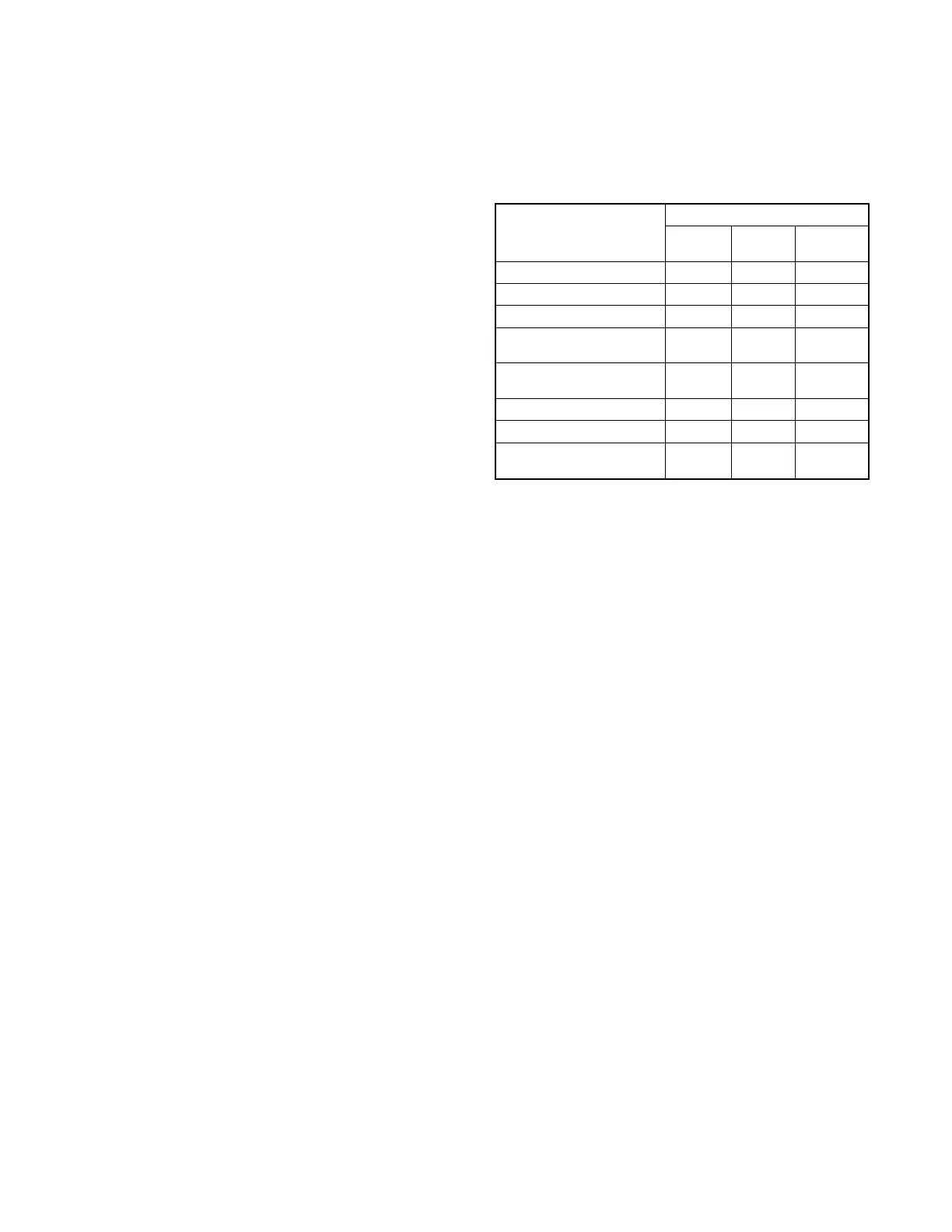
The voltage selector switch position determines which
voltage lamp, receptacles, and circuit breakers are
active. Do not move voltage selector switch while the
generator set is running. Section 3 provides the
electrical connection procedure for voltage. See
Figure 3-11 for a summary of the electrical power panel
functions.
Voltage Selector Switch Position
Function
480 V
High Wye
208 V
Low Wye
240 V
Single Ph.
208-volt lamp Off On Off
240-volt lamp, 60--200KRP Off Off On
480-volt lamp On Off Off
Main circuit breaker,
480-volt
On Off Off
Main circuit breaker,
208- to 240-volt
Off On On
Duplex GFCI receptacles Off On On
Camlocks, 60--200KRP On On On
K1 relay control of shunt trip
circuit breakers
On Off Off
Figure 3-11 Voltage Selector Switch Position and
Electrical Power Panel Functions



 To Next Page