At waterworks and wastewater treatment plants the Jackson Candle apparatus
was a standard instrument for measuring turbidities of incoming raw waters and
treated wastewater effluents for many years. The equipment was modified over
time but originally it consisted of a long glass tube supported over a “standard
candle.” Water was added to or removed from the tube until the image of the
candle flame became indistinct. The depth of the water in the tube was read off a
calibrated scale etched into the side of the tube, and results were reported
numerically as Jackson Turbidity Units (JTU). The lowest turbidity that can be
determined with this method is 25 Nephelometric Turbidity Units (NTU). Since
the EPA’s Surface Water Treatment requirements state that, finish water from
municipal treatment plants will have a turbidity less than 1 NTU, indirect
methods were developed to measure turbidity. Turbidimeters are the preferred
method.
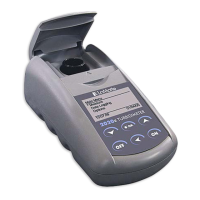
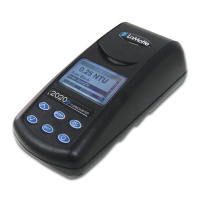
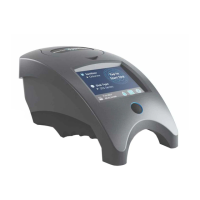
Nephelometers, such as the 2020, are turbidimeters that measure the scattered
light at 90 degrees from the light source. A reference beam passes through the
sample and is measured at 180 degrees. The ratio of these two readings is
electronically converted to a turbidity measurement in NTU.
9





 To Next Page