EasyManua.ls Logo

Lincoln C Series - User Manual

Lincoln C Series
24 pages
Print Icon
To Next Page IconTo Next Page
Loading...
ELECTRONIC LUBE METER
MODEL 905
Series "C"
GENERAL
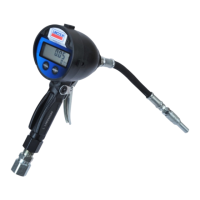
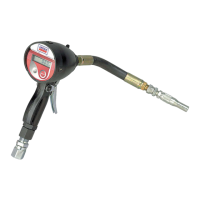
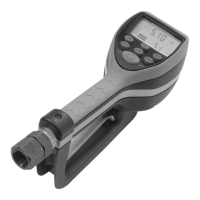
The Electronic Preset Meter (EPM) is designed specifically to
meter and dispense bulk fluids for servicing automobiles, trucks,
buses, construction equipment, and similar applications. The
meter is lightweight, rugged and has a comfortable grip. The
meter is designed specifically to dispense motor oils (S.A.E.
5-50), gear oils (S.A.E. 80-240), automatic transmission fluid,
and hydraulic fluid. The 905SF is designed specifically to
dispense anti-freeze (Ethylene Glycol), windshield wiper
fluid solution, and brake fluid.
A superior rugged, shock-resistant design for demanding
environments.
METER IS NOT FOR RESALE MEASUREMENT OF FLUID.
OPERATION
This unit can be programmed to dispense in quarts, liters, pints,
and gallons. You can program any batch size in a matter of
seconds. A 5-digit liquid crystal display, accurate to the second
decimal point, shows the exact amount of fluid dispensed.
The EPM meter uses 4 replaceable AA batteries and is
calibrated at the factory. The meter can also be recalibrated
easily in the field.
Electronic accuracy will help you save time and money. The
preset feature will allow users to perform other service tasks
while fluid is dispensed.
TYPICAL APPLICATIONS
• FleetMaintenanceShops
• IndustrialAssembly
• QuickLubeFacilities
• Dealerships
• ConstructionandMiningEquipment
• GeneralAutomotiveServiceCenters
• SpecialtyServiceandRepairShops
IMPORTANT NOTE: The automatic nozzle requires 60 PSI
to open and function properly. A pump exceeding 60 PSI is
required for adequate flow and proper operation. A pump ratio
of at least 3:1 is recommended.
FEATURES
• OvalGearDrivenMeter
• Durable,RuggedDesign
• RubberBoot
• Large,Easy-to-ReadLCDDisplay
• EaseofOperation
• CEApproved
• TotalizationinLitersandGallons
• DeliveryinLiters,Quarts,Pints,Gallons
• AutomaticNon-DripNozzlewithmanualshut-offfeature
• Max.TotalizerNumber:99,999GallonsorLiters
• Max.DispenseVolume:99,999Units
• Max.PresetVolume:99.9Units
• CalibrationFactorforDifferentFluids
• ChangeableUnitsofMeasure
• OneProgrammablePreset
• TotalandResettableTotal
• Minimum20,000CyclesonBatteryLife
• LowBatteryIndicator
• LowBatterySafetyLockOutFeature
• UsesStandardAABatteries
• In-LineSwivelStandardWithAllMeters
• AutomaticShut-OffatPresetAmount
• EmergencyElectricalShut-Off
• PrecisionControlValveOperation
Electronic Preset Meter
FORM 403760
Section - F22 Page - 23F
(IOM-134-01 P/N 53400-134 Rev. 1)
SEPTEMBER2008
To order call 1-800-548-1191 or visit www.partdeal.com - info@partdeal.com

Other manuals for Lincoln C Series

Questions and Answers

  • A
    Adam WhiteAug 14, 2025
    Why Lincoln Water Pump motor does not run?
    • S
      Steven WilliamsAug 14, 2025
      If the Lincoln Water Pump motor isn't running, it could be due to a few reasons. First, check the voltage supply to the pump; an interruption here could be the problem, so eliminate the cause of the fault. Second, the voltage supply to the printed-circuit board might be interrupted; inspect the line from the pump plug to the printed circuit board. Lastly, the printed circuit board itself may be defective, requiring replacement.
  • H
    Heather MeyerAug 17, 2025
    Why is Lincoln Measuring Instruments meter inaccurate?
    • C
      Christine DavisAug 18, 2025
      If the Lincoln Measuring Instruments are inaccurate, the scale factor may not be correct for the fluid you're measuring. To resolve this, enter program mode and check and reset the program factor.
  • J
    Jennifer GordonAug 21, 2025
    What to do if Lincoln Measuring Instruments have slow or no fluid flow?
    • C
      Christine BooneAug 21, 2025
      If you're experiencing slow or no fluid flow with your Lincoln Measuring Instruments, several factors could be responsible. The filter in the swivel nut might be clogged, so clean or replace it. Alternatively, the pump pressure could be low; try increasing the pump pressure. If these steps don't resolve the issue, foreign material may be jamming the meter.
  • J
    jonesanthonyAug 25, 2025
    What to do if the Lincoln Water Pump motor runs permanently for 30 minutes?
    • M
      miranda39Aug 25, 2025
      If the Lincoln Water Pump motor runs continuously for 30 minutes, the issue might stem from a defective proximity switch. Try disconnecting the main line to the monitored metering device. Alternatively, the cable connection of the proximity switch to the pump could be interrupted; in this case, check the cable connections to the pump, and if needed, replace the proximity switch with the connector. As a last resort, the printed circuit board might be defective, requiring replacement.
  • K
    Kiara BlakeAug 27, 2025
    What to do if there is excessive air or fluid from the air exhaust in Lincoln Engine?
    • K
      Kyle BerryAug 27, 2025
      If you observe an excessive amount of air in the fluid or too much fluid coming from the air exhaust of your Lincoln Engine (note that some fluid exhaust is normal), you should replace the 34310 Packing, 35135 Gland Packing, and 31050 Gland Gasket.
  • F
    Frank SheaAug 30, 2025
    What to do if Lincoln Engine pump does not operate?
    • T
      Thomas AlexanderAug 31, 2025
      If the Lincoln Engine pump does not operate, check the air supply to the air motor. Also, replace the 11475 Trip Shoe Assembly, 11947 Trip Sleeve, and 91331 Toggle Plate.
  • K
    Kimberly PachecoSep 3, 2025
    What to do if Lincoln Measuring Instruments meter does not latch for batching?
    • P
      Paul GarciaSep 3, 2025
      If the Lincoln Measuring Instruments meter does not latch for batching, it might be due to several reasons. First, ensure the meter is in AUTO mode by pressing the AUTO button and programming the batch size. Second, the meter may not have been reset after the prior batch, so press the RESET button. Finally, low batteries can cause this issue; check for the battery icon, replace the batteries, and then push the RESET button.
  • A
    Andre TrujilloSep 6, 2025
    What to do if Lincoln Measuring Instruments display is blank?
    • J
      Julia CarterSep 6, 2025
      If the display of your Lincoln Measuring Instruments is blank, the meter may be asleep; try pushing the reset button. Alternatively, the batteries might be dead; replace them and push the reset button. A program error could also cause this; remove and reinsert the battery pack, then push the reset button. Lastly, a loose battery connection could be the culprit; remove the battery pack, check the connection, and push the reset button.
  • J
    Johnny BrownSep 9, 2025
    How to fix battery icon on Lincoln Measuring Instruments?
    • J
      Judy WhiteSep 9, 2025
      If your Lincoln Measuring Instruments show the battery icon, it means the batteries are low and need to be replaced.

Summary

GENERAL

FEATURES

Highlights key attributes of the EPM meter, including its design, display, and operational capabilities.

Explosion and Fire Hazards

Meter Hazards

Meter Buttons

LCD Display

Meter Installation

Relieve System Pressure

Instructions for safely relieving system pressure before performing meter installation or maintenance.

Grounding

Explains the importance of grounding system components to prevent static electricity and fire hazards.

Apply Meter to Hose

Apply Nozzle to Meter

Meter Operation

Operating Mode Functions

Emergency Override

Describes the procedure for activating the Emergency Override to immediately stop fluid flow.

Change Factory Settings

Programming

Detailed steps for accessing and navigating the programming mode to change factory settings.

Change Scale Factor

Calculate Scale Factor

Specifications

Troubleshooting

Overview

The Lincoln Electronic Lube Meter, Model 905 Series "C", is a lightweight, rugged, and comfortable-to-grip device designed for metering and dispensing bulk fluids in various service applications. It is specifically engineered for use in fleet maintenance shops, industrial assembly, quick lube facilities, dealerships, construction and mining equipment, general automotive service centers, and specialty service and repair shops.

Function Description:

The EPM (Electronic Preset Meter) is primarily used for dispensing and measuring fluids. It can be programmed to dispense in quarts, liters, pints, and gallons, with batch sizes adjustable in seconds. A 5-digit liquid crystal display (LCD) shows the exact amount of fluid dispensed, accurate to the second decimal point. The meter features an automatic non-drip nozzle with a manual shut-off, ensuring precise control over fluid delivery. It also includes an emergency override function to immediately stop fluid flow in case of an emergency or to interrupt a batch. The meter's oval gear-driven mechanism contributes to its accuracy.

The 905SF model is specifically designed to dispense anti-freeze (Ethylene Glycol), windshield wiper fluid solution, and brake fluid. However, a warning on page 4 explicitly states that the meter is designed specifically to dispense petroleum products and should not be used for windshield wiper fluid, brake fluid, or water-based solutions, which contradicts the initial description of the 905SF. This discrepancy should be noted.

Important Technical Specifications:

  • Maximum Flow: 10 gpm (38 lpm)
  • Minimum Flow: 0.25 gpm (1 lpm)
  • Operating Pressure (Maximum): 1000 psi (67 bar)
  • Operating Pressure (Minimum): 5 psi (.35 bar)
  • Operating Temperature (Maximum): 120° F (50° C)
  • Operating Temperature (Minimum): 20° F (-5° C)
  • Accuracy - Oils: +/- 0.5%
  • Accuracy - Anti-freeze: +/- 1.5%
  • Display: 5-Digit LCD Display, showing Quarts, Pints, Gallons, Liters.
  • Inlet and Outlet Connections: ½" NPT or ½" BSPP (depending on meter model).
  • Power Source: 4 replaceable AA alkaline batteries.
  • Battery Life: Minimum 20,000 cycles.
  • Totalizer Number (Max): 99,999 Gallons or Liters.
  • Dispense Volume (Max): 99,999 Units.
  • Preset Volume (Max): 99.9 Units.
  • Nozzle Requirement: Automatic nozzle requires 60 PSI to open and function properly. A pump exceeding 60 PSI (at least a 3:1 ratio) is recommended for adequate flow.
  • CE Approved.

Usage Features:

  • Manual Mode: Operates as a free-flow dispensing handle. The display shows the dispensed amount, and flow stops when the trigger is released. The RESET button clears the counter display to zero.
  • Auto Batch Mode: Allows programming a specific batch size. The AUTO icon appears, and the batch quantity is shown on the LCD. Batch size can be adjusted using the 10, 1, and 0.1 buttons for increments of 10, 1, and 0.1 units respectively. When the trigger is pulled, the solenoid valve locks in the full open position, and flow automatically shuts off after the preset batch quantity is dispensed. After a batch, the meter functions as a free-flow handle until the RESET button is pressed for the next batch.
  • Re-settable/Accumulated Totals: The meter has two flow totalizers: a re-settable total and an accumulated total. The TOTAL button displays the accumulated total, and holding it for three seconds shows the re-settable total. The re-settable total can be reset to zero by pressing the RESET button while viewing it. The accumulated total cannot be reset unless the unit of measure is changed between English and metric.
  • Emergency Override: A red button on the meter activates an emergency override, immediately closing the valve and stopping fluid flow. Batching can resume by pulling the trigger.
  • Unit of Measure: Users can change the unit of measure between PT, QT, GAL, and L. When Liters is selected, the decimal point can be toggled between a period and a comma.
  • Scale Factor Calibration: The meter is factory-calibrated for 10W motor oil. The scale factor can be adjusted in the field to compensate for different fluid viscosities, which may cause fluid to slip past the meter gears without being detected. The scale factor is a number that the meter multiplies each pulse by to correct accuracy. Changing the scale factor can be done through a programming mode, allowing adjustment of five digits.
  • Low Battery Indicator: A low battery icon appears in the lower left corner of the display when batteries are low. If the icon flashes, battery power is too low, and meter functions are disabled.
  • Low Battery Safety Lock Out Feature: Disables meter functions when battery power is critically low.
  • In-Line Swivel: Standard with all meters.
  • Precision Control Valve Operation.

Maintenance Features:

  • Battery Replacement: The meter uses 4 AA alkaline batteries, located in a compartment on the underside of the trigger guard. Replacing batteries does not affect programmed values or totals.
  • Field Recalibration: The meter can be easily recalibrated in the field to maintain accuracy.
  • Flushing Procedure: Instructions are provided for flushing the system, especially for new installations or if fluid lines are contaminated, to ensure cleanliness before installing the meter(s).
  • System Grounding: Emphasizes the importance of grounding all system components (pump, hoses, air compressor, fluid supply container) according to local, state, and federal codes to prevent static electricity and potential explosions/fires.
  • Pressure Relief Procedures: Detailed steps are provided to relieve system pressure before maintenance or service to prevent injury from fluid spray.
  • Troubleshooting Guide: A table lists common symptoms (e.g., battery icon displayed, display blank, meter not latching for batching, slow flow, inaccurate meter) and their possible causes and remedies.

Important Warnings and Cautions:

  • Explosion and Fire Hazards: Improper grounding, poor ventilation, open flames, or sparks can cause explosions or fires. Users must ensure proper grounding, ventilation, and avoid smoking or debris near flammable fluids.
  • Meter Hazards: Equipment misuse can cause rupture or malfunction. The meter is for professional use only. Users must read all instructions, not modify the equipment, not leave it unattended, check daily for damage, not exceed maximum working pressure, use only designed extensions/nozzles, use compatible fluids, tighten all connections, not stop leaks with hands, not dispense towards people, not place hands near the dispense valve, and comply with all regulations.
  • Fluid Compatibility: The meter is designed for petroleum products. Using it for windshield wiper fluid, brake fluid, or water-based solutions is explicitly warned against (despite the 905SF description).
  • Scale Factor Accuracy: Changing the scale factor alters meter accuracy, potentially leading to overfill or underfill and mechanical breakdown.
  • Totalizer Reset: Changing the unit of measurement between metric and English clears both the re-settable and accumulated totals.
  • Meter Lock: The meter always locks in the maximum open position during auto-batch.

Lincoln C Series Specifications

General IconGeneral
BrandLincoln
ModelC Series
CategoryMeasuring Instruments
LanguageEnglish

Related product manuals