16
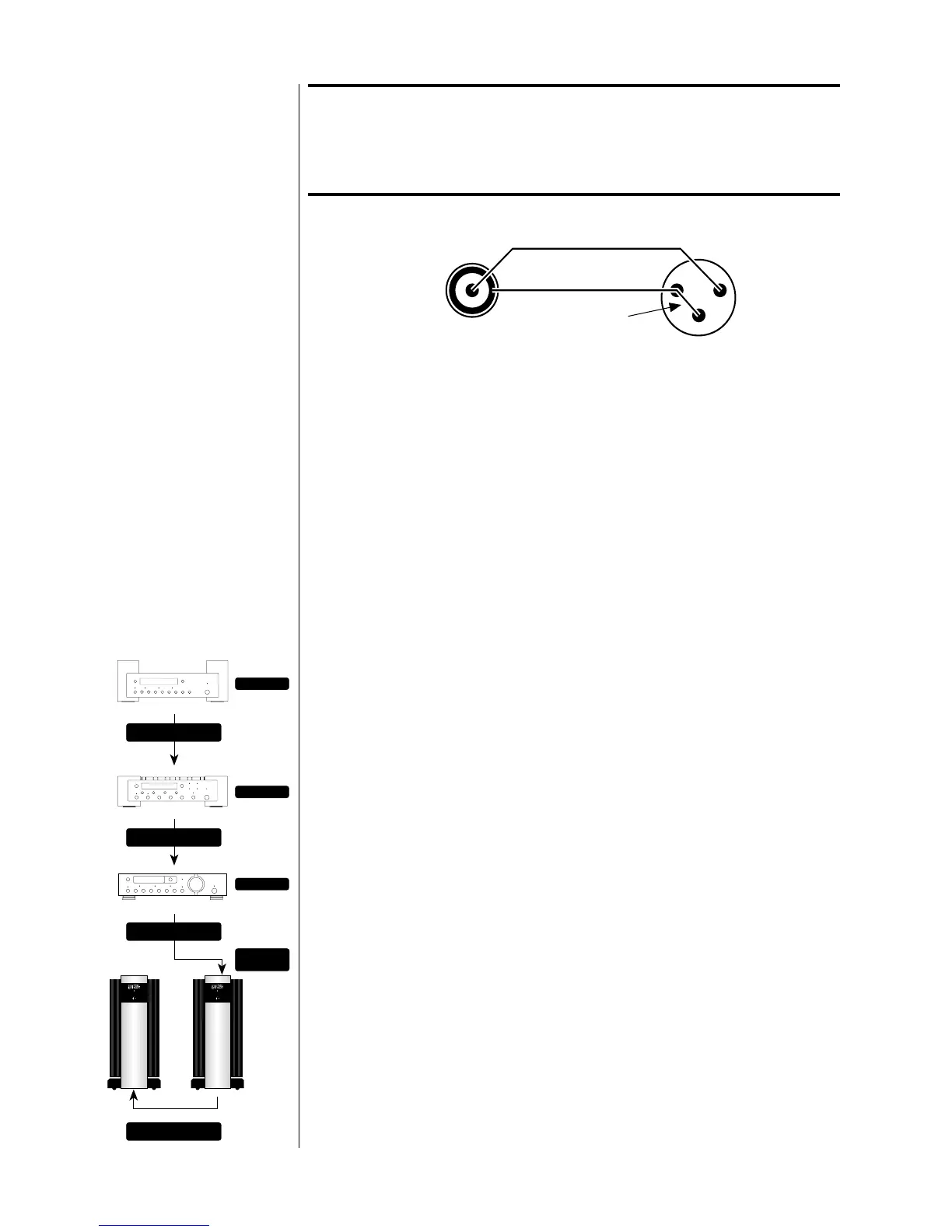
Note: If you won’t be using the Nº380’s balanced inputs and
need more single-ended inputs, it is possible to
fabricate a cable to connect line-level sources with
single-ended output to these balanced inputs:
1
2
3
Male RCA
(connect to source)
Male XLR
(connect to Nº380)
22-gauge
bus wire
4 Record Outputs
Connect these outputs to the right-channel and left-channel tape
inputs of your recorder. Make a note of which set of record out-
puts
you used with which recording device. It is important to
name the inputs you use and to associate the correct record out-
put
with the appropriate recording device. By giving the Nº380
this information, it can prevent accidental record loops that might
otherwise create disturbing feedback. (See “programming input
names” and “assigning record outputs” on pages 20-21.)
These outputs are unaffected by the output level control on the
front panel of the Nº380, or by the source chosen to be moni-
tored.
5 Slave and Master Communicator Ports
These communications ports allow the Nº380 to “link” to certain
compatible Mark Levinson components. (See “Linked Functions.” )
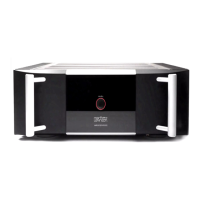
MADRIGAL AUDIO LABORATORIES
R
REFERENCE
MONAURAL
AMPLIFIER
Nº 33
MADRIGAL AUDIO LABORATORIES
R
REFERENCE
MONAURAL
AMPLIFIER
Nº 33
slave in
master
slave out
processor
slave
master
slave in
slave out
slave in
transport
preamp
power
amp(s)
8 to 8 Link Cable
8 to 8 Link Cable
6 to 6 Link Cable
8 to 6 Link Cable
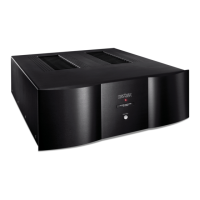
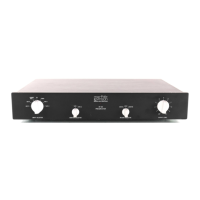
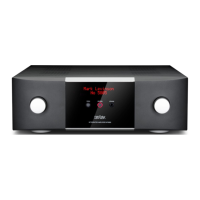
The Mark Levinson Linking system uses a Digital Audio Processor
as the Master of (and central clearinghouse for) inter-component
communications. Other components such as digital transports are
connected to the Master as “Slaves,” and can be “daisy-chained”
using their Slave In and Slave Out jacks. As the ultimate destina-
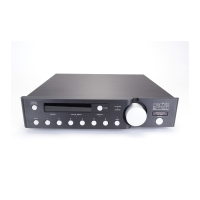
tion of all source signals, the Nº380 Preamplifier must be the final
“Slave” in the chain. (In technical terms, it terminates the communi-
cations bus.) In turn, the Nº380 can serve as a master to an associ-
ated compatible Mark Levinson power amplifier—hence its “Mas-
ter” communications port.






 To Next Page