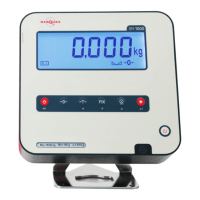
User Guide | BM1000P TOP
EN
24 Nov 2023
10 Nov 2023
PT
Dossier Técnico | BM1000
J TYPE MESSAGE
Using this message requires the activation of FrmJ and Icn on PROG-2; see the programming section
for more information.
Structure of the
weight message
J C C C C C C C ST K K K K K K CR LF
Caption
J
J character (ASCII 74h)
C (7)
Dots (internal counts)
ST
Status byte (fl ag)
K (6)
Weight
CR/LF
Ending characters for the weight message
Values for the ST fl ag [Ver a tabela da Mensagem P]
C TYPE MESSAGE
Message used in the C S M.
Structure of the
weight message
C N N N N N N p p p p p p p P P P P P P P ST CR LF
Caption
C
C Character (ASCII 67h)
N
6 digits of the number of units
p
7 digits for unit weight
These strings of bytes will always have a fl oat-
ing point, in case decimals are called for; if not,
the point is placed at the end of the string.
P
7 digit for net weight
ST
Byte de estado (fl ag)
CR/LF
Ending characters for the weight message
Values for the ST fl ag [See P-type table]
EPELSA PROTOCOL
Protocol used in 8 9; mode 8 entails continuous communication of weight; mode 9 works
by request, only being triggered when a request is received.
Request
$
Response
STX ST P P P P P P P P CR
Caption
$
$ character - ID for the request message
STX
Flag for the beginning of the message
ST
Status byte (fl ag)
P
Weight
CR
Ending character for the weight message
Values for the ST fl ag
7 6 5 4 3 2 1 0
Stable
Weight
Unstable
Weight
- Zero
Weight
- Net
Weight
Gross
Weight


 To Next Page