The temperature of water entering the load will depend very much on the sizing of the
secondary pump.
1. If the capacity of primary pump = secondary pump, there will be no flow in the bypass
loop. Hence, the water temperature entering the load will be equal to the water
temperature leaving the chiller.
2. If the capacity of primary pump > secondary pump, there will be a nett flow down the
loop and returned to the chiller unused. Therefore, tee A becomes a diverging tee and
tee B becomes a mixing tee. The water temperature entering the load will also be equal
to the water temperature leaving the chiller. However, the water temperature entering
the chiller will be colder due to mixing of the unused chilled water at tee B.
3. If the capacity of primary pump < secondary pump, there will be a nett flow up the loop
from B to A. Thus, tee A becomes a mixing tee and tee B becomes a diverging tee.
Then, the water temperature entering the load will be in between the water temperature
leaving the chiller and the water temperature entering the chiller.
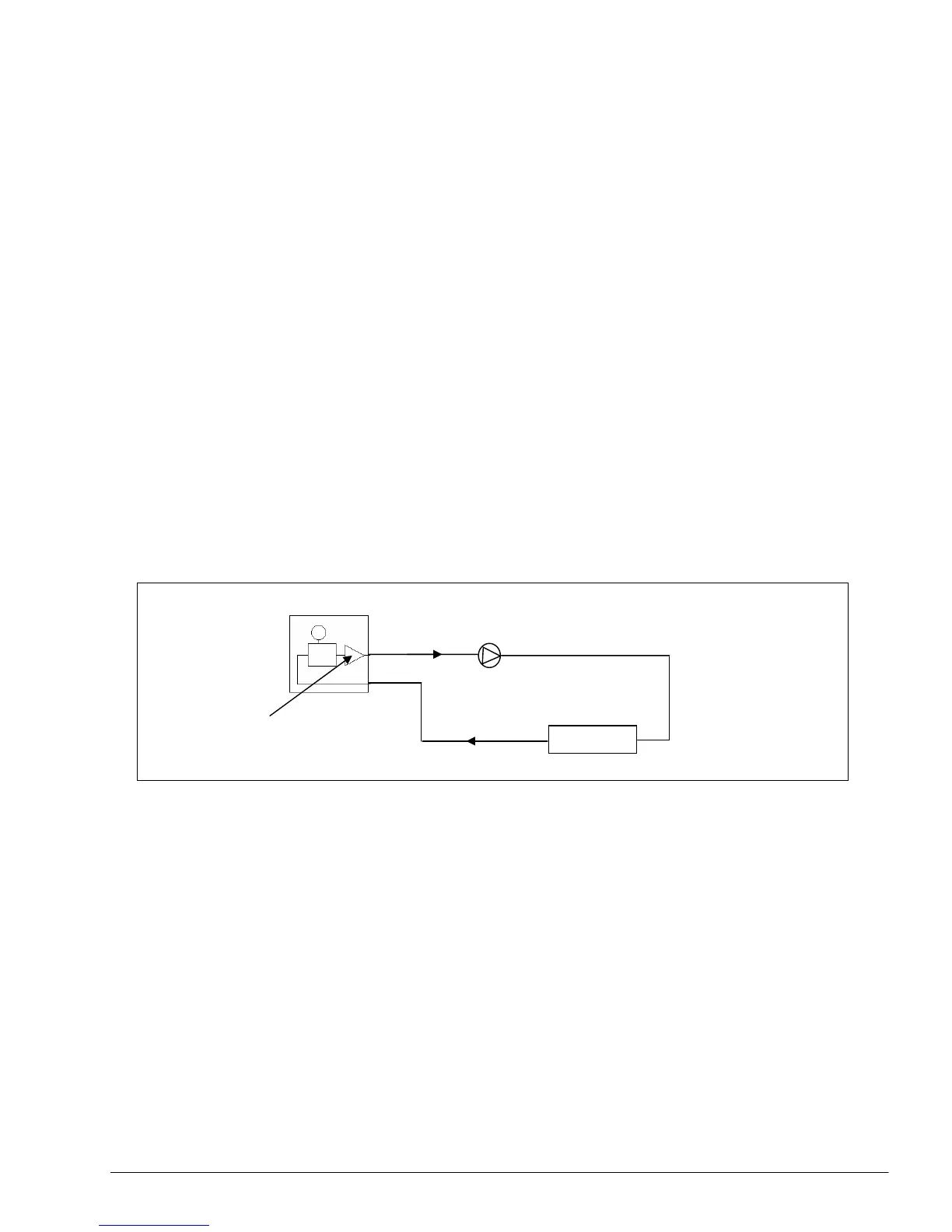
There may be installations using pumps in series to boost the head pressure.
But this is not recommended due to a high chance of wrong pump sizing which can
cause damage to the pumps themselves.
Primary pump
Secondary pump in series
Load
For this to work properly, both the primary and secondary pumps must be of the
same capacity. Else, the greater capacity pump will overflow the lesser pump and
cause:
a. Cavitation problems to the lesser pump.
b. Excessive pressure drops across the pump itself.
c. The extra head pressure build-up may cause damage to some of the
components in the chiller itself.
Section 2 Page 16


 To Next Page