1-833-454-0864
6
LP GAS CYLINDER (TANK) SPECIFICATIONS:
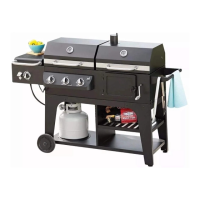
LP gas cylinder (not supplied with this grill)
The LP (Liquid Propane) gas cylinder is designed to be used with this grill must be 12” (30.5 cm)
diameter x 18” (45.7 cm) tall and have a 20 lb. (9.1 kg) capacity incorporating a Type 1 cylinder valve and
an over-lling protection device (OPD).
This grill is designed to t 20 lb. (9.1 kg) cylinders.
The installation of this appliance must be in accordance with:
All applicable local codes, or in the absence of local codes, either:
• National Fuel Gas Code ANSI Z223.1 NFPA 54
• Natural Gas and Propane Installation Code: CAN/CGA B149.1
• Natural Gas Installation Code: CAN/CGA B149.1 (Canada)
• Propane Installation Code: CAN/CGA B149.2 (Canada)
To check your local codes, see your local LP gas dealer or natural gas company.
When purchasing or exchanging a cylinder for your gas grill, it must be constructed and marked in
accordance with specications for LP gas cylinders of the U.S. Department of Transportation (DOT) or
the National Standard of Canada, CAN/CSA-B339 Cylinders, Spheres and Tubes for Transportation of
Dangerous Goods; and Commission, as applicable; and provided with a listed over-lling prevention device
(OPD), and provided with a cylinder connection device compatible with connection for outdoor cooking
appliances.
The cylinder must also be equipped with:
• A shut-o valve terminating in a Type 1 gas cylinder valve outlet.
• A Type 1 mating compatible with this barbecue. The type 1 valve is easily recognized by the large ACME
external threads on the outside of the valve that prevents gas ow until a positive seal is obtained.
• A device for vapor withdrawal.
• A collar to protect cylinder shut-o valve.
• A safety relief device having direct communication with vapor space of the cylinder.
• A listed over-lling prevention device (OPD).
• Cylinders must have a D.O.T certication, and a testing date that is within ve years of current use.
FILLING THE LP GAS CYLINDER (TANK):
WARNING
• Allow only qualied licensed LP gas dealers to properly ll or repair your LP gas cylinder.
• New tanks should be purged prior to lling; inform LP gas dealer if you are using a new tank.
• DO NOT allow the cylinder to be lled beyond 80% capacity. Over-lled tanks can create a
dangerous condition. Over-lled tanks can build-up pressure and cause the relief valve to expel
propane gas vapors. The vapor is combustible and if it comes in contact with a spark source or
ame an explosion causing severe burns, bodily harm, or death could occur.
• Always use a protective cylinder cap when grill is not connected to cylinder.
• If you exchange a cylinder with a qualied exchange program, the new cylinder must have a Type 1
valve and an over-lling prevention device (OPD).
• Inspect the propane tank valve rubber seal for cracks, wear or deterioration prior to use. A damaged
rubber seal can cause a gas leak, possibly resulting in an explosion, re or severe bodily harm.



 To Next Page