1-833-454-0864
15
PROPER CARE & MAINTENANCE
ATTENTION: If you are experiencing any of the following performance or safety issues: 1) barbecue not
reaching temperature potential, 2) yellow burner ames, 3) the smell gas, 4) popping noises, 5) delayed
burner ignition, 6) uneven heat, 7) ash res, or 8) grease res, TURN OFF YOUR grill immediately and
perform the following maintenance regime. Perform these steps when your barbecue is o and cool. A
thorough cleaning is recommended at least twice a year, or more if your barbecue is used consistently.
CLEANING THE HEAT PLATES
1. Remove heat plates.
2. Holding your heat plate over a large garbage receptacle, use a plastic paint scraper or a grill brush to
remove debris.
IF A MORE THOROUGH CLEANING IS REQUIRED:
3. Clean away all remaining debris with mild soap and warm water.
4. Dry thoroughly.
5. Re-install.
CLEANING THE BURNER
Keeping burners free of blockages including spiders, insects, nests and other debris that can block the
burner ports is essential for safe operation.
1. Use a clean grill brush to clean the outside of the burner.
2. Remove the hitch pin and pin used to secure the burners to the burner box. Use pliers if necessary.
3. Lift burners out slightly, exposing the burner venturi. Be careful not to damage or disconnect the
electrode connector.
4. Use a pipe cleaner or exible Venturi Brush to clean the interior of all burners. Shake any loose debris
out of the burner.
5. Use a wire or paper clip to clean burner port holes. Do not use anything that can damage or enlarge
port holes.
6. Use a clean soft bristle brush to clean spider/ insect screens.
7. Reinstall, ensuring that the burner orice is placed over the gas jet correctly.
PROPER BURNER ASSEMBLY
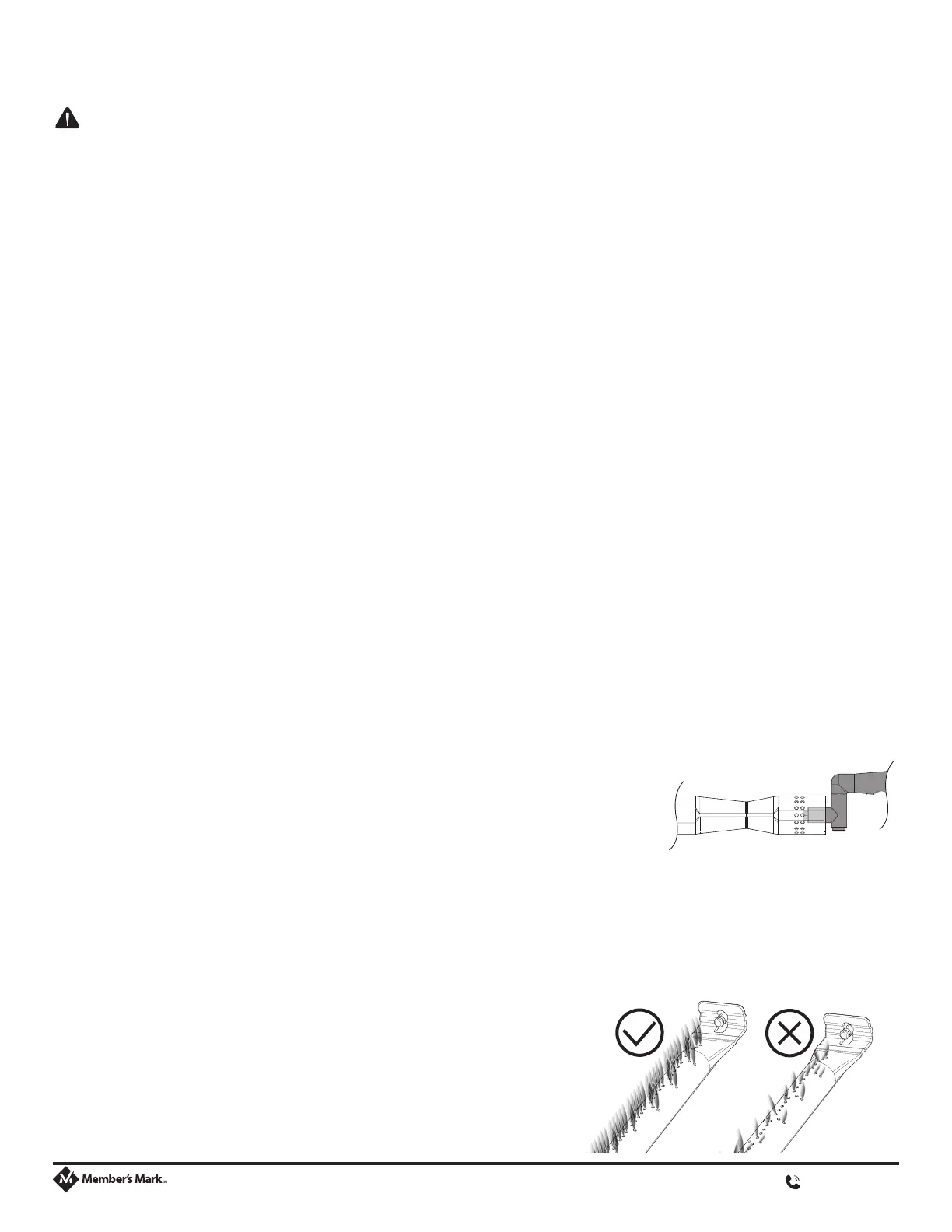
If the burner is not properly seated on the gas valve nozzle, as shown, dangerous
re or gas leakage can occur, causing death, injury and/ or property damage.
PROPER BURNER FLAME PATTERN
The burner ame pattern is the key indicator of proper or improper function within the cook system. When
the burners are performing correctly you will see a specic ame pattern. All burner ports should be 2.5
cm/ 1” ame on “HI” with orange tips, light blue center, with a darker blue ame at the base of the burner
port. Refer to the Troubleshooting section on page 19-20 if you experience any of the following issues:
• Large, unruly, or irregular orange burner ames.
• The smell of gas in conjunction with irregular ames.
• Low temperatures or uneven heat.
FOLLOW THE BURNER CLEANING PROCEDURE OUTLINED IN THE
PROPER CARE & MAINTENANCE SECTION (PAGE 15-17) OF THIS MANUAL
OR FOLLOW THE REGULATOR FLOW LIMITING DEVICE RESET PG 9.



 To Next Page