15
ATMOS 41
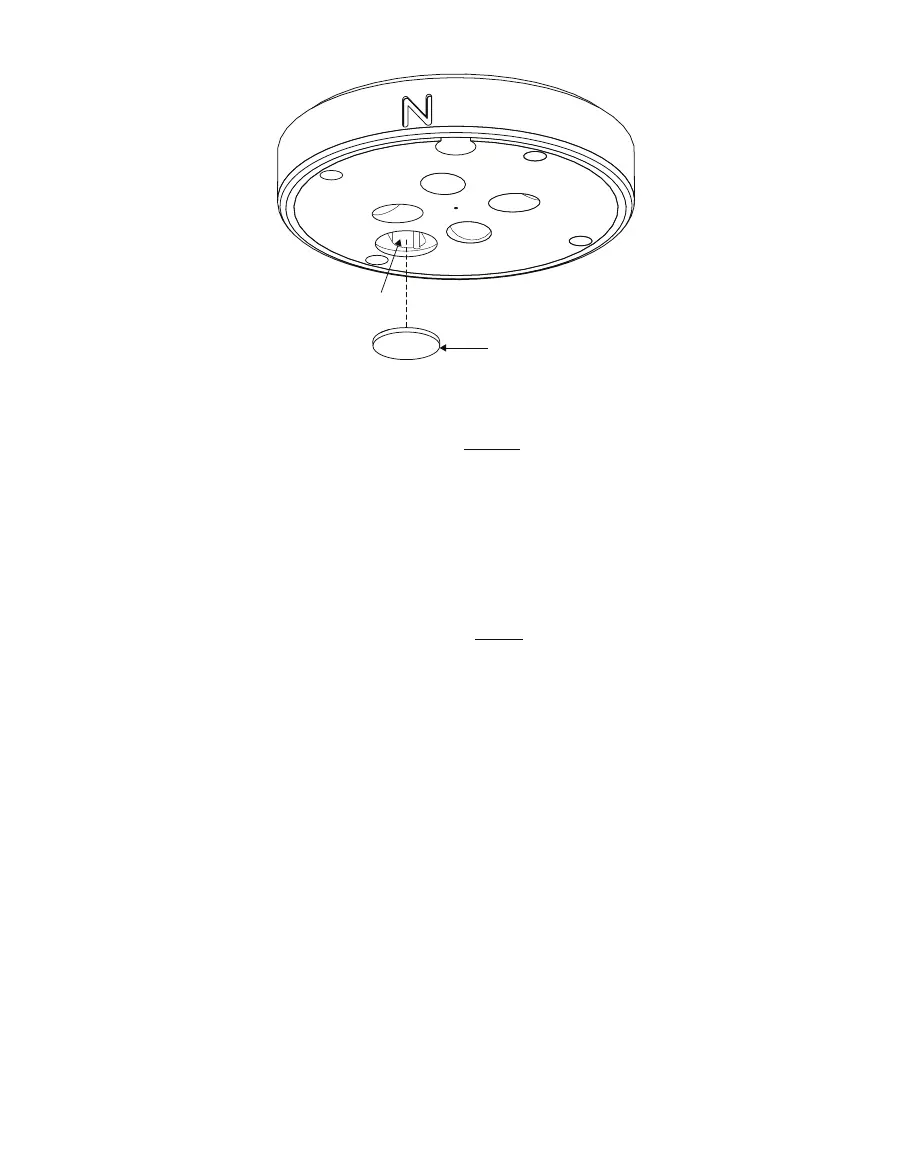
Teon screen
Vapor pressure sensor
Figure8 Vapor pressure sensor
If the relative humidity of the air is desired, it can be computed using Equation 1.
Equation 1
RH
r ,air
=
a
e
( T
)
where e
a
is the vapor pressure of the air, from the ATMOS41, and e
s
(T
air
) is saturation vapor
pressure at the air temperature given by the ATMOS41.
The saturation vapor pressure is calculated using the Magnus-Tetens equation (Equation 2)
with the following coefficients described by Buck (1981).
Equation 2
e
s
T
air
= a exp
bT
air
c + T
⎜
⎜
⎜
⎜
⎟
⎟
⎟
⎟
⎟
Water
a = 0.611 kPa b = 17.502 c
=
240.97 °C T
air
= Temperature in °C
Ice
a = 0.611 kPa b = 21.87 c
=
265.5 °C T
air
= Temperature in °C
Unlike relative humidity, vapor pressure does not depend on temperature, and is generally
conservative over time and space. The vapor pressure of the atmosphere near the relative
humidity sensor is the same as the vapor pressure at the relative humidity sensor, even if the
relative humidity sensor is not at the same temperature as the atmosphere. Additionally, it
is the vapor pressure of the atmosphere (not RH) that controls the rate of vapor phase water
transport (e.g., evaporation, transpiration, and distribution of water vapor). Therefore, vapor
pressure is a much more useful measure of atmospheric moisture than relative humidity.
The METER ZENTRA system calculates and outputs vapor pressure deficit (VPD) in the
standard data stream. VPD is simply
e
s
(T
air
) – e
a
and gives a good indication of evaporative
demand.
When powered on, the ATMOS41 measures the vapor pressure once every 60 s and
records the instantaneous values. When queried, the ATMOS41 outputs the average of the
instantaneous measurements since the last query.


 To Next Page