EasyManua.ls Logo

Microhard Systems VIP4Gb - User Manual

Microhard Systems VIP4Gb
207 pages
Print Icon
To Next Page IconTo Next Page
Loading...
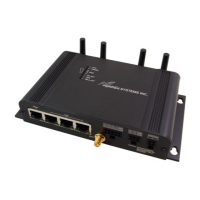
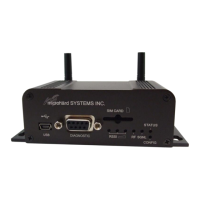
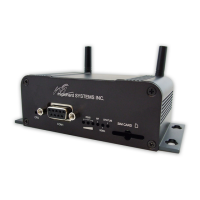
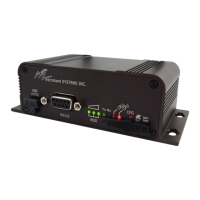
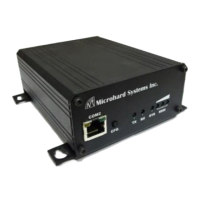
VIP4G / VIP4Gb
LTE Ethernet Bridge/Serial Gateway
Document: VIP4G Operating Manual.v1.6.pdf
FW Version: 1.1.6-r1190-4
Operating Manual
December 2015
150 Country Hills Landing NW
Calgary, Alberta
Canada T3K 5P3
Phone: (403) 248-0028
Fax: (403) 248-2762
www.microhardcorp.com

Table of Contents

Question and Answer IconNeed help?

Do you have a question about the Microhard Systems VIP4Gb and is the answer not in the manual?

Summary

Important User Information

Warranty

Microhard Systems Inc. warrants products against defects in material and workmanship for one year.

Warranty Disclaims

Microhard Systems Inc. disclaims all expressed or implied warranties for hardware, software, and products.

Important User Information (continued)

1.0 Overview

1.1 Performance Features

Key performance features of the VIP4G, including LTE link, data rates, I/O, Ethernet, GPS, and interfaces.

2.0 Quick Start

2.1 Installing the SIM Card

Instructions for installing the SIM card in the VIP4G before network use.

2.2 Getting Started with Cellular

Steps to connect cellular antenna, power up the unit, and establish cellular connectivity.

2.3 Getting Started with WiFi

2.3.1 Setting up WiFi

Steps to configure the VIP4G as a WiFi Access Point, including radio and virtual interface settings.

2.3.2 Connecting to WiFi

3.0 Hardware Features

3.1 VIP4 G

Overview of the VIP4G unit and its physical hardware features.

3.1.2 Connections

3.1.2.1 Front

Describes the front panel connectors of the VIP4G, including WAN, LAN, GPS, I/O, RS485/422, and power.

4.0 Configuration

4.0 Web User Interface

Outlines the initial steps for configuring the VIP4G using its Web User Interface.

4.0.1 Logon Window

4.1 System

4.1.1 System > Summary

Displays a summary of the VIP4G's status, including system, carrier, LAN/WAN, and WiFi information.

4.1.3 System > Access Control

Password Change

Allows changing the default 'admin' user password for enhanced security.

4.1.6 System > Maintenance

4.2 Network

4.2.1 Network > Status

Displays network interface status, including LAN, WAN, WiFi, connection type, IP, gateway, and DNS.

4.2.2 Network > LAN

LAN DHCP

4.2.3 Network > WAN

4.2.4 Network > WIFI

4.2.10 Network > SNMP

4.3 Carrier

4.3.1 Carrier > Status

Displays overview of cellular carrier information, including activity, network, data service type, and frequency band.

4.3.2 Carrier > Settings

4.3.6 Carrier > SMS Config

4.3.8 Carrier > Data Usage

Status

Enables or disables the VIP4G's tracking of cellular data consumption.

4.4 Wireless (WiFi)

4.4.1 Wireless > Status

Provides a summary of wireless settings and connections, including general and traffic status.

4.4.2 Wireless > Radio1

Mode

Defines the wireless standard (802.11a/b/g/n) for the wireless network.

4.4.3 Wireless > HotSpot

Hotspot Status

Enables or disables the hotspot authentication service.

4.4.4 Wireless > Netmotion

Disable;Enable

Enables or disables the Netmotion functionality of the modem.

4.5 Comport

4.5.1 Comport > Status

Summarizes serial port status, configuration, and statistical information about transmitted/received data.

4.5.2 Comport > Settings

IP Protocol Config

4.6 I;O

4.6.1 I;O > Status

Displays the status of the 4 VIP4G status inputs and 4 control outputs.

4.7 GPS

4.7.1 GPS > Location

Displays the VIP4G's location on a map, using GPS receiver or Cell ID data.

4.7.2 GPS > Settings

4.7.3 GPS > GPS Report

Report Define

Enables or disables UDP/Email GPS Reporting for up to 4 hosts.

4.8 Firewall

4.8.1 Firewall > Status

Shows detailed information about how the firewall is operating, including All, Filter, Nat, Raw, and Mangle options.

4.8.2 Firewall > General

Firewall Status

Enables or disables the firewall; when disabled, modem is open to anyone.

4.8.3 Firewall > Rules

4.8.4 Firewall > Port Forwarding

DMZ Mode

Enables or disables DMZ Mode to forward all traffic to a specific IP address on the LAN.

4.8.5 Firewall > MAC-IP List

4.9 Router

4.9.1 Router > RIPv2

Configures RIPv2 routing for exchanging routing information with attached networks.

4.10 VPN

4.10.1 VPN > Summary

Overview of VPN capabilities, including IPsec Gateway to Gateway, L2TP Server, and L2TP Client.

4.9.2 VPN > Gateway To Gateway (Site-to-Site)

Local Group Setup

Local Security Gateway Type

Specifies method for identifying the router to establish the VPN tunnel.

Remote Group Setup

Remote Security Gateway Type

Specifies method for identifying the router for VPN tunnel establishment.

IPsec Setup

4.10.3 VPN > Client To Gateway (L2 TP Client)

4.10.4 VPN > VPN Client Access

4.11 MultiWAN

4.11.1 MultiWAN > Status

Provides an overview of both WAN connections and their configuration, detailing wired and cellular WAN status.

4.10.2 MultiWAN > Settings

Multi Wan status

Enables or disables the MultiWan service on the VIP4G.

Primary Connection

Defines the primary network/internet connection for the VIP4G.

4.12 Tools

4.12.1 Tools > Discovery

Network discovery tool to find VIP4G/VIP Series units on the network and report details.

Network Discovery

Initiates network broadcast to find devices, reporting MAC, IP, description, firmware, mode, and SSID.

4.12.3 Tools > NMS Settings

4.12.4 Tools > Event Report

Event Type

Selects the type of event to be reported (Modem_Event, SDP_Event, Management).

4.12.5 Tools > Modbus

4.12.5.1 Modbus > TCP Modbus

Configures the VIP4G to operate as a TCP/IP Modbus slave and respond to Modbus requests.

Network Tools Ping

Network TraceRoute

5.0 AT Command Line Interface

5.1 AT Command Overview

Explains how AT Commands can be issued to configure and manage the VIP4G via serial or TCP/IP.

5.1.1 Serial Port

Details connecting to the VIP4G's serial port using a terminal emulation program.

5.1.2 Telnet (TCP;IP)

5.2 AT Command Syntax

5.3 Supported AT Commands

Appendix B: IP-Passthrough Example (Page 1 of 2)

Appendix B: IP-Passthrough Example (Page 2 of 2)

Appendix C: Port Forwarding Example (Page 1 of 2)

Appendix C: Port Forwarding Example (Page 2 of 2)

Appendix D: Firewall Example (Page 1 of 2)

Appendix D: Firewall Example (Page 2 of 2)

Appendix E: VPN Example (Page 1 of 2)

Appendix E: VPN Example (Page 2 of 2)

Appendix G: Firmware Recovery Procedure

Appendix H: Troubleshooting (FAQ)

Appendix H: Troubleshooting

Summary

Important User Information

Warranty

Microhard Systems Inc. warrants products against defects in material and workmanship for one year.

Warranty Disclaims

Microhard Systems Inc. disclaims all expressed or implied warranties for hardware, software, and products.

Important User Information (continued)

1.0 Overview

1.1 Performance Features

Key performance features of the VIP4G, including LTE link, data rates, I/O, Ethernet, GPS, and interfaces.

2.0 Quick Start

2.1 Installing the SIM Card

Instructions for installing the SIM card in the VIP4G before network use.

2.2 Getting Started with Cellular

Steps to connect cellular antenna, power up the unit, and establish cellular connectivity.

2.3 Getting Started with WiFi

2.3.1 Setting up WiFi

Steps to configure the VIP4G as a WiFi Access Point, including radio and virtual interface settings.

2.3.2 Connecting to WiFi

3.0 Hardware Features

3.1 VIP4 G

Overview of the VIP4G unit and its physical hardware features.

3.1.2 Connections

3.1.2.1 Front

Describes the front panel connectors of the VIP4G, including WAN, LAN, GPS, I/O, RS485/422, and power.

4.0 Configuration

4.0 Web User Interface

Outlines the initial steps for configuring the VIP4G using its Web User Interface.

4.0.1 Logon Window

4.1 System

4.1.1 System > Summary

Displays a summary of the VIP4G's status, including system, carrier, LAN/WAN, and WiFi information.

4.1.3 System > Access Control

Password Change

Allows changing the default 'admin' user password for enhanced security.

4.1.6 System > Maintenance

4.2 Network

4.2.1 Network > Status

Displays network interface status, including LAN, WAN, WiFi, connection type, IP, gateway, and DNS.

4.2.2 Network > LAN

LAN DHCP

4.2.3 Network > WAN

4.2.4 Network > WIFI

4.2.10 Network > SNMP

4.3 Carrier

4.3.1 Carrier > Status

Displays overview of cellular carrier information, including activity, network, data service type, and frequency band.

4.3.2 Carrier > Settings

4.3.6 Carrier > SMS Config

4.3.8 Carrier > Data Usage

Status

Enables or disables the VIP4G's tracking of cellular data consumption.

4.4 Wireless (WiFi)

4.4.1 Wireless > Status

Provides a summary of wireless settings and connections, including general and traffic status.

4.4.2 Wireless > Radio1

Mode

Defines the wireless standard (802.11a/b/g/n) for the wireless network.

4.4.3 Wireless > HotSpot

Hotspot Status

Enables or disables the hotspot authentication service.

4.4.4 Wireless > Netmotion

Disable;Enable

Enables or disables the Netmotion functionality of the modem.

4.5 Comport

4.5.1 Comport > Status

Summarizes serial port status, configuration, and statistical information about transmitted/received data.

4.5.2 Comport > Settings

IP Protocol Config

4.6 I;O

4.6.1 I;O > Status

Displays the status of the 4 VIP4G status inputs and 4 control outputs.

4.7 GPS

4.7.1 GPS > Location

Displays the VIP4G's location on a map, using GPS receiver or Cell ID data.

4.7.2 GPS > Settings

4.7.3 GPS > GPS Report

Report Define

Enables or disables UDP/Email GPS Reporting for up to 4 hosts.

4.8 Firewall

4.8.1 Firewall > Status

Shows detailed information about how the firewall is operating, including All, Filter, Nat, Raw, and Mangle options.

4.8.2 Firewall > General

Firewall Status

Enables or disables the firewall; when disabled, modem is open to anyone.

4.8.3 Firewall > Rules

4.8.4 Firewall > Port Forwarding

DMZ Mode

Enables or disables DMZ Mode to forward all traffic to a specific IP address on the LAN.

4.8.5 Firewall > MAC-IP List

4.9 Router

4.9.1 Router > RIPv2

Configures RIPv2 routing for exchanging routing information with attached networks.

4.10 VPN

4.10.1 VPN > Summary

Overview of VPN capabilities, including IPsec Gateway to Gateway, L2TP Server, and L2TP Client.

4.9.2 VPN > Gateway To Gateway (Site-to-Site)

Local Group Setup

Local Security Gateway Type

Specifies method for identifying the router to establish the VPN tunnel.

Remote Group Setup

Remote Security Gateway Type

Specifies method for identifying the router for VPN tunnel establishment.

IPsec Setup

4.10.3 VPN > Client To Gateway (L2 TP Client)

4.10.4 VPN > VPN Client Access

4.11 MultiWAN

4.11.1 MultiWAN > Status

Provides an overview of both WAN connections and their configuration, detailing wired and cellular WAN status.

4.10.2 MultiWAN > Settings

Multi Wan status

Enables or disables the MultiWan service on the VIP4G.

Primary Connection

Defines the primary network/internet connection for the VIP4G.

4.12 Tools

4.12.1 Tools > Discovery

Network discovery tool to find VIP4G/VIP Series units on the network and report details.

Network Discovery

Initiates network broadcast to find devices, reporting MAC, IP, description, firmware, mode, and SSID.

4.12.3 Tools > NMS Settings

4.12.4 Tools > Event Report

Event Type

Selects the type of event to be reported (Modem_Event, SDP_Event, Management).

4.12.5 Tools > Modbus

4.12.5.1 Modbus > TCP Modbus

Configures the VIP4G to operate as a TCP/IP Modbus slave and respond to Modbus requests.

Network Tools Ping

Network TraceRoute

5.0 AT Command Line Interface

5.1 AT Command Overview

Explains how AT Commands can be issued to configure and manage the VIP4G via serial or TCP/IP.

5.1.1 Serial Port

Details connecting to the VIP4G's serial port using a terminal emulation program.

5.1.2 Telnet (TCP;IP)

5.2 AT Command Syntax

5.3 Supported AT Commands

Appendix B: IP-Passthrough Example (Page 1 of 2)

Appendix B: IP-Passthrough Example (Page 2 of 2)

Appendix C: Port Forwarding Example (Page 1 of 2)

Appendix C: Port Forwarding Example (Page 2 of 2)

Appendix D: Firewall Example (Page 1 of 2)

Appendix D: Firewall Example (Page 2 of 2)

Appendix E: VPN Example (Page 1 of 2)

Appendix E: VPN Example (Page 2 of 2)

Appendix G: Firmware Recovery Procedure

Appendix H: Troubleshooting (FAQ)

Appendix H: Troubleshooting

Microhard Systems VIP4Gb Specifications

General IconGeneral
BrandMicrohard Systems
ModelVIP4Gb
CategoryGateway
LanguageEnglish

Related product manuals