This document is strictly private and confidential, reproduction without Micropack approval is prohibited. © Micropack Engineering Ltd, 2018
5.2 Detection Coverage
Detector locations can be chosen from computer models or from site surveys. The detectors
should be aligned to view the intended hazard considering any obstruction and
congestion.
Software analysis of the actual detector coverage may be required to ensure adequate coverage
of the hazards. This analysis can also be used to optimise the number of detectors and the loop
configuration. The cones of vision are detailed in Appendix C.
5.3 Exposure to Flare Radiation
Flame detectors are frequently used where hydrocarbon fire hazards are expected; these are
quite often processing plants where a flare stack is in use nearby. The detector shall not have a
direct view of the flare or a reflected view of the flare.
5.4 Optical Contamination
There are many sources of contamination such as oil, water (deluge water, rain and sea-spray),
snow, ice, and internal misting. Excessive contamination of the detector faceplate may result in
an increased maintenance requirement and potentially reduce the detector’s sensitivity. Where
detectors are mounted at low level, care should be taken to avoid contamination (such as water
and oil) from equipment above the detector. Care should be taken in sighting the detector to
minimise the likelihood of such contamination. The detector is designed such that an optical
fault
is indicated after a confirmation period of 15 minutes, when half of the detection range
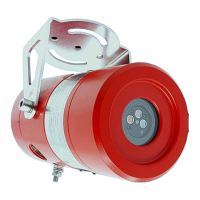
remains. This is indicated by the fault output and is evident by the yellow colour of the LED on
the face of the detector. The optical fault condition
indicates that the detector requires cleaning
or service. The optical fault indication is self-clearing.
5.5 Enclosed Areas
In enclosed areas, if dense smoke is expected to accumulate at the onset of the fire, the detector
should be mounted 1 to 2 metres below the ceiling level.
5.6 Detector Sensitivity
The detector’s response to a fire is a function of the fuel source and how it is released, fire size
and distance, orientation to the detector and local ambient conditions. The typical figures are
based on in-house tests except where marked with the FM logo these tests were conducted and
certified by Factory Mutual. As with all tests the results must be interpreted according to the
individual application considering all possible variables.
The detector sensitivity to different fuel sources is dependent on the Radiant Heat Output of the
flame, the detectors typical response is shown below (see table 4). The detector will only detect
Hydrocarbon fires.
5.7 Detector Alarm Delay
The detector can be factory configured with an alarm delay of up to 30 seconds. If this option is
selected, however, it invalidates the SIL 2 and FM certification shown within this manual.


 To Next Page