EasyManua.ls Logo

Miller Trailblazer 302 Diesel - User Manual

Miller Trailblazer 302 Diesel
68 pages
Print Icon
To Next Page IconTo Next Page
Loading...
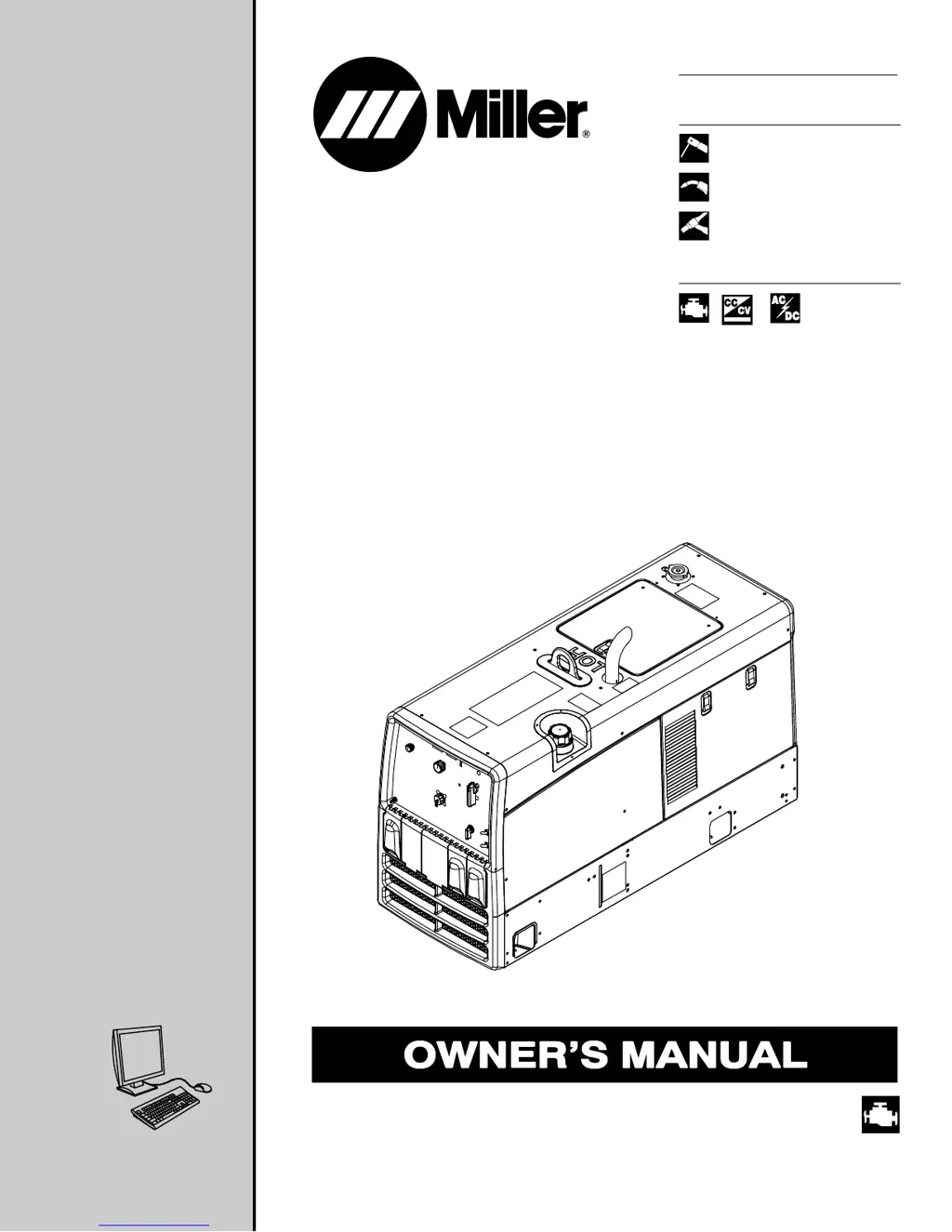
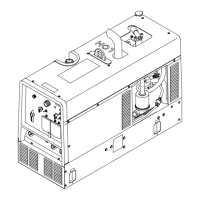
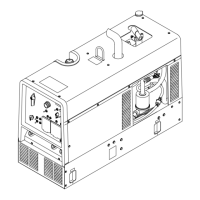
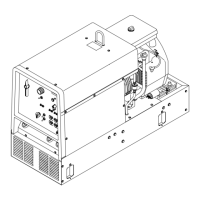
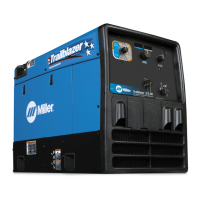
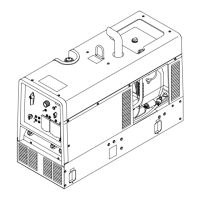
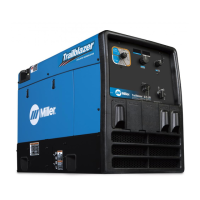
Trailblazer 302 Diesel
Processes
Description
R
AC/DC TIG (GTAW) Welding
Stick (SMAW) Welding
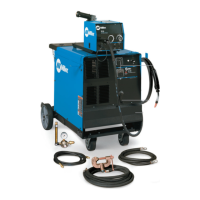
MIG (GMAW) Welding
Flux Cored (FCAW) Welding
Engine Driven Welding Generator
OM-217 454S
201105
File: Engine Drive
Visit our website at
www.MillerWelds.com

Table of Contents

Questions and Answers

  • B
    Brian OrtizAug 17, 2025
    What to do if my Miller Welding System has no weld output?
    • A
      Alejandro MooreAug 18, 2025
      If your Miller Welding System has no weld output, start by checking the weld control settings and weld connections. Ensure that the equipment is disconnected from generator power receptacles during start-up. You may also need to increase the voltage/amperage control settings on the front panel or remote. Verify and secure the connections to the Remote receptacle RC4. If these steps don't resolve the issue, a Factory Authorized Service Agent should inspect the brushes, slip rings, and circuit boards PC1 and PC2.
  • R
    Robert RodriguezAug 20, 2025
    Why is the weld output erratic on my Miller Trailblazer 302 Diesel?
    • A
      austinandrewAug 20, 2025
      If you're experiencing erratic weld output with your Miller Welding System, begin by checking the control settings. Ensure all connections, both inside and outside the unit, are clean and tight. Inspect and secure lead connections to the remote control, and ensure the connection to the workpiece is clean and tight. Remove any excessive coils from the weld cables and use dry, properly stored electrodes. Check the engine speed and adjust if necessary. Verify proper shielding gas coverage while welding. If the problem persists, have a Factory Authorized Service Agent check the brushes, slip rings, and circuit boards PC1 and PC2.
  • M
    Mario GomezAug 22, 2025
    How to troubleshoot low weld output on a Miller Welding System?
    • J
      Joshua VincentAug 23, 2025
      If your Miller Welding System has low weld output, check the control settings. Increase the voltage/amperage control settings on the front panel or remote. Inspect and clean the air cleaner as needed. Clean or replace the fuel filter and inline fuel strainer if necessary. Check and adjust the engine speed, and consult the engine manual. If the issue continues, have a Factory Authorized Service Agent inspect the brushes, slip rings, and circuit boards PC1 and PC2.
  • G
    Gina HornAug 26, 2025
    What causes high weld output in a Miller Trailblazer 302 Diesel Welding System?
    • K
      Keith PrinceAug 26, 2025
      If your Miller Welding System has high weld output, start by checking the control settings. Check and adjust the engine speed. Also, check for any obstructed movement of the solenoid linkage. If the issue persists, have a Factory Authorized Service Agent check circuit boards PC1 and PC2.
  • V
    Valerie FowlerAug 28, 2025
    Why does my Miller Welding System have no remote voltage/amperage control?
    • T
      Teresa MitchellAug 28, 2025
      If you have no remote voltage/amperage control on your Miller Welding System, check and tighten the connections to the Remote receptacle RC4. Also, check and secure the lead connections to the remote control.
  • D
    Dr. Thomas LopezAug 30, 2025
    What to do if there is no 24 volt AC power output at Remote receptacle RC4 on my Miller Trailblazer 302 Diesel Welding System?
    • A
      Anna GreenAug 30, 2025
      If there is no 24 volt AC power output at the Remote receptacle RC4 on your Miller Welding System, reset the supplementary protector CB4.
  • A
    Anthony MatthewsSep 1, 2025
    How to fix no front panel voltage/amperage control on a Miller Trailblazer 302 Diesel Welding System?
    • M
      Michael RushSep 2, 2025
      If your Miller Welding System has no front panel voltage/amperage control, disconnect the remote control from the Remote receptacle RC4 if it is not needed for the weld process.
  • K
    Kelly WoodardSep 4, 2025
    What to do if there is no 115 volt ac power output at Remote receptacle RC4 on my Miller Trailblazer 302 Diesel?
    • M
      Mr. Michael ToddSep 4, 2025
      If there is no 115 volt AC power output at the Remote receptacle RC4 on your Miller Welding System, reset the supplementary protector(s) CB1 and/or CB3.
  • S
    Sally SimsSep 6, 2025
    What to do if my Miller Trailblazer 302 Diesel Welding System has erratic weld output?
    • E
      Erin LiuSep 6, 2025
      If the weld output of your Miller Welding System is erratic, check the control settings. Ensure that connections both inside and outside the unit are clean and tight. Check and secure lead connections to the remote control, and make sure the connection to the workpiece is clean and tight. Remove excessive coils from weld cables and use dry, properly stored electrodes. Check and adjust the engine speed. Check the shielding gas and ensure proper shielding gas coverage while welding. If problems persist, have a Factory Authorized Service Agent check the brushes, slip rings, and circuit boards PC1 and PC2.
  • T
    Tommy PetersonSep 9, 2025
    How to fix high weld output on a Miller Trailblazer 302 Diesel Welding System?
    • R
      Raymond VasquezSep 9, 2025
      To address high weld output on your Miller Welding System, first check the control settings. Then, check and adjust the engine speed. Also, check for obstructed movement of the solenoid linkage. If the issue persists, have a Factory Authorized Service Agent check circuit boards PC1 and PC2.

Summary

OWNERS MANUAL

Trailblazer 302 Diesel

Model name and designation of the welding generator.

From Miller to You

SECTION 1 - SAFETY PRECAUTIONS

Symbol Usage

Explanation of safety symbols used throughout the manual to identify hazards.

Arc Welding Hazards

Details potential hazards associated with arc welding processes and provides safety guidelines.

Engine Hazards

Highlights dangers related to the engine, including battery explosion, fuel, and moving parts.

Hydraulic Hazards

Covers risks associated with hydraulic equipment, fluid, and moving parts.

California Proposition 65 Warnings

Principal Safety Standards

SECTION 3 - DEFINITIONS

Symbol Definitions

Defines various symbols used in the manual, including operational and safety indicators.

SECTION 4 - SPECIFICATIONS

Weld, Power, and Engine Specifications

Provides detailed technical specifications for welding output, power ratings, and engine.

SECTION 5 - INSTALLATION

Installing Welding Generator

Guidance on how to properly position and mount the welding generator unit.

Grounding Generator To Truck Or Trailer Frame

Instructions for safely grounding the generator frame to a vehicle for electrical safety.

Connecting the Battery

Steps for correctly connecting the generator's battery, including polarity.

SECTION 6 - OPERATING THE WELDING GENERATOR

Engine Control Switches

Details the function and operation of engine control switches for starting, stopping, and speed.

Weld Output Controls

Explains the controls for adjusting weld voltage, amperage, and selecting welding processes.

Process;Contactor Switch

Describes how to use the switch to select welding processes and control weld output.

Stick Start Procedure - Scratch Start Technique

Provides step-by-step instructions for initiating a stick welding arc using the scratch start method.

Lift-Arc TIG With Auto-Crater And Auto-Stop

Remote Amperage Control

SECTION 7 - OPERATING AUXILIARY EQUIPMENT

Generator Power Receptacles

Details the types and ratings of power receptacles available for auxiliary equipment.

Wiring Optional 240 Volt Plug

Instructions and diagrams for wiring a 240-volt plug for auxiliary power connections.

SECTION 8 - MAINTENANCE AND TROUBLESHOOTING

Routine Maintenance

Schedule and procedures for regular maintenance tasks based on operating hours.

Servicing Air Cleaner

Steps for cleaning or replacing the engine's air filter element.

Maintenance Label And Engine Maintenance Activities

Information on engine oil, fuel, coolant, and related maintenance activities.

TRAILBLAZER KUBOTA D722 ENGINE

Specific engine maintenance details, including fluid capacities and service intervals.

Adjusting Engine Speed

Overload Protection

Troubleshooting Tables

SECTION 9 - PARTS LIST

Recommended Spare Parts

List of essential spare parts recommended for maintenance and replacement.

SECTION 10 - ELECTRICAL DIAGRAMS

Circuit Diagram For Welding Generator

Detailed electrical schematic showing the generator's wiring and components.

SECTION 11 - RUN-IN AND WETSTACKING

Run-In And Wetstacking

Information regarding engine run-in procedures and the phenomenon of wetstacking.

SECTION 12 - PERFORMANCE DATA

Fuel Consumption Curves

Graphs illustrating fuel consumption rates based on welding load and auxiliary power usage.

Generator Power Curve

Chart showing available AC power output in amperes at different voltages.

Duty Cycle

Explanation and graph detailing the unit's welding duty cycle capabilities.

Stick Mode Volt-Ampere Curves

Volt-ampere characteristics for Stick welding modes (CC/DC and CC/AC).

TIG Mode Volt-Ampere Curves

MIG Mode Volt-Ampere Curve

SECTION 13 - GENERATOR POWER GUIDELINES

Selecting Equipment

Guidance on choosing appropriate auxiliary equipment and understanding power requirements.

Grounding Generator To Truck Or Trailer Frame

Instructions for grounding the generator when mounted on vehicles.

How Much Power Does Equipment Require?

Information on calculating power needs for various electrical equipment.

Power Required To Start Motor

Typical Connections To Supply Standby Power

Selecting Extension Cord

Miller Trailblazer 302 Diesel Specifications

General IconGeneral
TypeEngine-Driven Welding Generator
Fuel TypeDiesel
Rated Output300 A at 32 VDC, 100% Duty Cycle
EngineKubota D722
Generator Power10, 000 Watts
Welding ProcessesStick (SMAW), TIG (GTAW), MIG (GMAW), Flux-Cored (FCAW)
Dimensions20.5 in
Welding Amperage Range30-300A
Fuel Tank Capacity12 gallons

Related product manuals