OPERATION
specific classes of work. It is recommend to consult your welding supplier for the correct
selection of electrode.
Electrode Size
The size of the electrode generally
depends on the thickness of the section
being welded, and the thicker the section
the larger the electrode required. The
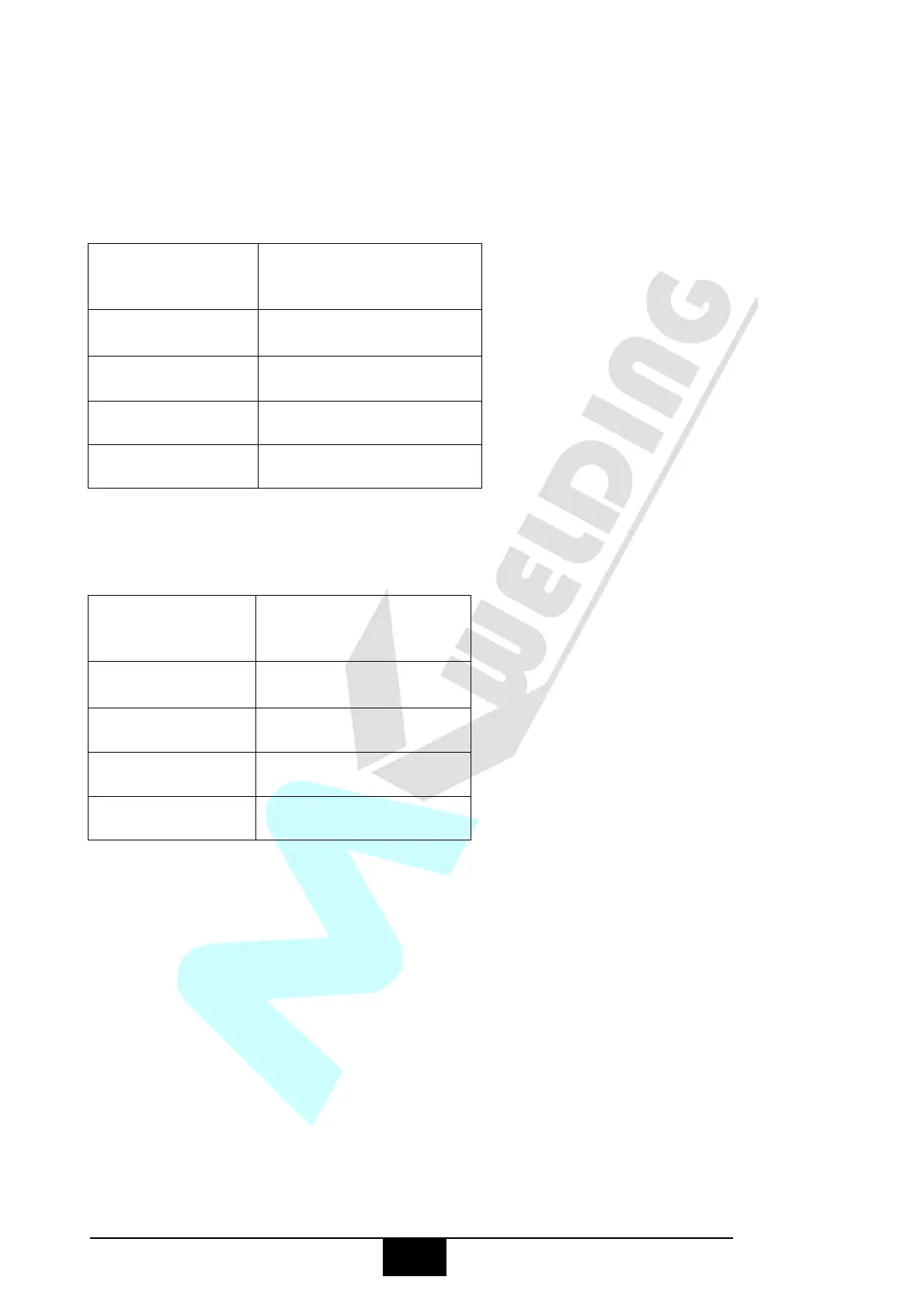
table gives the maximum size of
electrodes that maybe used for various
thicknesses of section base on using a
general purpose type 6013 electrode.
Welding Current (Amperage)
Correct current selection for a particular job
is an important factor in arc welding.With
the current set too low, difficulty is
experienced in striking and maintaining
astable arc. The electrode tends to stick to
the work, penetration is poor and beads
with a distinct rounded profile will be
deposited.Too high current is accompanied
by overheating of the electrode resulting undercut and burning through of the base metal
and producing excessive spatter. Normal current for a particular job may be considered as
the maximum, which can be used without burning through the work, over-heating the
electrode or producing a rough spattered surface.The table shows current ranges generally
recommended for a general purpose type 6013 electrode.
Arc Length
To strike the arc, the electrode should be gently scraped on the work until the arc is
established. There is a simple rule for the proper arc length; it should be the shortest arc
AverageThickness
of Material



 To Next Page