OPERATION
nip it. up tight.
§4.3.6 MIG Torch Liner Types and Information
MIG Torch Liners
The liner is both one of the simplest and most important components of a MIG gun. Its sole
purpose is to guide the welding wire from the wire feeder, through the gun cable and up to
the contact tip.
Steel Liners
Most MIG gun liners are made from coiled steel wire also known as piano wire, which
provides the liner with good rigidity and flexibility and allows it to guide the welding wire
smoothly through the welding cable as it bends and flex during operational use. Steel liners
are primarily used for feeding of solid steel wires, other wires such as Aluminium, Silicon
Bronze etc will perform better using a teflon or Polyamide line. The internal diameter of the
liner is important and releative to the wire diameter being used and will assit in smooth
feeding and prevention of the wire kinking and birdnesting at the drive rollers. Also bending
the cable too tightly during welding increases the friction between the liner and the welding
wire making it more difficult to push the wire through the liner resulting in poor wire feeding,
prematureliner wear and birdnesting. Dust, grime and metal particles can accumalate inside
the liner over time and cause friction and blockages, it is recommended to periodically blow
out the liner with compressed air. Small diameter welding wires, 0.6mm through 1.0mm have
relatively low columnar strength, and if matched with an oversized liner, can cause the wire
to wander or drift within the liner. This in turn leads to poor wire feeding and premature liner
failure due to excessive wear. By contrast, larger diameter welding wires, 1.2mm through
2.4mm have much higher columnar strength but it is important to make sure the liner has
enough internal diameter clearance. Most manufacturers will produce liners sized to match
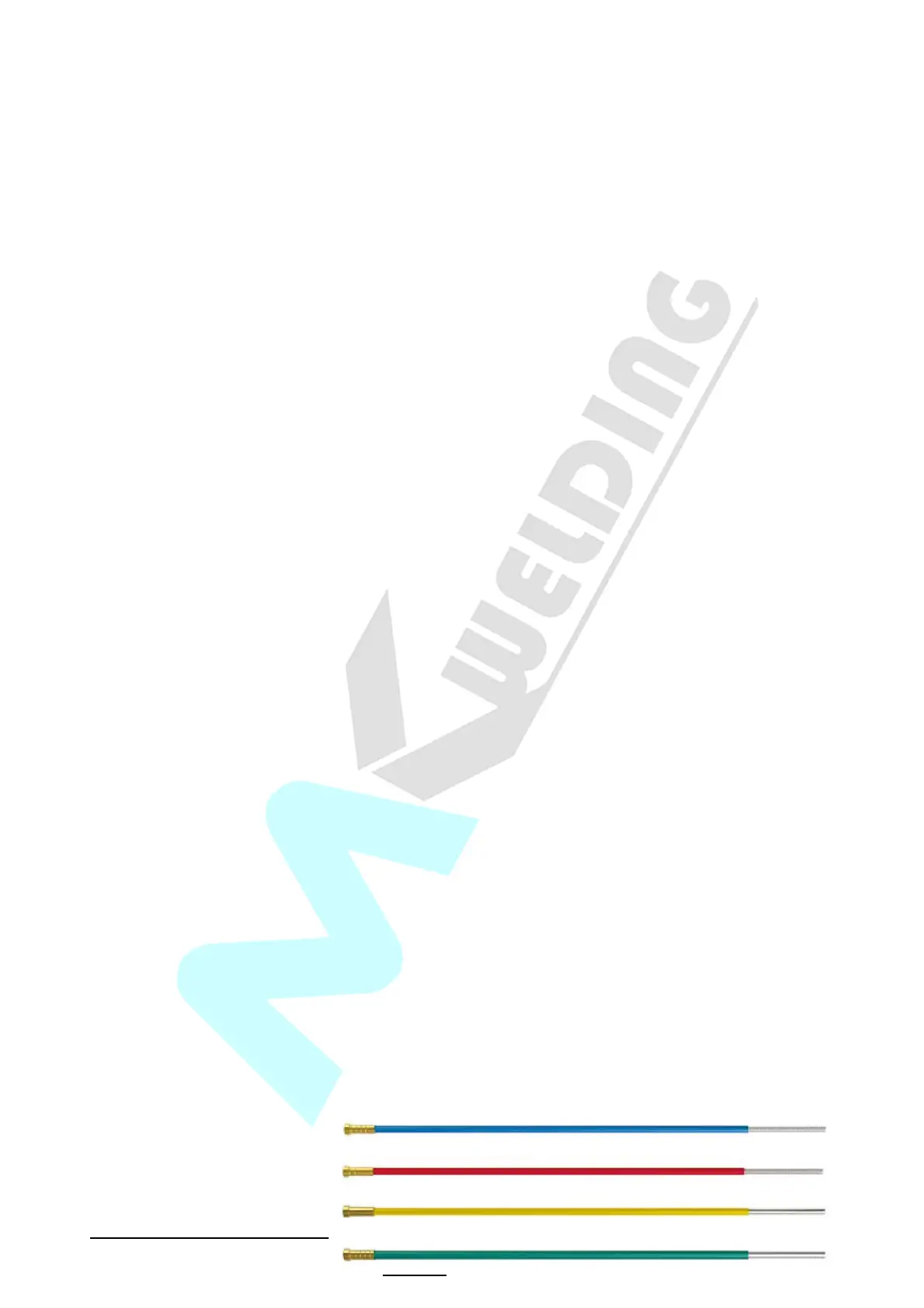
wire diameters and length of welding torch cable and most are colour coded to suit.



 To Next Page